Black Designers in Chicago Recovers a Vital Chapter of Design History
| Shelf | Authors & Interviews |
|---|---|
| Date in | |
| Readers | 694 |
A richly illustrated book traces how Black Chicago designers shaped American design and built creative communities with lasting influence.
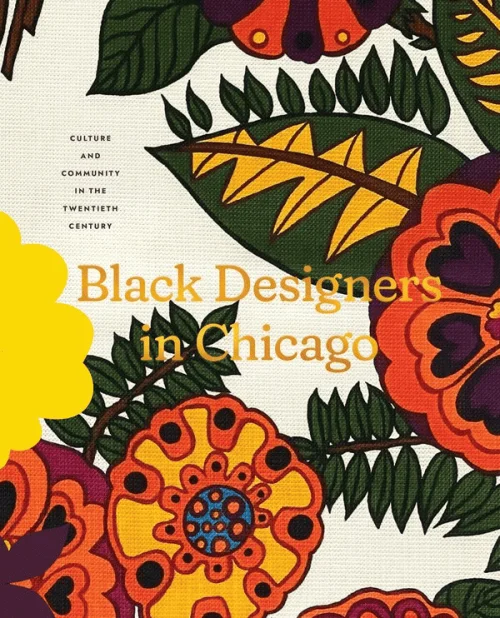
Design can solve practical problems while also changing who gets seen, whose ideas shape everyday life, and what a community recognizes as its own. That broader reach is at the heart of Black Designers in Chicago: Culture and Community in the Twentieth Century, a richly illustrated history of Black artists and designers whose work has too often been left out of accounts of American design.
Edited by Chris Dingwall, David Hartt, and Daniel Schulman, the book follows practitioners across fields, from product design and textiles to commercial art and collective work. Its central case is persuasive: Black Chicagoans helped shape design for everyday life and contributed to creative movements whose reach extended well beyond the city. The book also restores names, work, and personal histories to a record that has often favored better-known institutions and figures.
Design for daily life and cultural recognition
Charles Harrison offers a striking example of design’s practical influence. He led product design at Sears from 1961 to 1993, working with moldable plastic technologies to create affordable, appealing objects for American homes. His approach, as described in the book, made useful industrial design accessible without relying on explicit appeals to race. Harrison’s career shows how design choices can travel into ordinary routines and become part of a broad shared visual culture.
Other practitioners used their work to make Black life and the cultures of the African diaspora more visible. The book gives space to the many artists, clothing makers, illustrators, and designers whose contributions have received little attention in standard histories. Its scope runs from fabric artist Robert Earle Paige to Folayemi Wilson, who co-founded blkHAUS Studios in 2016 with Chicago native Norman Teague.
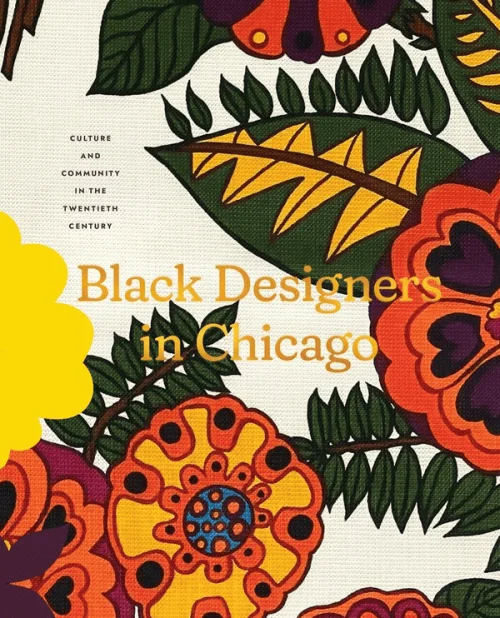
Paige’s textile design “028 Ivory,” made for Sears’ 1970s Dakkbar fabric collection, appears on the book’s cover. His line, “Design is an answer to a set of questions,” provides a useful way into the book’s larger subject. The questions change with the designer and the audience: some concern form and function, while others ask how images, materials, and creative institutions can reflect a community’s experience.
That range puts the book in conversation with familiar accounts of Chicago design. The city’s place as a home for European Bauhaus artists during the Second World War is well documented. Black Designers in Chicago makes a complementary case for the strength and international influence of the Black arts movement. It gives readers a fuller view of the people and networks that helped make the city a center of design.
Community as a creative force
The editors place community at the center of their account. The South Side Community Art Center and the AfriCOBRA artists collective are among the settings and groups through which the book shows how ideas developed, circulated, and reached audiences. AfriCOBRA sought to bring the concerns of the Black Power movement into an activist design practice. Together, these histories suggest that Chicago’s creative energy grew not only from individual talent but also from spaces where artists could work in conversation with one another.
Johnson Publishing Company, which operated from 1942 to 2019, is another important part of that story. Its magazines Ebony and Jet became influential vehicles for Black cultural production. The company’s leaders also employed and mentored Black commercial artists, helping create opportunities for practitioners to build careers and reach readers. The book’s attention to this work connects the history of design to the institutions that supported artists and brought their images into homes and public life.
The first two-thirds of the volume foreground this collective history. Its emphasis on community helps explain how design could speak across class and cultural lines, while also carrying meanings specific to the people who made and encountered it. Readers interested in the development of creative networks will find as much to consider here as readers focused on individual objects or styles.
Essays, personal histories, and a memorable voice
The final third gathers essays that shift between personal recollection and scholarly argument. “Black Gatsby” is a highlight: Paige’s career story, presented through conversations with Dingwall and Schulman, combines sharp humor with a sense of unfinished business. He describes his artistic training as “inferior desecration” and hints that he has more to say, perhaps in a future publication of his own. The result left this reviewer wanting a fuller account of his life and work.
Jacqueline Goldsby’s “The Artists’ and Models’ Balls” takes a more analytical approach. Goldsby, a Yale University professor, introduces the term middlebrow(n) to describe the aesthetics and outlook associated with annual arts fundraising balls. She argues that these gatherings offered Black Chicagoans a space to challenge the racial norms of their time and to act with greater freedom in their personal and professional lives. The essay adds a framework for thinking about how cultural events could create room for new forms of participation.
A book for readers beyond the design field
The book’s design supports its argument. Its considered layout, cover, and illustrations—appearing every few pages—make the volume a pleasure to spend time with, while its visual material keeps the people and objects under discussion in view. The attention to presentation feels especially fitting for a book about practitioners whose work is itself a form of visual communication.
Readers may come to the book knowing Theaster Gates, born in 1973, or Virgil Abloh, who lived from 1980 to 2021, as prominent culture makers with Chicago roots. The editors widen that picture by introducing less familiar designers and creators whose work helped shape the city’s creative life. Those stories make this a useful read for anyone interested in American design, but the book’s appeal reaches beyond specialists: it offers a compelling account of how communities build culture and preserve evidence of their own creativity.
For readers who want design history to account for the people behind its objects, images, and institutions, this volume is a welcome and well-researched contribution. It recognizes Black practitioners as active makers of design history and brings archival materials and personal stories into a fuller social record. The next step for readers is clear: take these names and histories into conversations about design, and look more closely at the work that older surveys left out.
NONFICTION
Black Designers in Chicago
Edited by Chris Dingwall, David Hartt, and Daniel Schulman
University of Chicago Press
Published October 7, 2026