Nicola Upson’s The Christmas Clue Brings Cluedo’s Designers Into a Christmas Mystery
| Shelf | Publishing Industry |
|---|---|
| Date in | |
| Readers | 335 |
Nicola Upson’s Christmas novella pairs the Pratts, designers of Cluedo, with a Tudor Close killing and a mystery the reviewer found full of clever turns.
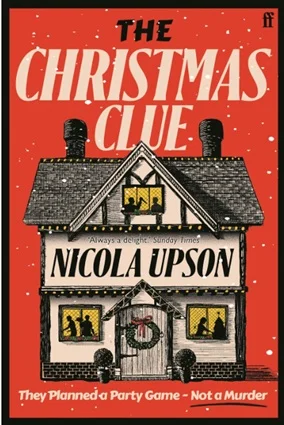
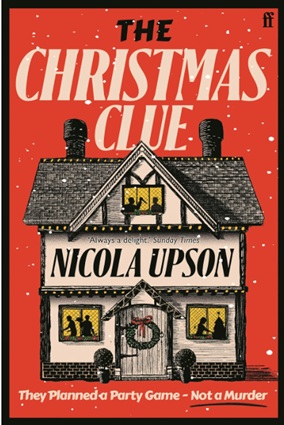
Nicola Upson makes the central conceit of The Christmas Clue part of the mystery’s machinery: Anthony and Elva Pratt, the designers of Cluedo, have to investigate a killing themselves. Set at Christmas in 1943, this novella brings the couple to the Tudor Close hotel to stage one of their murder mystery games and lift local spirits. Their plans change when they find Miss Silver, the local shopkeeper, dead from a knife wound.
The setting gives the story a seasonal frame, while the Pratts’ work supplies a neat source of playfulness. They arrive prepared to invent a fictional crime for their guests; instead, they’re drawn into a real one. A second death interrupts their efforts to adapt the game, making the line between staged puzzle and unfolding investigation harder to maintain. The setup lets Upson put the craft of constructing a mystery alongside the challenge of solving one.
A game becomes part of the case
The Pratts’ response to events carries the particular pleasure of a mystery that knows its own conventions. They consider reshaping their game around nine rooms, six suspects and six weapons, among them a piece of lead piping. Those familiar ingredients are more than a nod to Cluedo: the characters who designed the game are trying to make its tidy rules fit circumstances that keep resisting them.
That tension gives the novella room for both atmosphere and ingenuity. A board game can arrange clues and possibilities into a contained, comprehensible pattern. An investigation, as the Pratts discover, doesn’t promise to behave so neatly. Each death forces them to put the planned entertainment aside and attend to the facts in front of them. The reviewer’s account suggests Upson finds comic and narrative possibilities in that shift without losing sight of the mystery itself.
The premise also allows the book to play with the familiar pleasures of the genre: a contained setting, a group of potential suspects, and the question of how a crime was committed. The game’s rooms and weapons offer an appealing framework, but the story is not simply a fictional game played out at the hotel. It gives the Pratts a personal reason to engage with the puzzle, and it makes their experience as game designers relevant to the work of detection.
A Christmas novella with room for surprises
The Christmas Clue is a Christmas novella, rather than a full-length novel. The reviewer describes it as a substantial read for its format, with enough space for strong characterisation and a busy plot. That combination matters: a short mystery can feel like a puzzle compressed to the point of thinness, but here the reviewer found that Upson manages to fit in several developments and genuine surprises.
The verdict is particularly warm on the route the story takes. The reviewer found the final twist somewhat inevitable, yet still admired the clever ideas along the way. That distinction gives readers a useful sense of what to expect: the pleasure may lie less in an ending that overturns every assumption than in watching the mystery develop, and in seeing how Upson makes the game’s design echo the investigation.
The reviewer places the book among the Christmas mysteries they’ve enjoyed, judging it stronger than most seasonal novellas they’ve read. Their comparison is personal, not a claim that every reader will share the same ranking. Still, it points to the book’s appeal for readers who want a seasonal setting with a real puzzle at its centre, rather than atmosphere alone.
A fictional origin for a familiar game
The story’s connection to Cluedo is fictional. The reviewer is clear that the events at Tudor Close should not be read as a factual account of how the board game came to be. Instead, Upson uses the Pratts’ role as designers as a starting point for imaginative crime fiction, much as her Josephine Tey mysteries draw on a fictional approach rather than presenting themselves as literal records of events.
That distinction helps the conceit land on its own terms. Readers can enjoy the meeting of a real-world game and an invented case without expecting a historical explanation of the game’s origins. The question the novella pursues is what happens when the people who build murder puzzles have to respond to one outside the rules they’ve made.
For readers drawn to classic-style mysteries, Christmas settings and the mechanics of clue-making, Upson’s premise offers several pleasures in a compact form. The reviewer came away entertained and reminded that they wanted to return to the author’s Tey mysteries. For now, The Christmas Clue makes a persuasive case for spending a winter evening with the Pratts, their interrupted game and the investigation waiting at Tudor Close.