The Lancaster Witch: A Summer Visit Turns Into a Ghost Story
| Shelf | Publishing Industry |
|---|---|
| Date in | |
| Readers | 928 |
Carol H. Behrman’s 1993 novel pairs a mysterious English visitor with a haunting rooted in Lancashire history, as Maddie tries to help her cousin.

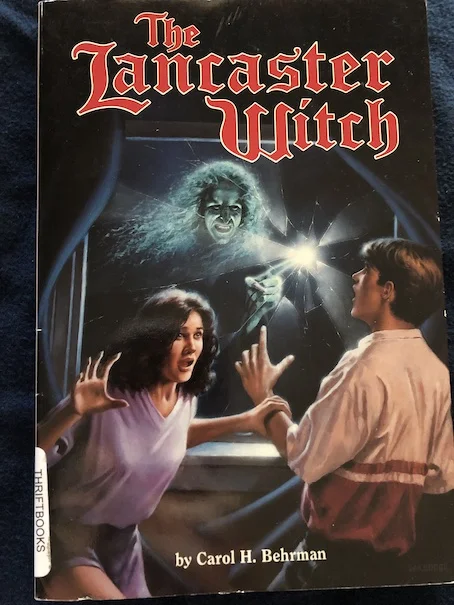
Carol H. Behrman’s The Lancaster Witch turns a family visit into a young readers’ ghost story about inherited history, uneasy friendships and the question of whether a frightening experience can be trusted. First published in 1993, it follows thirteen-year-old Maddie Stoner as she tries to understand why her English cousin Clive has come to stay—and why a pale woman dressed in black seems to be following him.
A cousin with unanswered questions
Maddie has never heard of Clive before her parents tell her he’ll be visiting their New Jersey home for two weeks. He’s the son of her mother’s cousin, who moved to England and married a British man. The families have stayed in occasional contact, and Clive, who is a little less than a year older than Maddie, wants to see the United States. His mother asked Maddie’s parents to host him for the summer, and they agreed.
That explanation doesn’t satisfy Maddie. She suspects there’s more to the trip than her parents are saying, but they sidestep her questions. When she tells her friend Chloe about Clive, Chloe guesses he may have got into trouble or fallen in with people his parents dislike. She mentions the old term “teddy boy” for certain British boys associated with gangs and a rock-and-roll style. The reference feels dated in a story set in the 1990s; the term belongs more strongly to the 1950s and 1960s.
At the airport, Maddie spots a strange woman in black standing close behind Clive, one hand resting on his shoulder. A traveler knocks Maddie down with a suitcase. When she gets back up, the woman has vanished. Clive insists he arrived alone, while Maddie’s parents think she mistook another traveler for someone accompanying him. Maddie trusts what she saw. Clive’s refusal to acknowledge the woman leaves her with a troubling first clue.
The cousins begin to get along. Both are only children, and they discover they like similar music. Clive lives with his parents in Morecambe, a resort town outside Lancaster in northern England. Asked why he wanted to visit America, he says only that his mother thought a change would do him good. His answer reinforces Maddie’s sense that the adults are keeping something from her. Still, when she invites him to the community pool with her friends, he’s keen to join them—he likes swimming.
The woman in black follows
At the pool, Maddie is resting when someone cries out that a swimmer is drowning. Clive has hit his head in the water, and the lifeguard pulls him to safety. As he’s brought out, he tells Maddie that “she” pushed him and nearly killed him. Maddie sees the woman in black leaving the pool. But when the lifeguard questions Clive, he says he made a bad dive and injured himself. Later, he gets upset when Maddie brings up the woman and denies saying anything else.
Maddie’s mother confirms that Clive’s mother mentioned he’d been having some problems and needed time away. She doesn’t know the details and assumes they’re ordinary teenage difficulties. She asks Maddie to let Clive enjoy his stay without pressing him. Maddie understands the request, but the pool incident makes it hard to accept that nothing serious is going on.
While snooping among Clive’s belongings, Maddie finds an unfinished letter to his parents saying that “it” followed him to America. She also discovers books about ghosts and notes he’s made on the subject. The clues leave her wondering whether Clive is frightened by his own imagination. Yet Maddie has seen the woman herself, and that experience makes the possibility of a real haunting difficult to dismiss.
Eventually, Clive admits the woman exists after Maddie promises to keep his secret. He calls her the Lancaster Witch. His family story reaches back to the 1600s, when women were put to death for witchcraft in Lancaster, England. One of them, Elizabeth Device, was said to have cursed the judge who tried her and his descendants. Clive believes he belongs to that family line. For about a year, he says, he’s felt the witch watching him. He came to America hoping to escape her.
Clive’s parents don’t appear to see the woman, and his father dismisses family stories of hauntings as superstition. Even with Maddie’s account to support him, Clive remains unsure whether the spirit is real or whether his fear is shaping what both of them see. Maddie briefly tries to put the matter aside and distract him. The haunting keeps intruding: a mirror breaks in her room, Clive is pushed down stairs, and he disappears after going for a bike ride with her friend Tommy on a day Maddie is unwell. Others assume he has lost his way in an unfamiliar town. Maddie suspects the witch has taken a hand in his disappearance.
As Maddie and Tommy search, the story brings together a supernatural threat and a more ordinary physical danger. The two strands eventually intersect: facing the immediate danger provides a way to end the family curse, and the witch decides Clive has made amends for what happened to her family. Behrman gives the frightening pursuit a resolution, while keeping most people around Maddie unaware that a ghost was involved.
History behind the haunting
In a note at the back of the book, Behrman identifies the historical case behind the story. In 1612, ten women were hanged for witchcraft in Lancashire, England, in front of Lancaster Castle, including Elizabeth Device. The accused are also known as the Pendle witches or Pendle Hill witches. Readers interested in the real events can find non-fiction books and video documentaries on the subject. One striking detail is that Device’s nine-year-old daughter, Jennet, testified against her.
The historical discussion gives the story more to work with than a generic haunted-family premise. Maddie and Clive consider why people accused others of witchcraft: suspicion, misfortune, envy or personal hostility could all play a part. Clive also observes that some accused people believed they had the power to cast spells. Whether those beliefs reflected real magic or old superstition remains uncertain in their conversation. The novel, as a ghost story, allows the possibility of supernatural power to stand.
There is a historical slip in the children’s comparison between the Lancashire case and the Salem witch trials. Clive says the Salem accused were burned, repeating a familiar image that doesn’t match what happened in colonial America. Most of those convicted in Salem were hanged, while one person was pressed to death. The mistake is small, but it stands out in a story that takes care to connect its haunting to a real case.
Reading the book now
The reviewer first read The Lancaster Witch at about ten or eleven, borrowing it from a friend and remembering it as a favorite. Revisiting it as an adult brought the historical background into clearer focus. That change in perspective suits the book: younger readers can follow Maddie’s fear and curiosity, while older readers may notice the historical details and the ways the novel blends documented events with supernatural invention.
Maddie and her friends also enjoy comparing American and British teenage life, including differences in speech. Their surprise that Clive may not know Monopoly is less convincing: the game had British versions for decades before the novel appeared. Even so, the cousins’ cultural exchanges help make the visit feel like a meeting between two ordinary teenagers, before the ghost story takes over.
Behrman’s novel mixes suspense, friendship and history without losing sight of Maddie’s point of view. Its best hook is the uncertainty around Clive: the adults won’t explain his troubles, he doubts his own perceptions, and Maddie has to decide what she believes. Readers who like kid-led mysteries with a ghostly edge will find that tension carries the story through to its satisfying end.