Marble Hall Murders: Anthony Horowitz’s Susan Ryeland Mystery Delivers a Clever Puzzle
| Shelf | Book Reviews |
|---|---|
| Date in | |
| Readers | 913 |
A reviewer found Horowitz’s layered mystery absorbing, with Susan Ryeland drawn into a manuscript that may conceal a real murder.
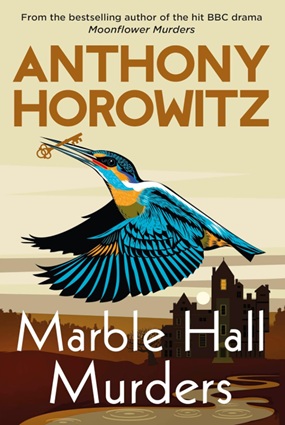
Anthony Horowitz gives Susan Ryeland good reason to walk away from murder mysteries. She has twice come close to being killed while investigating secrets concealed in Alan Conway’s novels about Atticus Pünd. Yet money brings her back: she accepts a job editing Pünd’s Last Case, a continuation novel still in progress.
The assignment puts Susan in the orbit of Eliot Crace, its young author. His childhood with his grandmother, the children’s writer Miriam Crace, has left him troubled, and he is convinced she was poisoned. Like Conway before him, Eliot is using fiction to expose what he believes happened. But his manuscript remains unfinished, and someone appears determined to prevent its publication. Susan, as editor and reader of its secrets, may be in the way.
A manuscript with two mysteries
The appeal of this setup is the double reading it asks of us. There’s the murder within Pünd’s Last Case, and there’s the real-world mystery surrounding Miriam’s death and Eliot’s claims. Each strand has its own clues and questions, while the unfinished book adds another complication: what does Eliot intend to reveal, and why has he chosen this particular way to do it?
I found one part of the puzzle, but the other two aspects caught me out. The novel gives more space to the real-world murder, and that’s where its most intricate construction lies. The fictional case didn’t hold my interest quite as strongly, but the balance works because the surrounding mystery has so much room to develop. Horowitz makes details that seem incidental feel worth remembering, then keeps the larger picture just out of reach.
A long read that moves quickly
At 590 pages, Marble Hall Murders looked like a substantial commitment. I’d put it aside for months, partly because I wanted to fit as many books as possible into my reading time. Once I started, though, I finished it in a day. That meant setting other things aside, but the book kept drawing me back.
Horowitz’s handling of clues was a particular pleasure. In my review of the previous Hawthorne mystery, A Deadly Episode, I admired the way he planted clues in plain sight while still steering me away from the answer. He pulls off a similar trick here. I could see some of the pieces, but seeing them wasn’t the same as understanding how they fitted together.
That distinction matters in a puzzle novel: a surprise feels satisfying when the clues have been present all along, even if the reader hasn’t assembled them correctly. Here, the final shape of the real-world mystery struck me as both clever and difficult to anticipate. I was nowhere near the full explanation, despite having made some progress along the way.
Susan and Eliot keep the story human
The intricate plotting doesn’t leave the characters behind. Susan’s friendship with another character develops as new problems gather around her, giving the story a warmer thread amid the suspicion. Eliot is a more unpredictable presence. I kept trying to work out what he was doing and why he had taken such a roundabout route to making his case. His uncertainty and oddness give the manuscript plot an unsettled energy.
Susan’s return also carries the weight of everything she has already been through. She doesn’t take the work because she has rediscovered a taste for danger; she needs the money, and the manuscript places her in a difficult position before she can step away. That practical starting point makes her involvement feel grounded, even as the mystery becomes increasingly elaborate.
I’ve read that Horowitz had to write the novel quickly while also working on the adaptation’s script. The finished book gives little sign of that pressure. Its structure feels carefully controlled, and the characters have space to make the puzzle matter beyond its mechanics.
I went into Marble Hall Murders expecting a demanding read and came away with one I barely wanted to put down. I suspect this may be the end of Susan Ryeland’s story, and if so, she leaves it on a high point. Still, the closing thought is hard to resist: perhaps there’s room for one more case.