Bonnie Jo Campbell on Family, Memory and The Spirits
| Shelf | Book Reviews |
|---|---|
| Date in | |
| Readers | 764 |
Bonnie Jo Campbell discusses the family tensions, literary echoes and hard-won possibility of change at the heart of The Spirits.
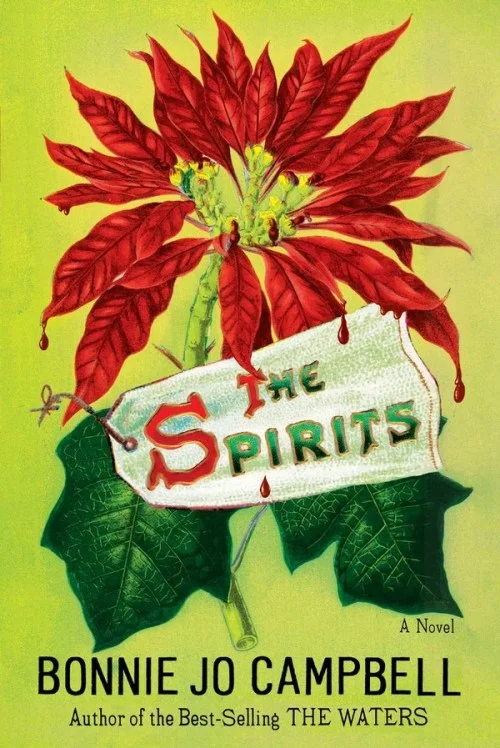
Bonnie Jo Campbell’s The Spirits puts a family’s past at the dinner table. Across one Christmas evening, the Whitbys try to welcome back their eldest sibling, Sister, while facing the harm left by her actions the previous year and the longer history of fear surrounding their father. Daddy Whitby is dead, but his presence still presses on the family: his ghost appears around the house, and his influence threatens to take hold of Sister and the others.
The novel’s central question is what a family can build after the old structure has hurt the people who depend on it. The Whitby children have kept parts of their connection to their father hidden, including their involvement in his death. As their memories and accounts of the past emerge, they begin to see the cost of living under his authority—and the possibility of making different bonds. Campbell spoke with RS Deeren about the book’s Dickensian echoes, its crowded dinner scenes and the difficult work of changing a family without pretending its history can simply disappear.
A familiar story, made personal
Deeren points to the book’s kinship with Charles Dickens’s A Christmas Carol: a family haunted by earlier Christmases, an attempt to celebrate amid loss, a father likened to Scrooge, and a character who uses crutches. Campbell says she didn’t begin with a plan to retell Dickens. She started with a story she felt compelled to write, then recognized that she had created a contemporary rural Michigan counterpart to the classic.
That recognition shaped her revisions. In an earlier short story, “The Trespasser,” Campbell hadn’t set out to reshape “Goldilocks and the Three Bears”; a friend noticed the resemblance after she had written it. Once Campbell saw the connection, she revised with the older story in mind. The girl, initially a brunette, became blond. In The Spirits, she gave Mary crutches after noticing the book’s relation to Dickens.
Campbell describes such details as small choices that can open larger questions during revision. Mary’s resemblance to Tiny Tim led Campbell to consider how much of his earnestness and innocence to give her. She eventually adjusted those qualities and redistributed some of them to another character. The challenge was to let Mary echo a Dickens character while giving her the desires and complications needed to stand on her own.
That balance also applied to the ghost and the rest of the Whitbys. They needed to reflect the source material enough for the connection to matter, while remaining contemporary people capable of driving the tensions of a family meal. Campbell enjoys considering how her approach compares with Jane Smiley’s interpretation of King Lear in A Thousand Acres and the structure of Barbara Kingsolver’s Demon Copperhead.
A novel with a longer history than its revision
Although The Spirits followed Campbell’s 2024 novel The Waters relatively quickly, its beginnings reach back much further. Campbell had written an unpublished story around a decade earlier. It was close to a hundred pages, but she felt it left too much unexplored and undeveloped. In its shorter form, she also found the story too brutal.
Turning that draft into a novel took about a year and a half. Campbell remembers the work as unusually urgent: she returned to her desk each morning eager to understand what had happened to the family and to make the story work. The revision felt like a whirlwind, even a fever dream, though the material had been sitting with her for years.
That pace differed sharply from her work on The Waters. Revising that novel took about seven years, and the manuscript grew to 650 pages before she cut it down. The Spirits also needed trimming, but the final cut was about twenty-five pages. After the long effort required for The Waters, finishing a novel in a shorter stretch felt empowering.
Campbell doesn’t regret letting stories develop over time. During those years, she says, a story can absorb other influences: folktales, songs, dreams and fantasies. She also describes illness, sorrow and joy as experiences that can inform the work. That slow accumulation helped prepare the older draft for its later transformation, even though the final revision moved quickly.
Keeping a crowded dinner alive
Most of The Spirits unfolds in two rooms over a single night, with a large family trying to talk around a table. The setting creates a practical challenge for Campbell: the characters are always close to one another, and getting someone out of the room can become a structural problem. She was glad to find a reason for Ma to leave for a couple of hours, giving the others room to say things they might have held back in her presence.
The dinner-table idea was the book’s starting point. In The Waters, Campbell had written a dinner scene that ran 45 pages; an earlier version had reached 110. She had told herself that a scene of that length wasn’t allowed. As often happens when she gives herself a rule, she became interested in breaking it. The Spirits became a test of whether a large family meal could sustain conflict and change without losing its energy.
For Campbell, the key was finding what the family could lose. The stakes are its integrity: whether the Whitbys can remain a supportive whole after the patterns that held them together have caused harm. She sees the novel as having a sentimental faith in family as a moral community, while recognizing that families in life can come apart through disagreement, distance or indifference. In this story, the possibility of losing the family matters.
The book’s many characters each bring a different pressure to the meal. Sister and Doug spar beneath the surface. Ma’s presence shapes what the others can say. Beth, a teenager, sometimes tries to make difficult moments feel gentler. Doug hopes to get through dinner with his relationship intact. Young Trevor’s attention can turn to dessert or Christmas presents, and his jokes cut through adult conversations. The family, Campbell says, also wants Mary’s attention.
Those lighter moments help the ensemble breathe. Trevor’s simple concerns can interrupt the adults’ intensity, while Beth’s efforts to sweeten events reveal her own way of coping. Campbell was interested in letting the characters change in real time, with everyone present to witness the shifts. A family meal with children also restricts what can be discussed openly. Campbell notes that this is her only novel without sexually explicit material, and wonders whether that boundary might be one she breaks in future work.
Mary’s outsider’s view
Mary, Doug’s new girlfriend, arrives with genuine curiosity about the Whitby family’s past. Her questions matter partly because Sister has long occupied the caretaker’s position: she works, repairs things around the house and helps keep the bills paid. But Sister has been largely absent for a year and no longer knows where she fits. She has, Campbell says, stepped into her father’s role without finding that it suits her.
Campbell thinks about characters through archetypes such as the Patriarch and the Caretaker, using them to understand how people interact and what those relationships can mean. She keeps that framework behind the scenes. Mary occupies another role: the Guest, an outsider who enters a settled family system and asks questions its members have stopped asking themselves.
A guest can change what a family is willing to show. The Whitbys try to behave well in Mary’s company, and her presence lets them express sides of themselves that may be less visible within the family. She also brings a view of the family’s moral questions that isn’t shaped by its shared memories. That distance is useful when love and fear have clouded what the Whitbys can see.
Campbell sees Mary as essential to the family’s evening of work: seeking forgiveness, finding a route toward redemption, and recovering some comfort and joy after estrangement. Mary doesn’t arrive with answers. Her questions help make it possible for the family to look at its past together.
What can replace the old order?
The Whitbys remember the events of Christmas Eve nine years earlier differently. Sister, Ma, Doug, Trevor and Beth each have their own version, and memory is one of the ways they remain connected to a father who frightened them. They are beginning to live on their own terms, but Daddy still shapes their relationships and their understanding of themselves.
Campbell describes the novel’s task as imagining how the family might move out of his shadow and make something more nourishing. She argues that the alternative to patriarchy isn’t simply putting women in charge. She imagines something closer to community and shared responsibility. But replacing the family’s old structure carries a risk: without new bonds, the Whitbys might drift apart.
The evening brings a series of changing relationships and realizations, beginning with Mary’s arrival and continuing as family members see one another differently. Campbell says there is a major revelation in the book, but the transformation also comes through smaller moments—openings that give the characters room to see and breathe. Together, these changes offer the possibility of bonds as strong as the old ones, without reproducing their pain and inequality.
That change won’t erase Daddy’s influence. Campbell says Sister will always carry the consequences of what she has done. She still loves her father and respects what he knew, even as she understands his life as a warning. He was a bully, but his children retain some of his quick temper and violent tendencies. The family can’t remove him from its history in a single gesture.
Instead, Campbell hopes the Whitbys can grow into a wider community capable of holding those complicated ties, softening them and giving each person room to keep learning. She connects that hope to a Jungian idea: some difficult problems aren’t neatly solved; people grow beyond their former limits. The family’s future depends on becoming larger than the harm that shaped it.
A quieter ghost next Christmas
Asked what might happen the following Christmas, Campbell imagines Doug and Mary arriving by noon. Doug would drive out to get a tree, and the family would prepare dinner together. The menu would trade green bean casserole for Brussels sprouts, which Mary might persuade them to broil instead of boiling them to exhaustion. They would still argue, as families do. Daddy’s ghost would remain by the fireplace, but speak more quietly.
That imagined meal captures the scale of change Campbell has in mind. The family doesn’t become free of conflict or memory. It makes room for shared work and a different balance of voices, while the past loses some of its power to govern the present.
Contemporary pressure, lasting questions
Campbell says her novels respond to the life and events surrounding her, even when she doesn’t set out to write topical fiction. She describes The Waters as shaped in part by her responses to the brutal events of January 6, a parody of masculinity she sees around her, her experience of breast cancer and her mother’s death from the disease.
The Spirits, she says, also grew in part from living through the Trump era and trying to see a way through it. A book tied to its moment can become harder to read as circumstances change, but Campbell sees bullying as a lasting human problem. For her, a fiction writer’s task is to find questions that remain alive inside a particular time and place. She leaves the judgment on whether The Spirits manages that to readers in fifty or a hundred years.
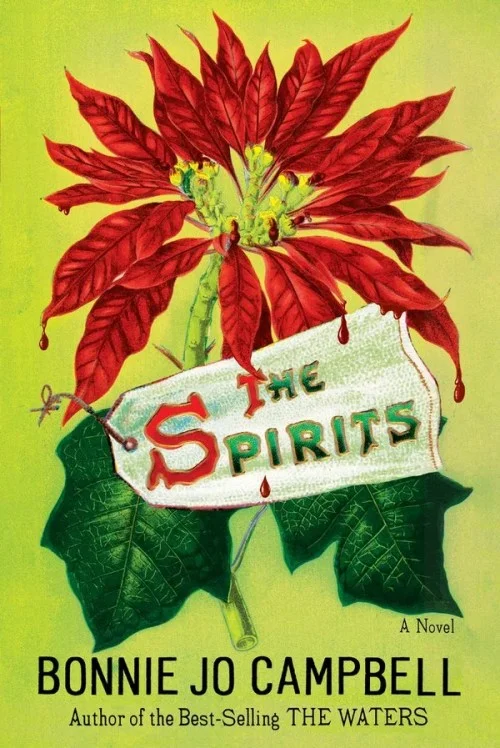
The Spirits is fiction by Bonnie Jo Campbell, published by W. W. Norton & Company on October 13, 2026.
FICTION
The Spirits
By Bonnie Jo Campbell
W. W. Norton & Company
Published October 13, 2026