Sonora Jha’s Foreign Brings Rural Indian Farmers’ Struggles Into Focus
| Shelf | Book Reviews |
|---|---|
| Date in | |
| Readers | 813 |
Sonora Jha’s debut gives its farming community vivid emotional weight, though its many viewpoints leave some characters less fully drawn.
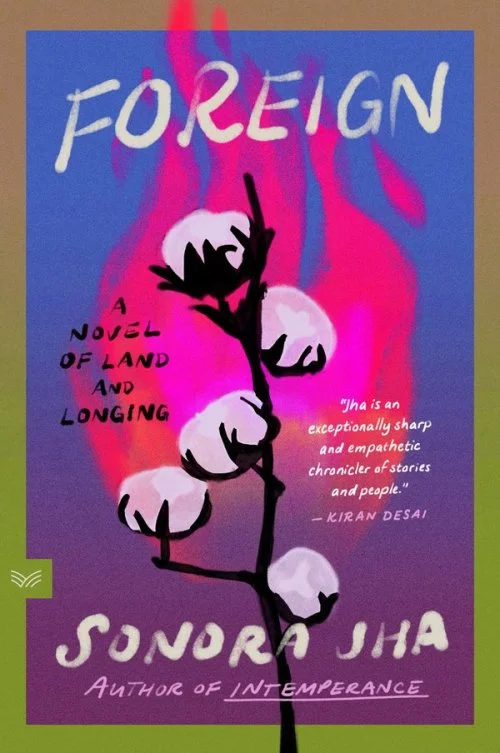
Sonora Jha’s Foreign is most affecting when it turns its attention to the people at the heart of its subject: farming families in rural India confronting financial hardship and despair. First published in India in 2013, the novel now reaches North American readers more than a decade before the publication of Jha’s later, lauded work, including The Laughter. Its return offers a useful view of a writer still shaping her approach. The farmers’ experiences give the book its strongest scenes, while the narrative’s wider cast sometimes keeps individual characters from receiving the same depth.
The novel’s backdrop is the Farmer’s Crisis. Beginning in the 1990s, numerous farmers died by suicide after years of failed crops and economic distress. Jha’s story brings that suffering into the lives of specific families, rather than treating it as distant context. The subject has continuing resonance: the crisis in India persists amid climate change, while farmers in America’s Plains regions face difficulties of their own. Jha is careful with the people living through hardship, and her attention to their perspectives and pain gives the book much of its emotional force.
An outsider’s return
The story begins with Katya, an Indian emigrant celebrating the launch of her book alongside her white fiancé. News from her ancestral home abruptly changes the evening: her teenage son, Kabir, has left his grandparents’ house and cannot be found. Katya follows him to a remote village in Maharashtra, where he has sought out Ammar, his biological father. Ammar works as an activist for the farming community, and Kabir hopes to reconnect with his roots and learn about the father he has never known.
For Katya, the search carries a different weight. She resents Ammar for leaving when their family was taking shape, and she fears that her son will face another painful disappointment. Yet Kabir settles into village life with surprising ease. He grows close to Bajirao and Gayatri-bai Andhale, the couple hosting him and Katya, and the visitors’ lives begin to intersect with theirs as the community’s hardship deepens.
That arrangement gives Jha a way to connect a family story with the farmers’ circumstances. Katya arrives as the person least familiar with the village and, in that sense, the book’s titular foreigner. But the emotional center gradually shifts toward Bajirao and Gayatri-bai. Their chapters bring the community’s pressures into sharper focus: the couple must arrange their daughter’s marriage while navigating Bajirao’s financial and existential despair. Gayatri-bai, meanwhile, faces her own vulnerabilities while carrying the strength and obligations of a family matriarch.
Their love for one another and their family gives the story a steady pulse. Jha makes their difficulties feel personal without losing sight of the broader hardship surrounding them. This is where the novel’s alternating third-person viewpoints pay off. Bajirao and Gayatri-bai’s perspectives add emotional complexity, and their struggles make the farmers’ circumstances more than a backdrop for Katya’s family reunion.
Where the balance falters
The choice to give the farming family such prominence also exposes a weakness in the book’s design. Katya and Kabir introduce the reader to the village, but both recede as the Andhales’ story gains force. A novel centered on farmers needn’t make its outsider figures the main attraction. Still, Foreign appears to want two narratives to carry equal weight, and the result leaves some of Katya and Kabir’s threads less developed than the rural family’s.
Katya’s fears as a parent are easy to understand, as is her quick affection for Bajirao and Gayatri-bai. Her conversations with Kabir, however, can feel repetitive. The story also gives considerable attention to her fiancé, Alec, and to the possibility of renewed feelings between Katya and Ammar, but Alec has little effect on the choices she makes. Katya’s divided feelings about Ammar would be clear without a fiancé waiting in the background, so that relationship can feel like an extra thread without enough story to carry it.
Kabir’s characterization is another point where the novel’s aims and execution don’t quite meet. His sympathy for the farmers is central to his connection with the village, but his deep empathy can make him seem more like an idealistic symbol than a fully rounded teenager. The book gestures toward a harder edge in his treatment of his mother, yet that tension doesn’t entirely resolve the impression. The comparison with the mother and son in Jha’s more recent novel Intemperance is revealing: those characters feel more flawed and complete, with their older ages and the attention given to their development helping shape them.
An early novel with staying power
These uneven character threads don’t erase what Foreign accomplishes. The story is complete, and its decision to center farmers’ lives gives it a focus that an outsider-led account might have missed. Jha writes with tenderness when she attends closely to the people carrying the greatest burdens. The Andhales’ chapters, in particular, make the novel’s emotional stakes tangible.
More than ten years after its first publication, Foreign reads as both a serious, empathetic work and an early effort from a writer whose later novels show greater control over characterization. Readers drawn to fiction about family, rural communities and economic hardship will find much to value here, especially in Bajirao and Gayatri-bai’s story. The book’s rougher balance is visible, but so is the care behind its strongest portraits.
FICTION
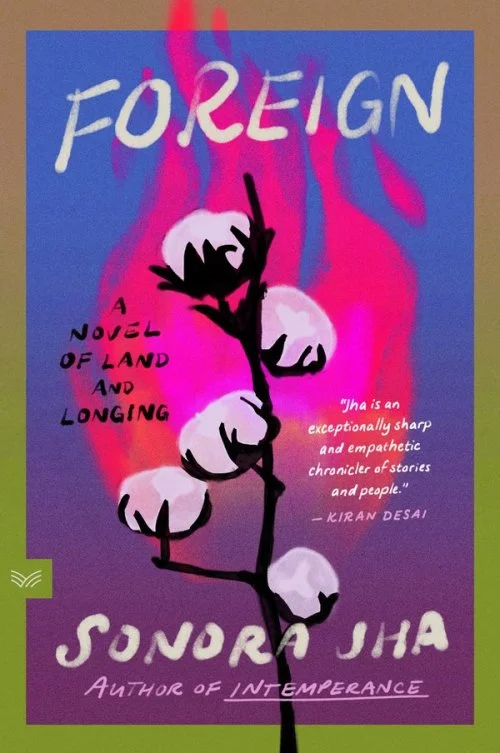
Foreign
By Sonora Jha
HarperVia
Published on October 13, 2026

The post Activism Literature as Fiction: A Review of Sonora Jha’s “Foreign” appeared first on Chicago Review of Books.
===