The Trouble with Miss Switch: Barbara Brooks Wallace’s Bewitching School Story
| Shelf | Publishing Industry |
|---|---|
| Date in | |
| Readers | 868 |
Barbara Brooks Wallace pairs classroom comedy with witchcraft in a story about fairness, creativity and a teacher in need of a clever idea.

The Trouble with Miss Switch, Barbara Brooks Wallace’s 1971 children’s book, makes the classroom a place where strange magic and ordinary school troubles meet. Its young hero, Rupert, is curious enough to investigate his teacher, and considerate enough to give her a chance to explain herself. That combination gives the story its appeal: the mystery matters, but so do the fairness and imagination behind it.
A teacher with unusual methods
Rupert is a budding scientist just starting fifth grade when he meets Miss Switch. She seems to know what’s happening in the classroom even when her back is turned. At times, she appears to read her students’ thoughts, and misbehavior brings uncanny consequences: a spitball rebounds onto its thrower, while a bully becomes stuck at the drinking fountain.
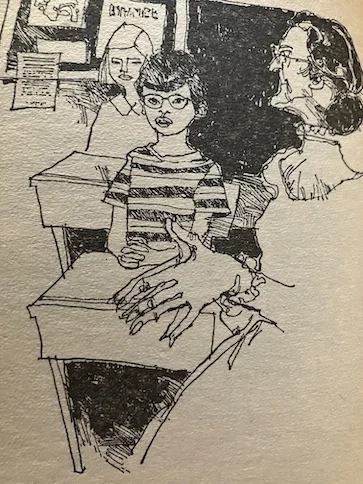
The odd incidents don’t stop the children from liking her. Miss Switch makes lessons engaging, and their grades improve. Her even-handedness also stands out. Where other teachers might favor certain pupils, she treats the whole class alike. The students benefit when she’s pleased and share the effects when she’s in a bad mood. Rupert appreciates her fairness, but his scientific instincts keep returning to the same question: what explains her strange abilities?
Rupert investigates
After researching witches at the library, Rupert reaches a startling conclusion: Miss Switch is one. He doesn’t rush to spread his theory. First, he wants evidence, then a conversation with the teacher herself. Since she has treated her students fairly, he believes she deserves the same consideration. He sneaks into the school after dark to search their classroom, only to find Miss Switch already waiting.
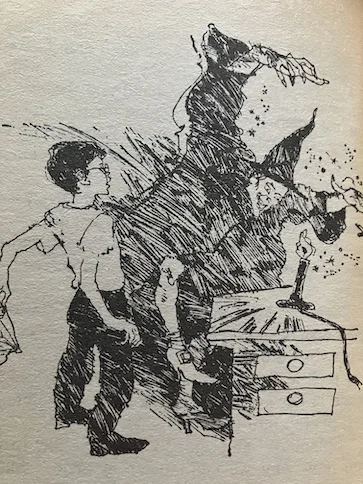
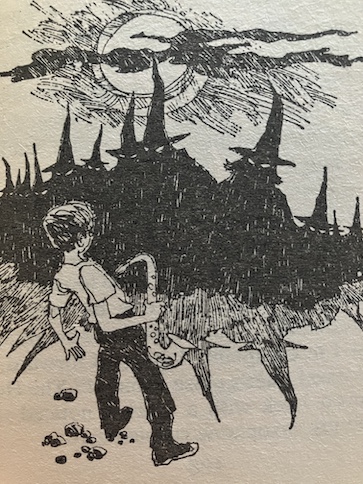
She isn’t angry. She was hoping Rupert would come because she needs his help. Miss Switch confirms that she’s a witch, then explains her predicament: witches now use a special computer to assess their work, and it has judged her magic insufficiently “original.” As a result, she has been assigned to teach Rupert’s class while she comes up with something more inventive. If she fails, she’ll spend the next 150 years sweeping the witches’ mountain with her broom. She asks Rupert to put his creative, scientific mind to work.
His first suggestion is to help the school’s struggling football team and its poor band before their next game against a rival. Miss Switch improves the band, but her spell targets the quarterback’s number instead of the quarterback himself. The opposing team has a player with that number, so it benefits too. Miss Switch receives a good rating but an F for completing the task successfully. The reviewer questions that result: with half the plan working, a C average might seem fairer.
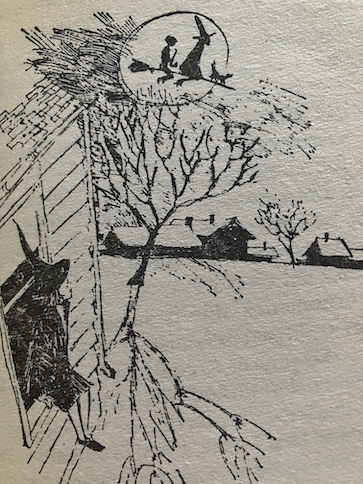
Rupert’s old friend and classmate Amelia has also worked out Miss Switch’s secret. She confronts Rupert, who brings her to his next meeting with the teacher. As the three discuss fresh ideas, Rupert realizes that Miss Switch has already been using her magic inventively at school. He persuades her to take him and Amelia to the witches’ mountain on Halloween, where he can make their case directly to the computer and the other witches.
Nostalgia, with a modern classroom question
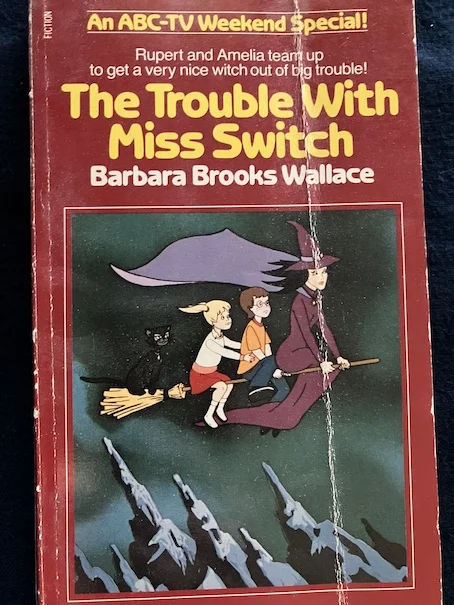
The reviewer remembers both the book and its cartoon adaptation from childhood, and notes that the cartoon is a shorter version of the story. The cover of their copy even uses an image from the film. Some episodes had stayed clearer in memory than the book itself; others, including Rupert’s experiments on his pets, had been forgotten.
That subplot gives the book a more uncomfortable moment. Rupert overfeeds one pet and underfeeds another as part of his experiments, and the reviewer is surprised that his parents allow it. Miss Switch’s magic enables the animals to speak up. They explain how the experiments affect them and warn that Rupert could kill them if he continues. Once he understands the harm he’s causing, he stops.
The reviewer’s fondest memories include the witches’ computer punch cards, a detail that links the story to an earlier stage of everyday technology. They recall punch cards still being around during their childhood in the 1980s, and their father, a computer programmer, explaining that he used them when first learning to program. At school, the reviewer used old cards as bookmarks and reading guides, though they never learned what the cards had originally been for. The object carries a personal nostalgia that younger readers may not share.
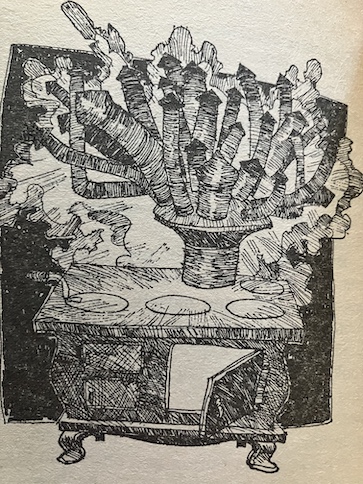
The ending brings together the classroom and the larger witch community: Rupert argues that Miss Switch’s teaching already shows original magic, and the reviewer enjoys how he persuades both the computer and the witches. A magical teacher who uses her powers to maintain order and make lessons more fun is a lively premise for children, also found in books such as Vampires Don’t Wear Polka Dots. For adults, the computer’s grading system adds another layer. Its narrow judgment resembles workplace evaluations that can miss the value of someone’s actual work; when the computer suffers a nervous breakdown, several witches are relieved to be free of it.
The Trouble with Miss Switch is the first book in a series about Miss Switch. The reviewer says copies can be borrowed and read for free online through the Internet Archive, which lists multiple copies. A cartoon movie based on the book can also sometimes be found on YouTube. Its mix of school routines, odd magic and a child’s willingness to question an unfair system gives readers a reason to revisit Miss Switch’s class.