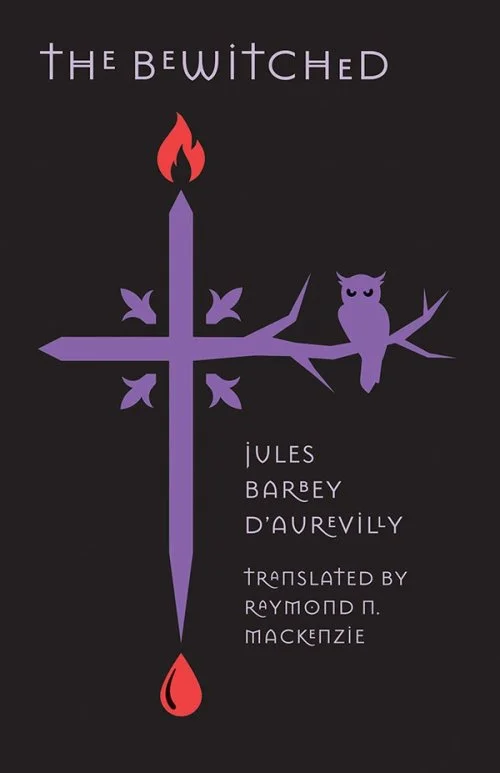
Jules Barbey D’Aurevilly’s The Bewitched Turns Gothic Unease into a Story of Desire and Loss
| Shelf | Book Reviews |
|---|---|
| Date in | |
| Readers | 400 |
A new Raymond N. MacKenzie translation brings Barbey’s winding Normandy Gothic to English readers, with its hauntings, desire and anxieties about a changing world.
“Yes, I think the vices you indulge in return to bewitch you.” That warning sets the mood for Jules Barbey D’Aurevilly’s The Bewitched, a Gothic novel in which desire seems to leave traces that no one can escape. Its mysteries unfold through a tale told on a journey across haunted moors, where uncertainty about what happened matters as much as the events themselves.
A stranger arrives at an inn and needs help crossing unfamiliar ground. The locals consider the moors haunted; one agrees to guide him and begins recounting the story behind their reputation. A mysterious priest, secret affairs, obsession and supernatural influence all figure in the account, alongside death. The plot’s turns are best left undisclosed. What matters for a new reader is the way Barbey makes the telling itself part of the suspense: each digression can deepen the sense that the story has more than one explanation.
A story shaped by its telling
The frame narrative gives the book a layered, conversational quality. The guide speaks as someone passing along a tale that may be true, distorted or impossible to verify. That uncertainty reaches beyond the ghost story: even within the novel, the line between remembered events and rumor stays unsettled. Barbey’s sentences can stretch across a page, following associations and recollections rather than moving in a straight line. The effect is winding, but it gives the reader time to feel the story gather force.
That style asks for attention, though it also suits the material. A quick, tidy account would flatten the atmosphere; here, the delays and detours leave room for suspicion to grow. The result can be both demanding and propulsive. Readers who enjoy Gothic fiction for its unsettled mood, layered testimony and sense of buried histories may find the novel’s pace rewarding, especially if they’re willing to let its long sentences lead them through the fog.
Normandy’s past presses into the present
Although Barbey published The Bewitched in the 1850s, he sets it in Normandy in the early 1800s, only a few years after the French Revolution. The region was home to Barbey’s family, and its villages, monastery and moor give the story a strong sense of place. Blanchelande monastery and Lessay moor belong to a world where merchants, former peasants and other commoners make up much of the local population. The old aristocratic order has largely disappeared, yet tensions over the country’s direction remain alive.
That historical pressure gives the hauntings a second register. The past is present in the landscape and in the loyalties that characters carry, much as the supernatural lingers in the stories people tell. Barbey’s attachment to the monarchy is legible in the book’s concerns, and Raymond N. MacKenzie’s introduction helps readers place those concerns in context. The novel considers what may be lost when a society remakes itself and when religious authority no longer shapes public life in the same way. Readers needn’t share Barbey’s politics to recognize how those questions feed its unease.
The book can be read as a Gothic tale without historical preparation, but context enriches the experience. MacKenzie’s introduction and notes offer a guide to the period and the world surrounding the story, while leaving the novel’s atmosphere to do its own work. His translation is the first English-language translation since 1928, bringing a major French Gothic work to readers who may know the genre chiefly through its more familiar titles.
A new English-language reading
Readers drawn to Frankenstein, Dracula and the Brontë sisters have clear points of connection here: a powerful setting, a strong sense of local character and the pressure of forces that resist easy explanation. The novel may also interest readers returning to John Steinbeck’s East of Eden. Both works invite reflection on family stories and the fears people attach to what lies ahead, though Barbey delivers those concerns through a distinctly Gothic frame.
The Bewitched is likely to suit readers who enjoy atmospheric fiction that leaves some questions open and lets its historical setting complicate the drama. The book’s winding prose and layered narration reward a measured reading; its accumulating secrets offer plenty to follow. One line captures the mental restlessness at its heart: “For nothing exhausts the brain like the impossibility of quieting it.” That lingering quality may be the novel’s most persuasive spell.
Fiction
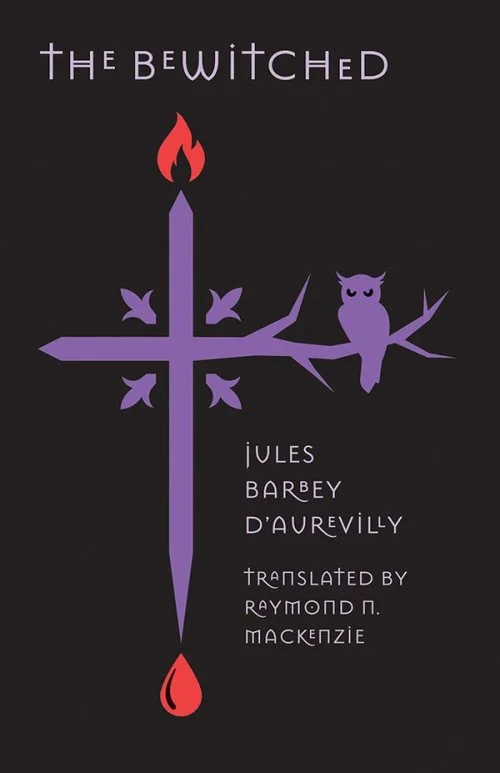
The Bewitched
By Jules Barbey D’Aurevilly
Translated by Raymond N. MacKenzie
University of Minnesota Press
Published November 17, 2026