Annie and the Old One: A Gentle Story of Grief, Family, and Weaving
| Shelf | Publishing Industry |
|---|---|
| Date in | |
| Readers | 324 |
Miska Miles’s Newbery Honor book follows Annie as she faces her grandmother’s coming death and learns how family craft carries memory forward.

Annie and the Old One finds a tender way to talk about a hard truth: a child can love someone deeply and still be unable to keep them from dying. Miska Miles’s 1971 picture book follows Annie, a Navajo girl, as she tries to delay her grandmother’s death by stopping her mother from finishing a rug. The story’s heart is not a mystery about whether Annie’s plan will work, but the slow, compassionate shift in her understanding of time, loss, and her place in her family.
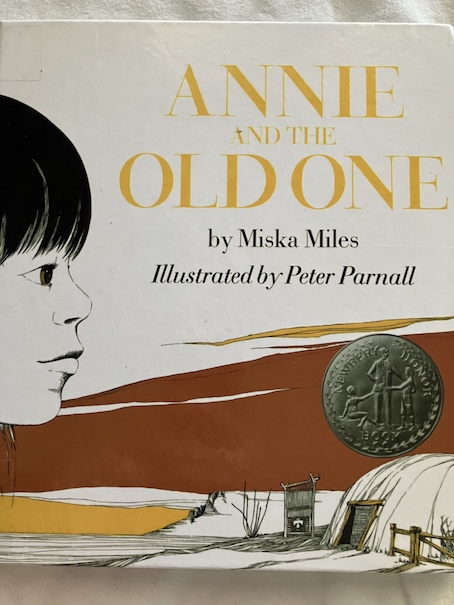
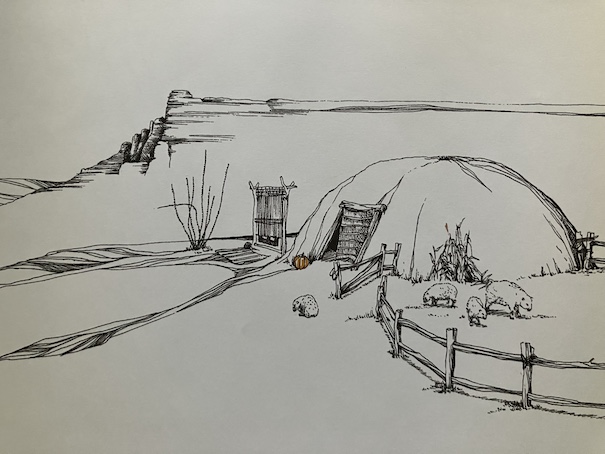
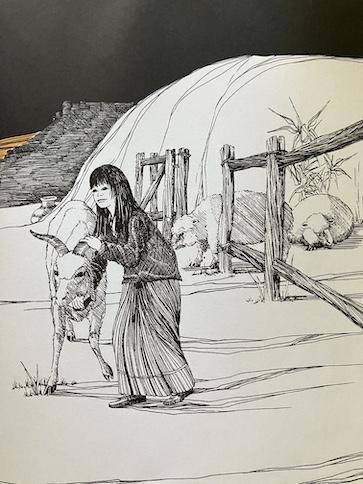
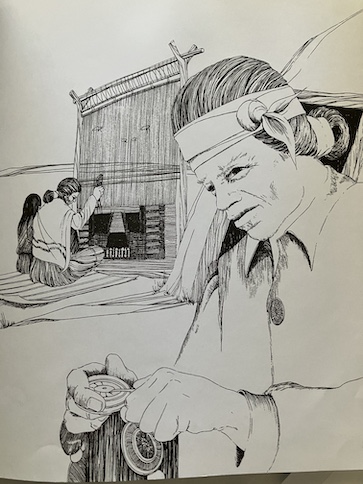
Illustrated by Peter Parnall, the book introduces Annie’s life through familiar family work and routines. She lives with her family in a traditional hogan, tends their sheep when she is not at school, and enjoys listening to her grandmother’s stories. Weaving is part of the household’s livelihood: Annie’s mother makes rugs to sell, while her grandmother is a skilled weaver whose knowledge belongs to the family as much as any object she owns.
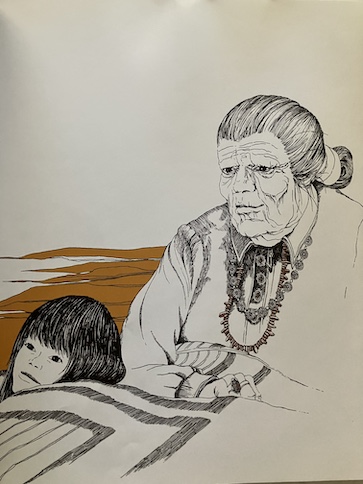
One evening, Annie’s grandmother tells the family that she expects to “go to Mother Earth” by the time the new rug is finished. The adults understand her words as an estimate of how much time she believes she has left. Annie, still a child, hears a more direct connection: if the rug is completed, her grandmother will die. When the grandmother asks each person what they would like to receive from her, Annie’s attention settles on the weaving stick. Her grandmother gives it to her, a gift that will carry a new meaning as the story unfolds.
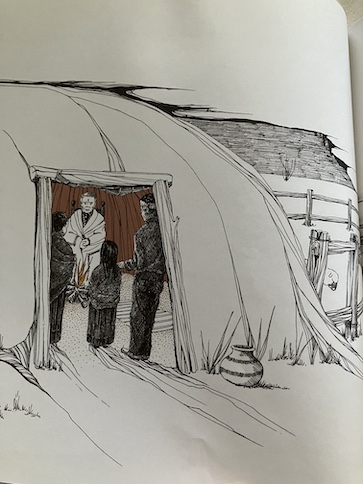
Annie asks her mother how her grandmother can know when she will die. Her mother explains that many Old Ones can tell when their time is near. Annie’s response is immediate and practical: she wants the rug to remain unfinished. If her mother stops weaving, perhaps her grandmother will stay. The family, however, needs to make rugs to sell, and her mother cannot simply abandon her work.
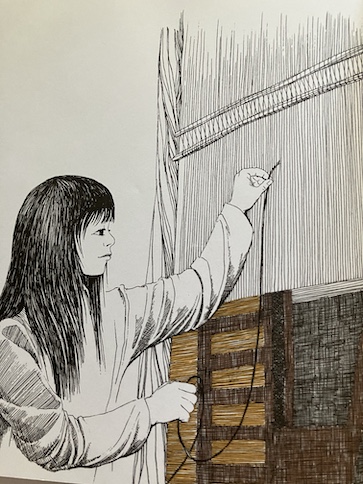
So Annie tries to interrupt it. She misbehaves to draw her mother’s attention away from the loom, then secretly loosens part of the weaving. These efforts are understandable from a child who loves her grandmother and has mistaken a rough measure of time for a cause she might control. Miles lets Annie’s fear take shape in actions rather than turning it into an abstract lesson. The rug becomes the focus of her hope because it is the one thing in the situation she thinks she can change.
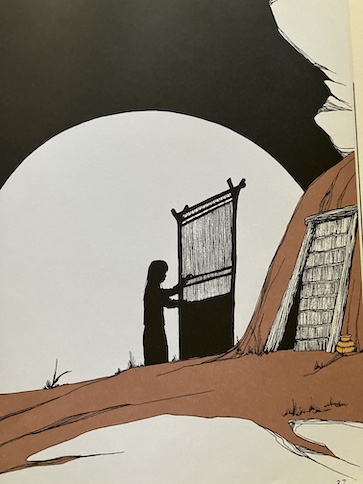
Her grandmother eventually notices and speaks quietly with her. She tells Annie that nobody can hold back time and that nature’s cycles include both life and death. That conversation changes the meaning of the weaving. Finishing the rug cannot determine when the grandmother dies, and undoing the work cannot preserve her. Annie begins to see that she can take part in what comes next by learning the craft her grandmother has practiced.
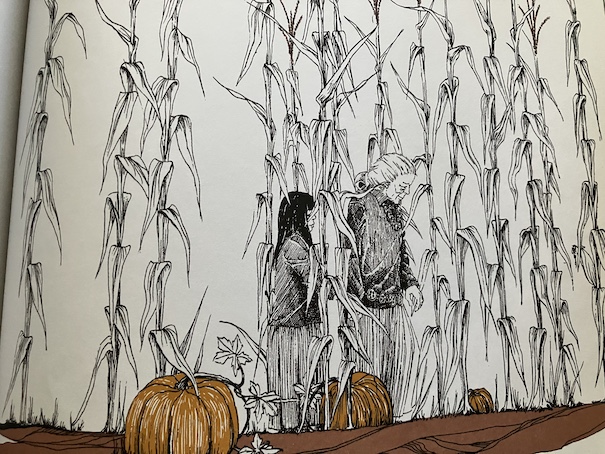
The grandmother’s role in this exchange gives the story much of its gentleness. She does not dismiss Annie’s fear or ask her to become cheerful about losing someone she loves. Instead, she offers an explanation suited to the family’s understanding of the world and helps Annie face what she cannot control. Earlier, Annie had not felt ready to learn weaving when her mother and grandmother encouraged her. By the end, she is ready to begin.
A story about what families pass on
The weaving stick is a small object with a large emotional role. Given to Annie when her grandmother speaks of her approaching death, it connects the child to a skill that has belonged to the women in her family. Annie’s decision to learn does not erase her coming loss. It gives her a way to carry something forward: the work, knowledge, and relationship she has shared with her grandmother.
My reaction to the story is shaped by an uncertain childhood memory. I vaguely recalled the title, but rereading it did not bring back the plot, and I can’t tell whether I read it as a child or heard it recommended by teachers or librarians. I grew up in the Southwestern United States, not far from where the Navajo live, where books about Native Americans of the Southwest were common in my reading life. That background makes the book feel familiar in one way, even as its specific family story came back to me as something new.
The sadness here is quiet. The grandmother does not die on the page; instead, Annie and the rest of the family begin preparing for her absence. Her gifts offer each person something to keep, and her conversation with Annie helps the girl understand that the rug is not what controls the future. The story allows a child’s literal reading of the grandmother’s words to make emotional sense, then gives her room to grow beyond it.
That balance makes Annie and the Old One a thoughtful choice for readers looking for a children’s story about grief that does not rely on a sudden, dramatic scene. Its treatment of death is matter-of-fact, but never cold. Nature’s cycles give Annie a way to understand change, while the act of weaving brings that idea back to her own family. She cannot stop time, but she can grow into a new responsibility and preserve part of what her grandmother has taught her.
The book is a Newbery Honor Book. It is available to borrow and read for free online through the Internet Archive, which lists multiple copies. For parents, educators, and book-club readers choosing a story about a child’s first encounter with death, Miles’s book offers a gentle starting point: honest about loss, attentive to a child’s confusion, and grounded in the family’s work and care.