Phillip Garland’s Run-On Finds Grace in a Seagull’s Flight
| Shelf | Publishing Industry |
|---|---|
| Date in | |
| Readers | 557 |
A sleepless new father searches for steadiness in Phillip Garland’s one-sentence novella, where a gull becomes an unexpected guide to faith and freedom.
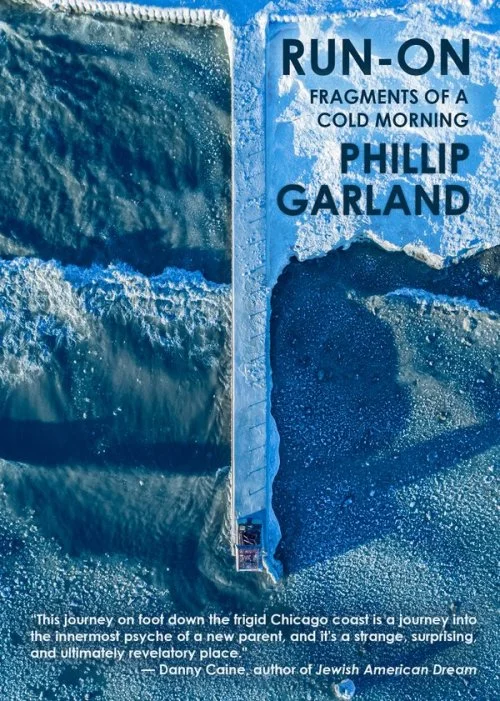
A seagull can be hard to admire when its usual associations are noise, scavenging and sudden aggression. Phillip Garland’s debut novella, Run-On: Fragments of a Cold Morning, asks readers to look again. Across one winter night and morning, a new father’s anxious thoughts gather around a gull he sees during a run. The bird becomes a point of attention in a story about parenthood, grief, belief and the difficult work of finding calm.
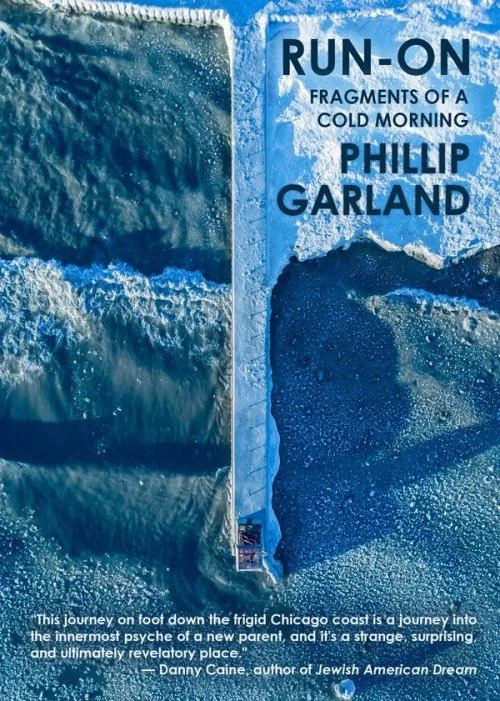
John’s son William is two months old, and John is still learning how to live with the demands of caring for a newborn. A frightening moment sets the story in motion: he falls asleep briefly while holding the baby. He responds by making tea, reading aloud and running into the cold. None of these actions quite quiets his mind. The temperatures are sharp enough to make his nose bleed, but he keeps moving, turning over fears that reach beyond fatigue.
John’s parents have both died. He and his wife, Anne, aren’t religious, yet they have chosen to honor Anne’s family history by having William baptized. That decision gives John another question to sit with as he thinks about faith, mortality, memory and what it means to welcome a child into the world. His thoughts don’t proceed in a straight line. They return, circle and press at the same uncertainties, much like a bird tracing a path through the sky.
A sentence built to keep moving
Garland gives that restless movement a striking form: the entire novella is one sentence. The pages contain no paragraph breaks or indents, and the prose largely forgoes punctuation and typographic emphasis. Commas, question marks and a single exclamation mark do much of the work. The result can feel less like a conventional narrative than an extended stretch of consciousness, carrying the reader through John’s attention as it shifts between the immediate world and the questions beneath it.

The commas are especially expressive. They offer brief pauses, like breaths that allow John to register where he is and what he sees. When those pauses disappear, the reading experience changes with them. The prose can suggest a mind overwhelmed by crying or panic, or one moving toward a more expansive state of awareness. That effect gives the book’s form a practical purpose: its unusual surface makes the reader feel the pressure and momentum of John’s inner life.
The style may invite the word “poetic,” but the stronger impression is cinematic. The prose creates a world that feels close and immediate, even when John’s attention turns inward. The reader follows him through the physical cold, the fear that follows his lapse in attention, and the changing light of morning. What happens next isn’t always obvious, and the book’s momentum depends partly on that uncertainty. Readers don’t need to be new parents to recognize the underlying concerns. Garland’s subject is also the human effort to care for someone while carrying grief, doubt and questions that have no easy timetable.
The gull as witness and guide
During his run, John sees the same gull repeatedly. His attention to it slows the book down just enough for the bird to become more than part of the scenery. One sighting stretches across two pages, following the gull as it meets the icy wind, moves out over the lake and shrinks against the brightening sky. The passage turns watching into a kind of contemplation: John studies the bird’s motion, then returns to his thoughts about prayer and the language of belief.
For John, the gull provides both a visual anchor and a spiritual prompt. Its flight gives him something concrete to observe when his thoughts threaten to carry him away. Once the bird disappears from view, his mind moves among theology, memory, dreams and desire. The gull doesn’t hand him a ready-made answer; the act of watching creates room for him to keep asking. By the end, John can approach his questions in a way that brings him peace and joy, and can begin to let go.
The reviewer’s change in feeling toward seagulls is part of the book’s appeal. A bird commonly dismissed as troublesome becomes, in this reading, an image of compassion, balance and freedom. Its ability to travel across land, water and sky suits a story concerned with boundaries between past and present, certainty and doubt, ordinary experience and the possibility of transcendence. Garland’s gull remains a bird in a specific winter morning, but John’s sustained attention lets it carry more meaning without turning it into a simple symbol.
Run-On may suit readers drawn to formally adventurous fiction and intimate stories of family life, especially those interested in how a writer can make sentence structure carry emotional weight. Its single-sentence design asks for patience, while the clear movement through John’s night and morning provides a thread to follow. The novella’s central pleasure lies in that combination: an unsettled mind, a carefully observed world and a small encounter that helps make space for a different way of seeing.
Fiction
Run-On: Fragments of a Cold Morning
By Phillip Garland
Tortoise Books
Published November 17, 2026