Anne Kampf’s Red Thread Connects Astrology, Myth and Modern Science
| Shelf | Book Reviews |
|---|---|
| Date in | |
| Readers | 546 |
Anne Kampf traces links between esoteric traditions and scientific ideas in an accessible, illustrated book for curious newcomers and seasoned readers.

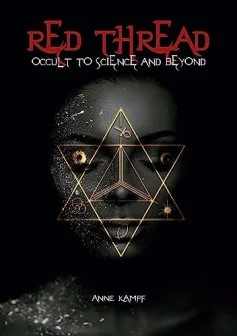
Anne Kampf’s Red Thread: Occult to Science and Beyond takes on a difficult balancing act: tracing connections between astrology, mythology and alchemy while keeping modern science in view. The book’s appeal, in the reviewer’s assessment, lies in its measured curiosity. Kampf invites readers to consider how ideas have travelled across centuries without asking them to accept every tradition on faith.
A welcoming route into esoteric traditions
The book opens with a foreword in which Kampf introduces her background and reasons for writing. The opening has a slightly tentative quality, but the reviewer finds that directness endearing. It establishes a writer who wants readers to engage with the questions ahead, rather than simply absorb a catalogue of claims.
Chapter one gives that invitation a clear shape. Framed as a beginner’s guide to esotericism, myth, astrology, alchemy and science, it lays out the book’s central territory in a concise and accessible way. Kampf moves between broad historical context and more focused details, giving readers an overview while including lesser-known information that keeps the material from feeling like a bare introduction.
That structure matters. These subjects can quickly become dense with names, symbols and competing explanations. The reviewer praises Kampf’s ability to keep the account readable without flattening its material. Her prose is lightly conversational, yet it retains a scholarly cast; personal observations add warmth without turning the discussion into uncritical enthusiasm.
That restraint gives the book room to ask questions. Kampf’s interest in the subject is evident, but the reviewer sees her as a curious guide rather than a believer insisting on one interpretation. For readers who approach occult traditions with skepticism, that balance may make the historical and philosophical connections easier to consider on their own terms.
From planetary myths to the zodiac
Chapter two turns to the solar system, examining the relationship between planets and the myths and legends reflected in their names and histories. Kampf uses questions to draw readers into the discussion, creating moments to pause and think about how inherited stories shape the way people describe the natural world.
Astrology takes the foreground in chapter three, which the reviewer regards as the book’s strongest section. Its subjects range from the significance attached to the number twelve to the ruling planets and houses associated with the signs. Kampf also brings in related legends and biblical references, widening the context around familiar astrological ideas.
The chapter’s strength, as described by the reviewer, is its abundance of connections. Readers who know astrology chiefly through the signs may find a broader framework here: symbolism, mythology and historical associations sit alongside one another. The material is presented as an invitation to explore how these traditions have developed, rather than as a promise that they can explain every aspect of a person’s life.
Chapter four shifts from the zodiac’s history and symbols to traits and physical characteristics associated with the signs. Kampf discusses common personality descriptions, then considers claims about facial features, body type, eye characteristics and eye color. Readers who are doubtful about such associations may find this section entertaining; those with a deeper interest in astrological interpretation will have more to consider.
The reviewer’s account suggests that this chapter asks for a different kind of engagement from the earlier historical material. Its subject is the way people have linked outward appearance and behavior to astrological categories. The book’s approachable tone helps carry that discussion, while readers can decide how much weight they give the proposed associations.
Where esoteric ideas meet scientific thinking
In the final three chapters, Kampf draws together themes developed earlier and turns toward present-day scientific ideas. She also makes space for concise discussions of tarot, palmistry and face reading. These sections extend the book’s survey beyond astrology, showing the range of practices included in its account of esoteric thought.
Kampf’s academic background in physics becomes more prominent as the discussion moves toward science. The reviewer notes that some passages may feel abstract to readers without a technical background. Still, the chapter structure, short sections and compact paragraphs help make the more demanding ideas manageable. Readers can follow the progression without having to absorb everything at once.
Diagrams and charts support that progression. The reviewer describes the diagrams as thoughtfully designed and the charts as useful for consolidating key information. They offer visual pauses in a book that moves between symbolic traditions and scientific concepts, and help readers keep track of ideas that might otherwise blur together.
The book’s wider ambition is to explore how older systems of thought and modern scientific approaches can be considered in relation to one another. Kampf’s approach, as the reviewer reads it, rests on careful inquiry and interpretation. Her interest in links between the subjects animates the discussion, while the accessible layout gives readers space to assess those links for themselves.
Who might enjoy Red Thread
The reviewer recommends Red Thread: Occult to Science and Beyond both to readers just beginning to explore these fields and to those who already have a more developed interest. Newcomers get a compact introduction to several traditions, while experienced readers may appreciate the connections among topics and the inclusion of material beyond astrology alone.
The review’s strongest praise is for the combination of research, lucid writing and an inviting structure. Kampf’s curiosity carries the book, but it is her restraint that helps keep the subject approachable. Readers looking for a definitive account of every tradition may want more depth in particular areas; those seeking a guided tour across mythology, astrology, alchemy and related practices will find a broad range of subjects to follow.
With its blend of historical context, interpretive questions and physics-informed discussion, Red Thread offers a starting point for thinking about how people have searched for patterns in the world around them. Its charts, diagrams and short sections make that journey easier to navigate, and its strongest invitation is to keep asking how these traditions connect—and where their explanations part company.