Louisa Morgan’s The Faerie Handmaid Brings Braithe into the Faerie Realm
| Shelf | Book Reviews |
|---|---|
| Date in | |
| Readers | 510 |
Louisa Morgan’s Arthurian fantasy gives Braithe room to step out of Morgana’s shadow in a vivid tale of faerie danger and growing courage.

The Faerie Handmaid gives Braithe, a supporting character in Louisa Morgan’s The Faerie Morgana, the chance to take the lead. The result, in reviewer Mogsy’s view, is an atmospheric Arthurian fantasy that pairs faerie lore with a satisfying story of a woman discovering her own resourcefulness. Mogsy rates the novel four out of five stars.
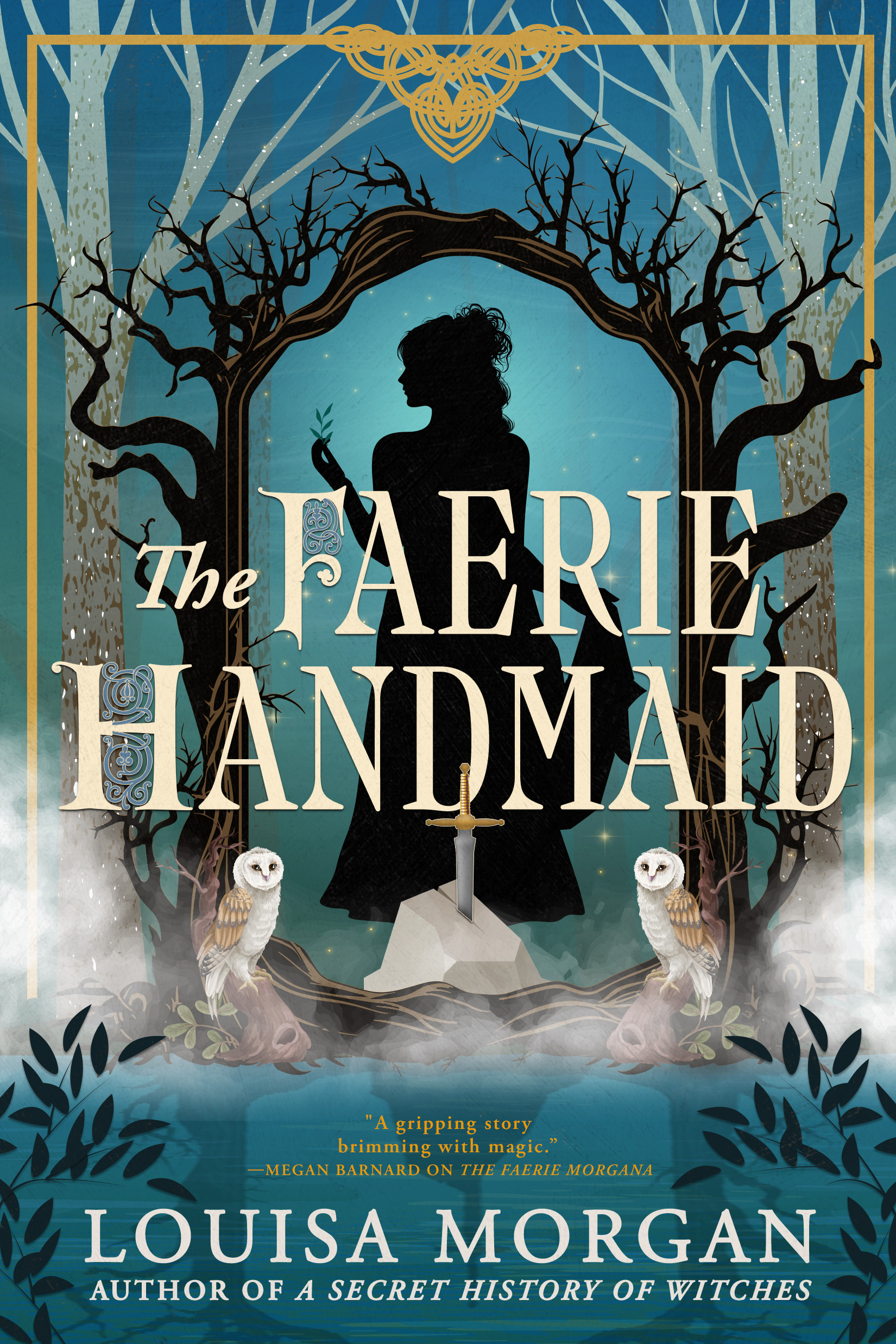
Published by Redhook on September 15, 2026, the 432-page book follows Louisa Morgan back into the Arthurian world she established in The Faerie Morgana. Though the publisher’s description does not identify it as a follow-up, Mogsy considers it the second book in that story. A new reader could follow the main events here, but would miss some of the history and character development that give the relationships extra weight. Starting with The Faerie Morgana is Mogsy’s clear recommendation.
A journey into the White City
Arthur has vanished, and a new king rules Camelud. His reign is troubled, and Merlin, known as the Blackbird, suspects an outside force may be at work. He turns to Morgana, now High Priestess, whose connections may help explain the curse hanging over the ruler.
Morgana follows her instincts toward the centre of the faerie realm. Braithe accompanies her, along with Idhri, a young ferryman’s apprentice who guides them over the water to the White City. The mission soon runs up against the fae themselves: proud, changeable and wary of human visitors. The city offers little welcome, and the travelers find that getting close to an answer brings its own dangers.
When Morgana’s attention is drawn elsewhere, Braithe has to take responsibility for Idhri’s safety. His life is threatened, and the handmaid must find a way to protect him in a place where she knows little and cannot simply depend on Morgana’s magic. That pressure gives the book its central source of movement: Braithe’s familiar loyalty is tested as she begins to act on her own judgment.
Braithe steps forward
In The Faerie Morgana, Braithe occupied a supporting role. Here, Morgan makes her the emotional centre of the adventure. She has spent much of her life on the Isle of Apples serving Morgana, whom she regards as both priestess and friend. Braithe has no notable gift for magic, and she has been content with her place beside someone she trusts. The shift in focus lets her grow without requiring her to become a different person overnight.
Mogsy especially appreciates that Braithe’s strengths emerge through practical thinking and care for others. She must respond when events become dangerous, rather than wait for Morgana to solve each problem. Morgana remains a significant presence, but the faerie realm makes her usual command of magic less reliable. That change gives the pair a fresh dynamic: experience and power still matter, while Braithe’s ability to think around an obstacle becomes just as useful.
Their relationship also gains room to breathe. A familiar bond can look different when the person accustomed to leading cannot control every situation. Braithe’s increasing independence adds tension to the journey while keeping her loyalty to Morgana intact. For readers who enjoyed their connection in the earlier novel, this altered balance is one of the sequel’s most rewarding developments.
Folklore with forward momentum
Morgan’s prose gives the setting much of its appeal. Mogsy praises the evocative detail and immersive atmosphere, qualities that make the world feel inhabited rather than merely arranged as a backdrop for the quest. The author draws on Arthurian legend while shaping characters who feel distinct from stock figures in familiar myths. The fae bring their own caprices and customs to the story, and their presence keeps the journey uncertain.
The book also marks a shift in emphasis from Morgan’s earlier witch-focused novels. Those works lean more firmly into historical settings; The Faerie Handmaid and its predecessor move further toward fantasy and mythology. Mogsy welcomes that change, finding that Morgan’s interest in folklore and feminine magic carries naturally into this more overtly enchanted setting.
For Mogsy, the storytelling balances atmosphere with urgency. The scenes have a sense of immediacy, and the conflicts keep the narrative moving. That pace helps the richly described world remain accessible, even as the characters cross into a place governed by unfamiliar powers. Readers get time to absorb the setting without losing sight of the danger facing Braithe and Idhri.
Who might enjoy it
The Faerie Handmaid looks like a good fit for readers seeking approachable fantasy, faerie lore and a fresh engagement with Arthurian magic. Its most appealing thread is Braithe’s gradual emergence as a capable central character, supported by the atmospheric world and Morgan’s folklore-inflected style. Readers who prefer a historical setting may find this pair more mythic than Morgan’s earlier work, while those eager for another journey into faerie country may welcome the change.
Mogsy’s four-star response reflects an enjoyable return to Morgan’s Arthurian retelling and a particular pleasure in seeing Braithe claim more space in the story. The novel can be followed on its own, but its character work gains depth from the first book. For anyone curious about this corner of Morgan’s fiction, The Faerie Morgana is the natural place to begin.