The Great Turkey Heist: A Boxcar Children Mystery About Charity and Second Chances
| Shelf | Genre Fiction |
|---|---|
| Date in | |
| Readers | 523 |
The Alden children investigate sabotage at a new food pantry, while Tom the turkey’s surprising appearances bring the town together.

In The Great Turkey Heist, the 129th Boxcar Children mystery, Gertrude Chandler Warner puts the Alden children on the trail of a puzzling question: who would sabotage a food pantry at Thanksgiving, and why? Published in 2011, the story mixes a community mystery with the series’ familiar interest in understanding people who have made poor choices.
Mr. Grayson, a friend of Grandfather Alden’s, has just opened a restaurant and wants to start a food pantry for people in need. His own childhood, when his family often struggled to find enough to eat, inspired the project. But the restaurant demands much of his time, so the Aldens step in to help gather donations and get the pantry running.
A pantry under pressure
At first, the community responds well. Local businesses display the children’s flyers, and residents donate canned goods. Then a series of incidents turns the pantry’s launch into a mystery. Someone shoves Mr. Grayson while he’s carrying donations, steals the pantry’s sign, throws a garbage can full of rubbish at its door and takes a jar of donated money.
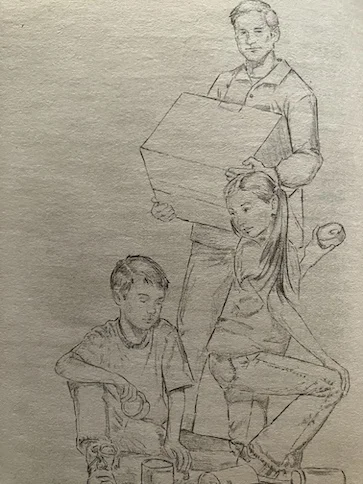
The most conspicuous theft is Violet’s large turkey shaped sign, soon named Tom by Benny. The sign begins turning up in unexpected places, including a movie theater and a football game. A local reporter covers the pantry, its fundraising and Tom’s odd travels. The attention seems to help donations, raising a question the children can’t ignore: is someone trying to damage the project, or are the strange events somehow bringing it support?
Ms. Matthews, who owns a restaurant across the street from Mr. Grayson’s, looks like an obvious suspect. She’s openly angry about his arrival and says he’s a fraud, accusing him of using donated food in his restaurant while claiming to serve organic food. She’s especially worried about his plan to offer a free Thanksgiving dinner to anyone in need. In her view, that meal will draw customers away from her own Thanksgiving service.
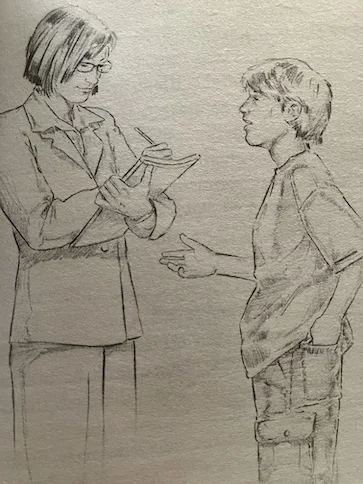
But the clues don’t point neatly to Ms. Matthews. The person who shoved Mr. Grayson was a man, as was the person seen taking flyers from local shops. The Aldens also consider Mr. Higgins, a grocer who fears that food donations will cost him business. And Mr. Grayson’s calm response to the stolen money makes the children wonder whether some of the apparent trouble might be part of a publicity scheme.
What the mystery asks of its characters
The reviewer’s main reservation is about how readily the adults’ suspicions take hold. Mr. Higgins imagines that a food pantry will somehow deprive his grocery store of customers, while Ms. Matthews assumes a free meal for people in need will compete with her restaurant for the whole town’s business. The reviewer finds both fears hard to believe: donations have to come from somewhere, and people who can’t afford food are unlikely to be choosing between paid meals and a free charity dinner.
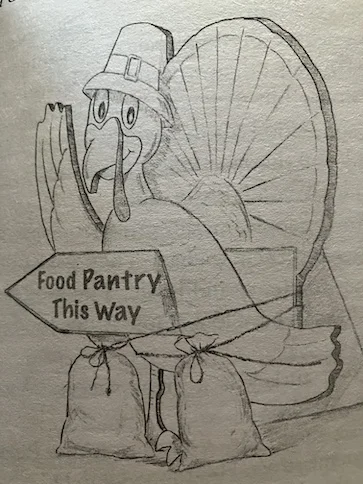
That skepticism gives the conflict an edge. The reviewer sees the characters’ fears as selfish and petty, particularly because the project is intended to help people who are struggling. In a series that often resolves its mysteries through forgiveness, the reviewer wondered whether that kind of response would feel too easy after an adult had shoved Mr. Grayson and stolen from a charity supported by children.
The explanation, as the reviewer describes it, combines genuine sabotage with someone’s effort to turn the disruption to the pantry’s advantage. The person behind the sabotage comes to see the harm in their behavior after watching how the town responds. The food pantry also changes the perspective of its critics: people who had treated it as a threat recognize that it can benefit the community, and even their own businesses.
That turn fits the book’s forgiving tone. The critics apologize and contribute to the pantry, while Mr. Grayson is forgiven for his own share of the deception because his actions were meant to support the cause. The reviewer still finds parts of the adults’ reasoning frustrating, but sees the resolution as consistent with a Thanksgiving story about reconsidering grudges and making amends.
Tom steals the show
The reviewer’s favorite thread is the turkey sign’s increasingly theatrical itinerary. Tom appears on a movie theater stage, joins a marching band and eventually reaches a rooftop, eluding the people trying to catch up with him. The episodes give the mystery a playful streak and become a source of fascination for the town.
Tom’s appearances also connect the book’s two central pleasures: following a trail of clues and watching a community rally around an unlikely cause. For readers who enjoy the Aldens’ gentle mysteries, the book offers a seasonal puzzle with an upbeat resolution. And for the reviewer, the runaway turkey is the star of the story: Tom’s antics make a food pantry mystery feel like a proper Thanksgiving adventure.