LMU Handbook and Microgrants Help Faculty Create Open Textbooks
| Shelf | Authors & Interviews |
|---|---|
| Date in | |
| Readers | 756 |
LMU’s handbook and OATI microgrants support faculty reviewing or adopting open materials, with examples in chemistry and filmmaking.
Faculty at Loyola Marymount University can draw on a practical handbook, peer examples and microgrants to review or develop open course materials. The work addresses a familiar classroom problem: students may skip assigned reading when a textbook costs too much, while instructors can struggle to find an affordable replacement that fits their course.
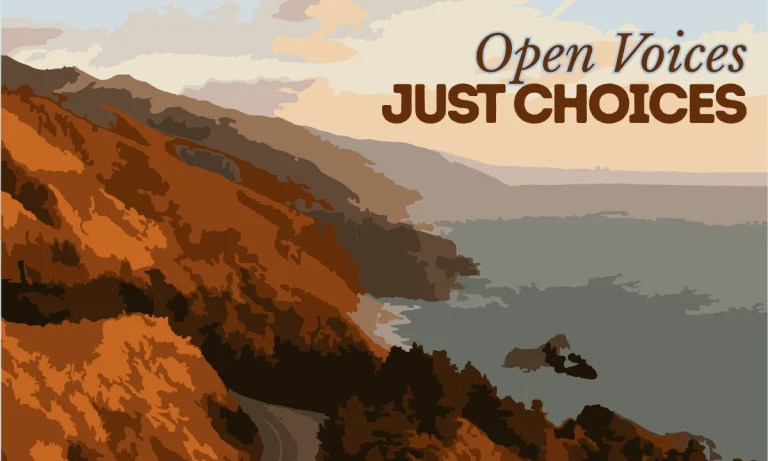
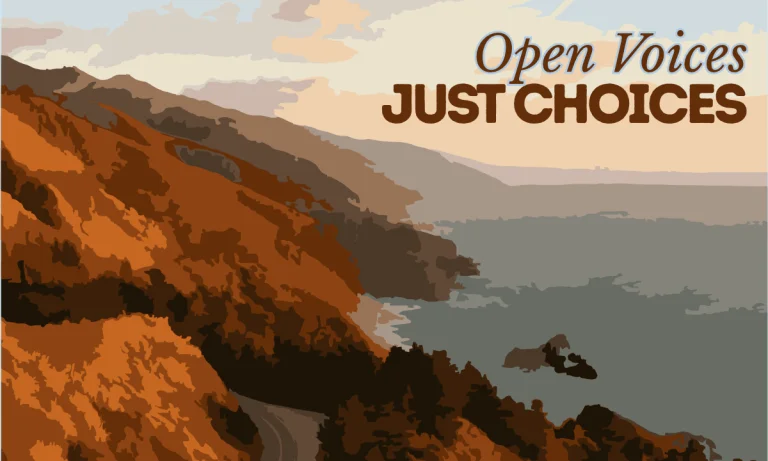
Open educational resources (OER) are free to use and openly licensed, so instructors can adapt them. That might mean updating a few references, combining existing resources or creating a new textbook for a particular course. LMU’s “Open Voices, Just Choices: OER for Social Justice Faculty Handbook” offers guidance across those approaches, and the library’s Open and Affordable Textbook Initiative (OATI) provides financial support for faculty taking the first steps.
A guide shaped with faculty
Karna Younger, LMU’s open educational resources librarian, writes that she and Theresa Huff developed and tested the handbook with 39 faculty members. Participants came from LMU, University of San Francisco, Santa Clara University and Saint Mary’s College of California, through the library’s three-year OER for Social Justice initiative.
The handbook follows the OER lifecycle, from planning and copyright considerations through accessibility, inclusive design, publishing and long-term sustainability. It also covers Pressbooks, H5P and open pedagogy, with tools, templates and examples intended to help faculty put the process into practice. Its case studies show how LMU instructors have created and used open resources in their teaching.
That breadth matters for faculty who may be starting with a small adaptation rather than a full textbook project. A course team can identify the parts of an existing resource that need revision, consider how students will access and use the material, then choose tools and publishing methods that suit the work. The handbook’s examples offer a route from those decisions to a resource that can be used in class.
Students as contributors
The handbook connects inclusive teaching with open pedagogy: students can contribute learning and work to an OER, with care for their educational, intellectual property and privacy rights. The aim is to create authentic opportunities for students to explain how course ideas relate to their lived experiences, while making room for perspectives that course materials may otherwise leave out.
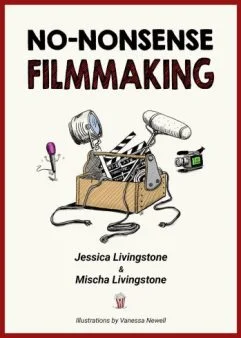
Jessica and Mischa Livingstone’s “No-Nonsense Filmmaking” illustrates that approach. The authors worked with student filmmakers to pair technical instruction with examples of student films. Student auteurs reflect on applying skills from PROD 100 to their short films, which appear in the textbook alongside the lessons.
Younger reports that the student sketches were a consistent hit with anonymously surveyed students. One respondent praised the range of backgrounds and perspectives represented, saying, “They had people from all different backgrounds speaking and sharing their own perspectives in terms of that lesson’s topic, which I enjoyed and found to be inclusive!” The example gives faculty a concrete model for bringing student work into a resource while connecting it directly to course learning.
Making equations and practice accessible
“General Chemistry 3e: OER for Inclusive Learning,” created by LMU’s Department of Chemistry and Biochemistry team, shows how technical choices affect access. The team includes Nicole Bouvier-Brown, Emily Jarvis, J. Ryan Hunt and Saori Shiraki. Shiraki worked to make the textbook’s many equations accessible to students using assistive technologies.
The handbook explains how the team avoided relying on equation screenshots. Instead, it used MathML and LaTeX equations rendered with MathJax to create accessible formulas in Pressbooks. For faculty building materials with mathematical content, the example shows how the format of an equation can determine whether students can access its essential information.
The handbook also explains how to add interactive exercises using H5P. Its guide to H5P activity types covers ways to present graphical information, check understanding and prompt reflection through essays and other activities. In “General Chemistry 3e,” Ryan Hunt placed multiple-choice questions alongside Shiraki’s equations so students could practise concepts and receive immediate feedback. Faculty can also automatically grade H5P activities with Brightspace.

Microgrants and reported savings
LMU is accepting applications to review existing OER in November 2026. Faculty who review a resource by Monday, November 16 can receive $300. Those who choose to use an OER in a course can receive an additional $700 and join a community of practice. Details and the application are available through the OATI program and its application form.
Applicants are asked to register for and attend the “How to Identify, Locate, or Review OER” workshop on Friday, November 6, from 12 to 1 pm. Faculty can also contact Karna Younger at [email protected]. Further OATI opportunities are planned for the spring.
The OER for Social Justice initiative resulted in 11 resources being implemented across LMU, Santa Clara University, Saint Mary’s College of California and University of San Francisco. LMU reports that the materials saved 723 students $84,547.62 in fall 2025 and spring 2026. All sections of General Chemistry I and II use “General Chemistry 3e”; the library says that saved nearly 400 students more than $44,000 last year. In the School of Film and Television, instructors’ use of “No-Nonsense Filmmaking” saved more than 250 students over $30,000 in textbook costs.
Faculty can explore all 11 OER authored by OERFSJ faculty and the handbook. With the guide, examples and microgrant support, instructors can assess whether open materials fit their courses and build from tested practices already in use across the partner institutions.
The post Library Offers Funding and Handbook for OER Faculty Authors appeared first on LMU Library News.