Tim Raymond’s Flee Follows Grief, Memory and Survival in a World of Changing Bodies
| Shelf | Book Reviews |
|---|---|
| Date in | |
| Readers | 982 |
In Flee, an autistic former teacher and his young student travel through a transformed South Korea, where grief and memory shape their search for safety.
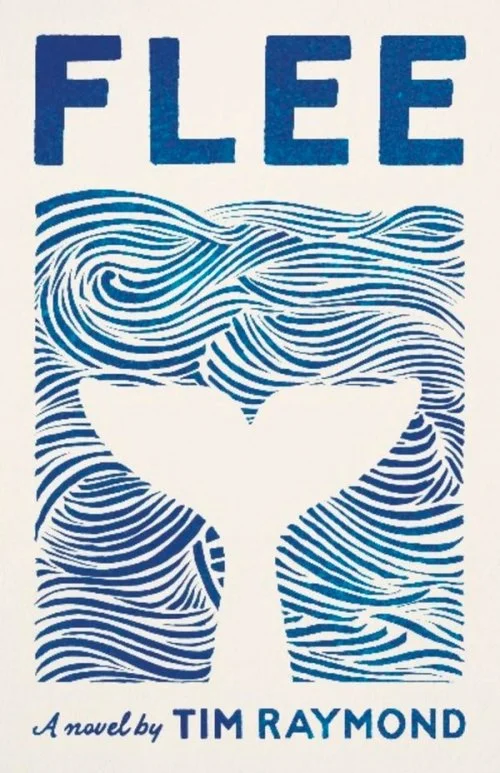
Tim Raymond’s debut novel Flee turns an impossible transformation into a story about the work of caring for others while carrying loss. In its altered version of South Korea, a virus called Novel Aquatica changes infected people into beluga whales. Former English as a Second Language instructor Jensen Fisher, autistic and in his late thirties, must leave his apartment and look after Min-kyoung, a former student who has lost her mother. With Jensen’s cat Ori beside them, the two set out to find a way to keep living.
The novel draws on speculative fiction, autofiction and survival storytelling, but its emotional center is more intimate than the premise suggests. Jensen’s journey through a changing world repeatedly opens onto memories of his late wife, Yoon, family members he has lost touch with and the ways other people have misunderstood him. Those recollections don’t simply explain the past. They interrupt the present, sometimes offering a way to make sense of it and sometimes pulling Jensen away from the immediate demands of travel and care.
Memory travels with them
Raymond gives Jensen a mind that moves associatively, with the past surfacing in the middle of conversations and practical decisions. Chapters may begin before the outbreak or slide between Jensen and Min-kyoung’s exchange and his recollections. This structure makes memory feel less like a neat account of what came before than a force that can shape attention in unpredictable ways. The movement is often effective, though at points the narrative briefly loses its bearings before the events of the journey draw Jensen back to the present.
Popular video games offer the pair another way to think through danger and uncertainty. Jensen reaches for references to Zelda: Breath of the Wild and Hades as they search abandoned malls for food or weigh possible routes along the mountainside. The references give them a shared vocabulary while lending the novel some of its humor. They also sit alongside the more difficult work of making choices for one another, especially when neither character can know what lies ahead.
Jensen’s memories of social encounters bring his autism into focus without reducing him to a single trait. Raymond, an autistic, nonbinary writer based in South Korea, gives Jensen experiences connected to social masking, stimming and distinctive patterns of thought. The novel is attentive to the distance between how Jensen understands himself and how strangers read him. It also shows his resourcefulness and creativity as part of ordinary life and problem-solving, rather than as a surprise that needs to be explained.
Care in the face of change
One of the journey’s most affecting episodes brings Jensen and Min-kyoung into contact with a woman who is infected and beginning to transform. As the woman loses speech and the ability to move on land, Min-kyoung comforts her and helps her reach a nearby river. The scene makes the virus’s strange premise immediate: transformation is not only a spectacle, but a change that leaves people around the infected person facing urgent, tender decisions. Min-kyoung’s actions reveal the practical care she can offer even as she is grieving her mother.
The novel also considers how a sense of home shifts when daily life becomes constant relocation. Jensen and Min-kyoung’s route through unfamiliar places gives those questions a physical shape, while Jensen’s recollections of Yoon and his family show how people can remain present in memory even when they are absent from his life. Raymond’s storytelling suggests that grief can draw people together and leave them isolated at the same time. That tension gives the relationship between Jensen and Min-kyoung room to develop through shared experience, rather than through easy assurances.
Jensen’s reflections on Korean culture are less evenly handled. At times, his descriptions of the language and local life seem idealized, and his perspective doesn’t always account for the nuances he’s trying to describe. Min-kyoung provides a useful check when she notices that survivors have chosen foreign representatives to guide them around their encampment. She suspects they want to reassure Jensen, whom they see as the adult outsider, that the place is safe. Her reading corrects his assumptions and gives her insight a clear place in their relationship.
That exchange captures one of the book’s stronger ideas: understanding is something people have to keep revising. The characters’ changing circumstances expose the limits of what they think they know about home, other people and themselves. Raymond’s comparisons range from sailors recounting travels to people describing illness and video game characters enduring the afterlife. These stories widen the novel’s view of whose experience can help make sense of dislocation and loss.
Flee brings humor, speculative strangeness and mourning into the same journey. Its wandering structure occasionally clouds the route, but it suits a story in which memory keeps intruding on the work of getting through the day. Readers drawn to character-led speculative fiction, autistic perspectives and stories about care under pressure may find its strongest moments in the small acts that make survival shared.
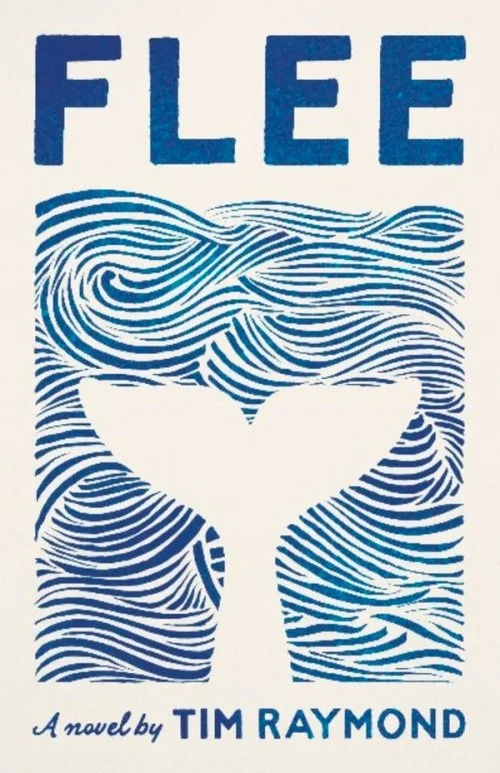
FICTION
by Tim Raymond
Button Poetry
Published on November 24, 2026