Gabriel Bump’s Don’t Stop Snowing Finds a Way Through Heartbreak in Community
| Shelf | Publishing Industry |
|---|---|
| Date in | |
| Readers | 404 |
Gabriel Bump’s third novel follows a father tracing his family’s heartbreak and finding that connection can offer what books alone cannot.
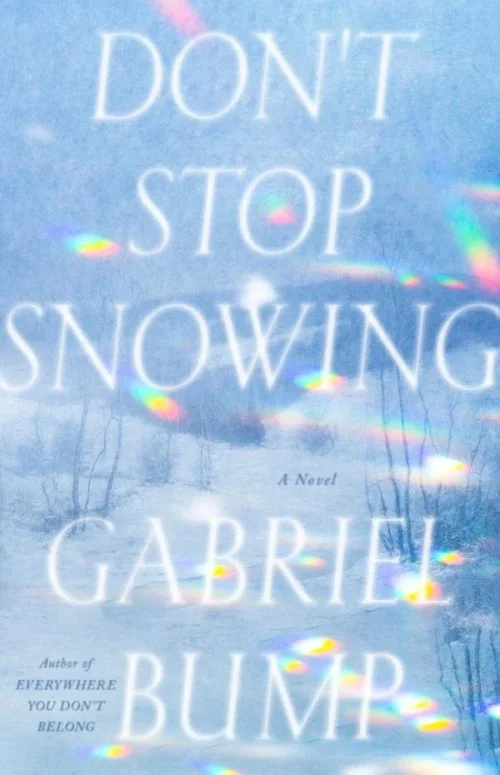
Books can offer shelter from pain, but Gabriel Bump’s Don’t Stop Snowing asks what happens when shelter becomes a place to hide. In Bump’s third novel, a father tries to interrupt a family pattern of romantic despair. His search leads him toward an unruly community whose members pull him back from reflection and into the life unfolding around him.
David, a middle-aged man living in North Carolina, recognizes a familiar hurt in his 20-year-old son’s heartbreak. The resemblance sends him looking across three generations: his son, himself, and his father have all endured lovesickness that threatens to consume them. David wonders whether the men in his family share a weakness, asking, “Maybe in both of my trees, there is some strain of cowardly men.” The question carries urgency. He fears his son may follow the same path and wants to understand what might help him avoid it.
Those fears reach back to David’s own collapse after graduate school. He fell in love with Pidge, and the two spent three years living together before she ended their relationship one morning. David returned to his mother’s house and withdrew from the world. His parents eventually sent him to stay with his cousin in Buffalo, hoping that a different setting might help him recover.
Buffalo interrupts the inward spiral
There, David encounters people whose eccentricities resist the tidy explanations he prefers. His cousin Flip, once a bookseller, arranges books according to spiritual principles—or through violence. Spider-Man, a boy who admires James Joyce, sneaks food from the refrigerator. Quadberry, who runs a local bookshop, takes his name from a character in a Barry Hannah story. They offer David bits of advice that are less practical than memorable: “Life is a series of fishbowls,” and “Go get some ice cream. Go watch people lose their minds.”
Their oddness matters because they give David company without handing him a neat cure. Books and literary conversation remain part of his life, but the people around him keep those interests from becoming an excuse to disappear inside them. His father, a gifted humanities scholar, turned to the classics while his marriage broke apart. David sees the danger in following that example: books can illuminate experience, but they can also help a person keep experience at a safe distance.
Bump makes that tension vivid in a neighborhood bar, where David and his cousin hear a stranger speak at length about climate change. The man’s account ranges across failed expeditions, darkening waters, melting snow in Peru, altered currents, swollen riverbanks and unusually large otters. David begins trying to interpret the outburst as though it were a piece of literature. His cousin cuts through the exercise: “Enough with the books. This is real life.”
The rebuke gives the scene its force. David’s habit of analyzing events can be a way to make meaning, but it can also keep him at the center of every moment. His cousin and, at times, people he barely knows challenge that self-absorption. The interruption is not presented as a grand revelation. It’s an insistence that the world beyond David’s thoughts deserves his attention, too.
A different inheritance
As David becomes more involved in Buffalo’s disorderly rhythms, his pain begins to change its proportions. Pidge’s departure still hurts; the novel doesn’t pretend that connection erases heartbreak. But the breakup stops serving as the defining event around which every other part of his life must turn. It becomes one part of a larger account, alongside the unexpected encounters and shared life that have gathered around him.
That shift gives the book’s family question a more human answer. David may not be able to solve his son’s heartbreak or guarantee that the next generation escapes suffering. He can, however, offer a model different from his father’s retreat: stay present, accept other people’s interruptions, and make room for experiences that don’t fit into a private story. The novel’s idea of healing is communal and imperfect, built through contact rather than a single insight.
That approach will speak especially to readers who turn difficult feelings into subjects for analysis, and to book-club groups interested in how family patterns shape adult lives. Bump keeps literature close to the novel’s center while questioning the limits of treating it as a substitute for human company. Don’t Stop Snowing suggests that books can accompany us through despair, but people are the ones who can call us back into the present. The path David finds is uncertain and untidy; its clearest promise is that he doesn’t have to walk it alone.
FICTION
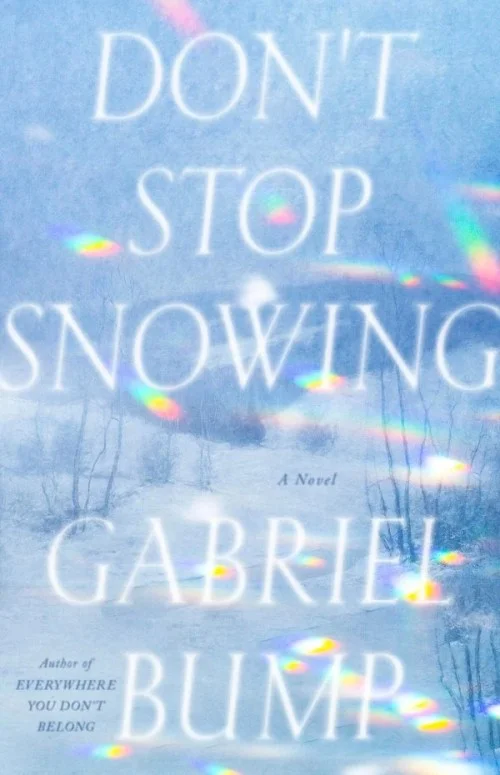
Don’t Stop Snowing
By Gabriel Bump
Algonquin Press
Published November 10, 2026