Ber Anena on Memoir, Migration and Holding on to Her Name
| Shelf | Book Reviews |
|---|---|
| Date in | |
| Readers | 491 |
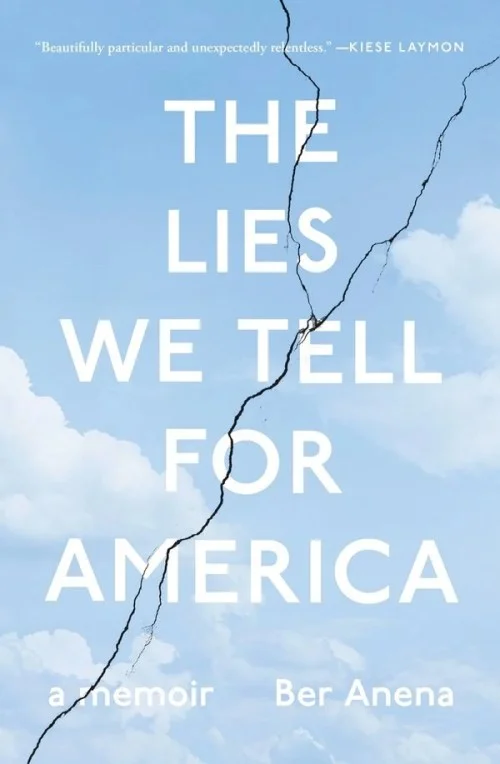
In The Lies We Tell for America, Ber Anena writes about leaving Uganda, finding her footing in New York and protecting the parts of herself she wants to keep.

Ber Anena’s memoir, The Lies We Tell for America, begins with a pursuit of opportunity and opens onto a more complicated question: what does it cost to belong somewhere new? Accepted into Columbia’s MFA program, Anena left Uganda for New York in 2019. The financial strain of getting there, the disorientation of starting over and the pressure to adapt became the material of a book about endurance, identity and the distance between an imagined home and the place that keeps changing while you’re away.

In conversation with Tryphena Yeboah, Anena reflects on writing through hardship, the craft choices that reshaped her memoir and the value of retaining her name and accent. Her account moves between personal experience and broader questions about cultural expectations, education, mental health and the ways people are treated when their differences become newly visible.
Home changes while you’re gone
Anena expected to miss her family and friends after leaving Uganda. The intensity of that longing surprised her: she describes it as a physical distress, one that kept her close to remembered conversations, familiar food, places and voices. For nearly three years, those recollections offered a version of home she could carry with her.
Returning to Uganda in 2022 brought a difficult recognition. The home she had preserved in memory had not waited unchanged. Her mother now used a crutch; her grandmother still laughed warmly but had lost some teeth with age. Some friendships felt different, and a few friends seemed unsure how to relate to Anena after her time in the United States. Kampala, where she had lived for close to a decade before moving, had smoother streets, taller buildings and more upscale gathering places. Other things remained familiar, including the unruly traffic of boda bodas and corruption as part of daily life.
The encounter unsettled the neat division between the place she had left and the one she had entered. Nostalgia had held Uganda still in her mind, but the years had continued to pass for the people and places she missed. Her account suggests that returning can require a second kind of adjustment: accepting that a beloved home is both recognizable and changed.
Anena had changed, too. She says New York had chipped away at her timidity. She spoke more audibly, met people’s eyes for longer and grew more confident. As a child, she had been taught that politeness meant speaking little and keeping her voice low—qualities associated with being a good girl or woman. In New York, she found that those habits could work against her. Speaking clearly and showing self-assurance helped her get heard and make her way through the world around her.
Distance also changed how she saw Uganda. Before leaving, she says, it was easier to focus on the country’s shortcomings. Life abroad made its difficulties no less real, but also sharpened her sense of what she valued at home. On returning, she tried to notice what was working and to extend grace to herself and her country where it was not. The shift was not a simple rejection of one place for another. It made room for appreciation without requiring her to overlook what needed to change.
From journalism to memoir
Anena’s path into nonfiction began with journalism. She studied the subject for her bachelor’s degree and spent about four years after graduation working as a writer and editor in a newsroom. Poetry was already part of her life, but creative writing was not a readily available university pathway in Uganda. Literature was taught, she explains, yet the curriculum offered little incentive or space for students to produce their own creative work.
Journalism gave her a way to write, even if it was a different kind of writing. It also brought her into Kampala’s literary community. Stories gathered on field assignments later appeared in her poetry, while blogging kept her close to a journalistic approach. As she met more writers, she began considering a program in creative nonfiction. Still, when she was accepted into an MFA, she had another nonfiction project in mind. A memoir was not yet part of the plan.
The idea took shape during her attempt to fund her studies. Anena raised money through GoFundMe and found the process of asking individuals and companies for support painful and anxiety-inducing. The difficulty prompted questions larger than her own application: why was scholarship support in the United States so hard to secure for an African woman in the arts, and were other people facing similar obstacles?
She hoped the move to New York might make things easier. Well-wishers had encouraged that expectation, and she believed that once she arrived, the path to her degree would become more manageable. Instead, the first years proved difficult. Around a semester into the MFA, with the pandemic approaching and the possibility of leaving the program becoming real, Anena began writing the memoir.
The book thus grew from the circumstances that threatened to interrupt her education. The struggle to reach the program and the challenges of remaining in it gave her a subject that extended beyond the degree itself. She could examine the gap between the promise attached to opportunity and the daily work of trying to make that opportunity possible.
Friendship, humor and a writing routine
The memoir holds hardship alongside friendship and care. Anena says that balance emerged naturally. Building close relationships in a new place can take time, courage or luck, especially when everyday social habits differ from those at home. She describes some interactions in the United States as more businesslike than the familiar custom of offering greetings freely. Misreading those differences, she says, can leave a newcomer feeling estranged.
That makes the people willing to meet her with curiosity and openness especially important. When someone made room for her unfamiliarity, Anena valued the connection. Those friendships carried particular weight when her resources were largely hope, prayer and the ambition that had brought her to New York.
Humor became another way to carry difficult material. Anena did not initially recognize it as a deliberate part of her memoir’s style. A workshop professor pointed it out in feedback, and classmates made similar observations. Their responses prompted her to pay closer attention to the effects of her language.
She traces the instinct to her upbringing, where humor could ease grief, tension between relatives or a fight, as well as enliven happy occasions. Families often had a grandmother, aunt or uncle whose stories brought everyone to laughter. Writing about her own trials, Anena suspects, brought that familiar way of coping to the page. Because memoir draws on lived experience, humor also gave her a little distance from the events and helped relieve their weight in the writing.
Writing itself has long offered Anena a way to understand what she was living through. She began by putting thoughts on paper to get out of her own head and make sense of a world where peace and safety felt unfamiliar. Her first poems are in a long handwritten book, creations she still considers private and sacred. She later published just one of those early poems, which appears in the memoir.
The MFA gave her a more structured practice. Class deadlines shaped her work, and she developed a routine that included meeting a writing partner, Saida, every weekend. The arrangement meant she needed new pages each week. Once she knew the memoir would serve as her thesis, she had another reason to keep going: she wanted to finish a rough draft before leaving the program and make time for as much feedback as possible.
Rebuilding the memoir’s shape
Feedback still brings some anxiety, Anena says, particularly on a book project. She prepares herself before reading notes because her first reaction is often to imagine how much work they will require. After she has read them, she takes days to consider each suggestion and picture possible new lines. By the time she sits down to revise, the work tends to move more smoothly. Receiving comments has become less daunting over time, and she is learning to edit her own work more rigorously before sharing it.

Revision changed the memoir’s structure as well as its content. The first draft lacked its final two sections. Since the publishing process took time, Anena needed to write new chapters that could account for what had happened in the meantime. An epilogue alone would not give those developments enough room; they were closely connected to the book’s central story and deserved fuller treatment.
Her original structure was thematic, made up of chapters that could stand on their own while connecting to one another. Reworking it into a linear narrative became the most challenging part of revision. Anena compares the process to pulling down a house and beginning again with only the foundation intact. The thematic version had allowed her to approach the material through related ideas, but it also risked repeating context and confusing the timeline. For a memoir, she decided, the reader needed a clearer progression through events than that structure could provide.
The overhaul gave the story a more coherent line while retaining its underlying concerns. It also reflects a practical lesson in shaping personal material: a structure can suit an early draft and still need to change when the writer sees how readers will encounter it. Anena says she was pleased with the result.
Poetry’s place in prose
Poetry remains close to Anena’s nonfiction practice. She admires how poetry demands that each word earn its place, and she brings that attention to diction and concision into her memoir revisions. Prose, meanwhile, gives her more room to use humor and other literary devices. Some moments in the narrative seemed to call for poems, and she included work that had begun in other manuscripts.
For Anena, this crossing between forms is not a problem to solve. Poetry was her first creative writing, and she wonders whether her interest in blending genres reflects a lasting attachment to that early love. She has no fixed rule for choosing between prose and verse. Sometimes a subject seems to belong naturally to one form; at other times, she writes about the same subject in more than one genre to see which version works. Writing, she says, can involve a gamble.
Belonging without surrendering identity
Adapting to New York raised questions about what Anena would have to change in order to fit in. At one point, she tried to learn an American accent and to move away from using her last name. She eventually stopped. As she puts it, “In my pursuit to belong, I realized I was losing myself.” Her name and accent connected her to where she came from and to her mother tongue; changing them made her wonder who she would be without those markers.
She also jokes that her unsuccessful accent training may have been a message from her Acoli ancestors. But the choice went beyond a failed exercise. Reading widely in her writing program introduced her to different ways of seeing and being, and led her to ask where she fit among them. Keeping her name and accent became a way to reclaim a sense of self.
That decision has not ended the work of adapting. Anena says the push and pull continues in other parts of her life and probably will not disappear. What matters to her is preserving some part of her identity as sacred and whole, even as she encounters new cultures and expands who she can become.
Personal experience and wider questions
Anena wanted the memoir to reach beyond a record of her individual experience. Events such as being searched at an airport and having her complaints disregarded by her school prompted her to connect personal hardship with broader experiences faced by people arriving from the Global South and with indifference within academic institutions. She looked for links between the events in her own life and the systems shaping them, hoping readers could recognize more than one person’s story in the book.
Mental health forms part of that account. Anena says therapy was not something people in her community typically turned to in the way it is understood and practiced in the West. During a period when mounting difficulties at school made it hard to get through each day, she tried it and says it saved her life. Therapy helped her through a mental health crisis, but also gave her a clearer understanding of how culture and inherited beliefs had shaped her.
That self-knowledge helped her examine friendship, authority and the contradictions in her own life. She could be comfortable opening up to a therapist she had just met while finding it harder to speak with her family, even as she believed in the closeness of family ties. The tension did not cancel either experience. It gave her something more complicated to think through on the page.
Moving also changed how she experienced difference. Anena reflects that colorism, which had shaped her childhood, seemed smaller beside the racism she encountered in the United States. She describes the strain of staying alert to the possibility that her difference might be targeted. That vigilance can make it difficult to live freely, she says, yet it is hard to put aside when the surrounding structures keep it necessary. The memoir attends to these conditions while also looking at language hierarchies, schooling and the relationships between teachers and students.
Books that shaped the work
While drafting, Anena read with craft questions in mind. Kiese Laymon’s Heavy helped her see how a story rooted in personal experience can open onto wider meaning. Vivian Gornick’s The Situation and The Story offered guidance on personal narrative. Leslie Jamison’s The Empathy Exams and The Recovering gave her early lessons in introspection, while essays in Phillip Lopate’s anthology The Art of the Personal Essay remain a resource she returns to for insight into the possibilities of essays and nonfiction.
The books she names sit alongside the memoir’s own cross-cultural concerns. In the conversation, Yeboah also mentions Behold the Dreamers by Imbolo Mbue, Promises by Goretti Kyomuhendo and Chimamanda Adichie’s Dream Count, works that engage with migration, cultural complexity and the effort to survive. Anena’s account of her reading emphasizes not just subject matter but the formal questions that helped her shape her own story.
What surprises her now
Asked what might surprise her pre-2019 self, Anena offers two small pleasures: snow and yellow bananas. She loves going outside after a snowfall to press her boots into it, listen to it crunch and watch it cling to her trousers. Snow, she says, brings out her inner child every winter.
She also eats a yellow banana every morning, despite once insisting that none could match the bananas grown on her uncle Ocii’s farm. Her former self, she jokes, would be scandalized by how quickly her taste changed. The everyday details make a fitting coda to a memoir concerned with adaptation: some changes are hard won, while others arrive quietly, one breakfast at a time.
The Lies We Tell For America is a memoir by Ber Anena, published by Flatiron Books on November 10, 2026. Its account of leaving Uganda and making a life in New York follows the practical strain of pursuing an MFA while asking what belonging asks a person to give up—and what she can choose to keep.