Roadshow and the Magical Thinking Behind a Working Life
| Shelf | Book Reviews |
|---|---|
| Date in | |
| Readers | 648 |
Nikki Ervice's debut Roadshow follows a New York exotic dancer on a road trip toward a dying mother, with flawed prose and a sharp eye for work.
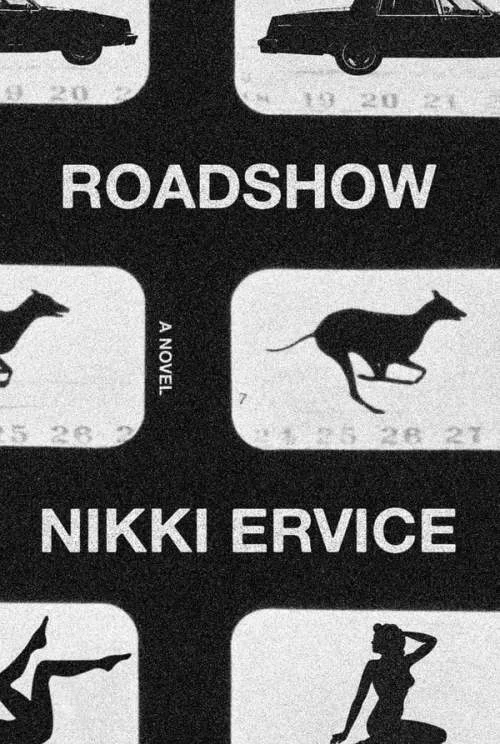
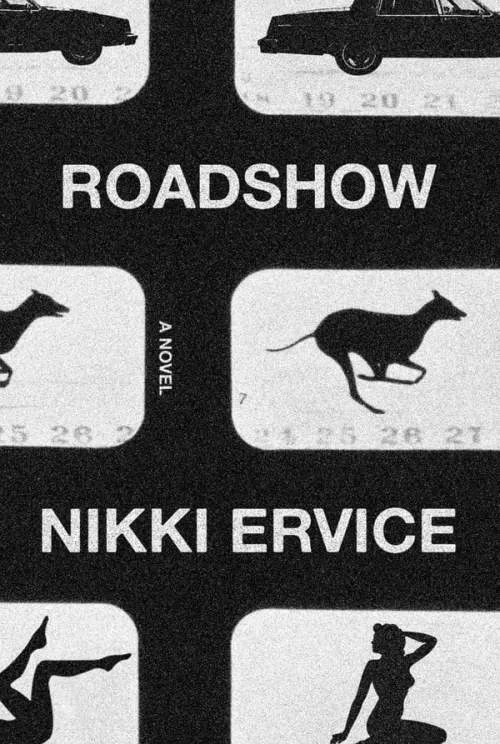
Novels about people living paycheck to paycheck are rarer than they should be, and debuts by New York-based MFA graduates are rarer still. Nikki Ervice's Roadshow, published by Astra House on November 10, 2026, is a welcome exception. It's a messy book, and I think the mess is part of what makes it honest.
A dog mask and a dying mother
Annie Juric dances and waits tables in New York City. At Club X, a loud burlesque room, she performs as The Dog-Faced Girl in a papier-mâché mask modeled on her childhood mutt. She's a struggling artist with no safety net, heading home each night to a stuffy, cockroach-infested apartment.
Then a letter arrives. Vera, the mother who left Annie as a child, is dying and wants to reconnect. She has returned to the Alaskan coastal community where Annie grew up, and she sounds remorseful. Annie, pushed along by Serge, her not-boyfriend, sets out on a transcontinental drive to Alaska. She sleeps in parking lots and keeps herself afloat by dancing in small-town strip clubs.
A slow and uneven start
The book opens slowly. Annie is a sharp observer in close third person, but she's often tepid and disaffected, a little too cool to pull us in during the early chapters. Several plot-defining choices get made for her. The clearest case comes in Chapter Six, where she's torn about going and Serge steps in to talk her into the trip. Because we know almost nothing about him, his motives stay blurry, and Annie looks passive rather than conflicted.
The prose strains too. A line like "his preoccupation with himself and his stagnancy in the market of prestige superseded much interest in her outside of her body" shows the problem. The sentence is overbuilt, and a reader has to work hard to get through it. This is most noticeable in Annie's chapters.
Two voices on one road
Things pick up once Annie hits the highway. Ervice alternates between Annie's life on the road and a run of emails from Vera, who lays out her history and tries to explain why she walked away. Vera's voice is the stronger of the two. It's scattered in the right way for a woman with little time left, and it's funny without losing its ache. Ervice has a real knack for letting Vera's digressions gather into a narrative that feels compelling and whole.
Performance as a route to honesty
The novel is at its best when Annie is performing. Ervice has sharp things to say about exhibitionism, including the observation that "for all the girls showed, revealed, there was more withheld." The mask does more than hide Annie from her audience. It opens up a kind of closeness that wouldn't be possible without it. Performance usually means being someone you're not, yet here the artifice produces a new kind of honesty.
One of the strongest scenes takes place in a private booth at an Edmonton gentleman's club, where Annie gives a lap dance. Ervice captures the tangle of lust, shame, and self-justification that binds dancer and patron together. It isn't sexy. It's tense, and the question hanging over it is whether the line between performer and customer, the mask itself, will slip. It does. The book is full of exposure, embarrassment, and the small humiliations that come with entertaining strangers for money.
The hope that keeps people working
What lifts the book is its understanding of the stubborn hope that carries anyone with an unstable job. Annie suspects she might be the exception, that she can outwit time, and that a bit of willful, magical thinking has kept her going. That same belief pulls both Annie and Vera, in their separate timelines, into the punishing industries of the performing arts. Read that way, Roadshow is a book about work: what we bring to a job and what we leave at home. The myth of personal exceptionalism shapes their ambitions and also decides how much they'll tolerate to reach them. It softens and even romanticizes the psychic strain of exploitative labor, and that's exactly why it's worth paying attention to.
Worth the slow start
My read is that Roadshow stumbles in its execution but finds something real in the gap between paychecks. The early chapters ask for patience, and not every reader will extend it. Those who do get a debut with a clear view of how working life can be both draining and sustaining. More debut literary novels should take on the triumphs and costs of ordinary work this seriously.