The Sugar Merchant: Trade, Faith and Coming of Age in Historical Fiction
| Shelf | Book Reviews |
|---|---|
| Date in | |
| Readers | 424 |
James Hutson-Wiley's historical novel follows scholar-merchant Thomas Woodward through sea voyages, trade and a coming-of-age arc. Reviewers found the research rich but the inner life thin.

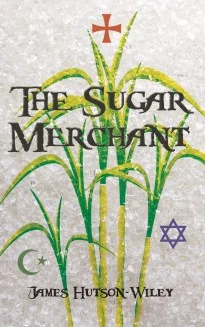
Title: The Sugar Merchant
Author: James Hutson-Wiley
Genre: Historical Fiction
A scholar who becomes a trader
Thomas Woodward starts out as a scholar and ends up as a merchant, and James Hutson-Wiley's novel treats that shift as the real story. A tragic childhood loss sends Thomas to a community of monks at a nearby abbey, where he's raised and where he meets the people who will shape the rest of his life. From there the book follows him out into the wider world of ships, cargo and negotiation.
Reviewers read the novel mainly as a coming-of-age story. Thomas begins as an innocent, and the book charts his growth into someone enterprising and respected in his own right. That growth plays out through his deals and his dealings with the people he meets on the road, which means the reader learns about him largely by watching what he buys, sells and risks. It's a sturdy way to build a protagonist, even if it asks some patience of readers who want to see inside him.
Where the adventure lands and where it stalls
The sea chapters are the book's strongest pull. Reviewers found the perils of the open water genuinely thrilling, and the novel's handling of the long-running tension between the Muslim and Christian worlds gives those voyages real weight. The conflict isn't decoration. It shapes who can trade with whom, what a voyage costs and how much a stranger can be trusted.
The complaint that comes up most is about the interior life. Several reviewers felt Thomas would have benefited from the same attention the plot gets. His relationship with faith and with the people closest to him is raised in ways that invite a deeper look, but the story keeps moving before it can settle there. One reviewer put it as a question the book never quite answers: what does it cost a man to set aside his faith for the sake of the woman he loves? The novel brushes against that question, and readers who come for character may want more than it offers.
Research that doesn't read like homework
The research is the part reviewers praised without reservation. The book's sense of its period is consistent, from the fraught relationships among traders to the uneasy peace between neighboring states. The religious tensions feel lived-in rather than footnoted, and the historical detail never stalls the momentum.
What stands out is how the research is folded into the storytelling. The novel doesn't hand over lectures on the era. Instead, the reader picks up how war and distant conflict filter down into ordinary lives: what gets more expensive, who gets squeezed, how a town adjusts when the sea routes change. That's the kind of historical texture that tends to separate a novel that feels authentic from one that merely feels researched.
Trade talk that stays readable
Hutson-Wiley's clear, crisp prose is what keeps the commerce from sinking the book. Reviewers noted a few stretches that linger on spice, the price of sugar and other trade matters a little longer than some readers will want. Even so, the sentences stay easy to follow, and the author manages to keep a commercial plot gripping. It's a useful reminder that a novel about markets doesn't have to read like a ledger.
The descriptive writing is also a highlight. Reviewers described the backdrop of early European and Middle Eastern history as vividly rendered, with the sights, sounds and textures of the period coming through. The attention to small details adds to the sense that the world on the page is working the way it would have then.
Who should pick it up
At a length that reviewers called substantial, The Sugar Merchant asks for time and commitment. It rewards readers who enjoy a full cast, a determined protagonist and a plot that crosses continents and creeds. The mix of action, adventure and flashes of humor and humanity gives the book a wide appeal within historical fiction, especially for readers who like their history grounded in trade and travel.
If you're drawn to character-driven literary work, though, keep expectations measured. The novel is stronger on the world Thomas moves through than on the man himself. My read is that it's a book for readers who want to be swept up in a period and its commerce first, and who can accept that the inner life of its hero arrives in fragments. Watch for how the author handles the next stage of Thomas's story, because the threads this book leaves loose are the ones that could make a sequel or a future work especially compelling.