Outsider Everywhere: A Writer Who Kept Writing Through Exile
| Shelf | Authors & Interviews |
|---|---|
| Date in | |
| Readers | 862 |
Mercedes Halfon's biography follows Witold Gombrowicz through twenty-four years of Argentine exile, when he wrote some of his most important work.
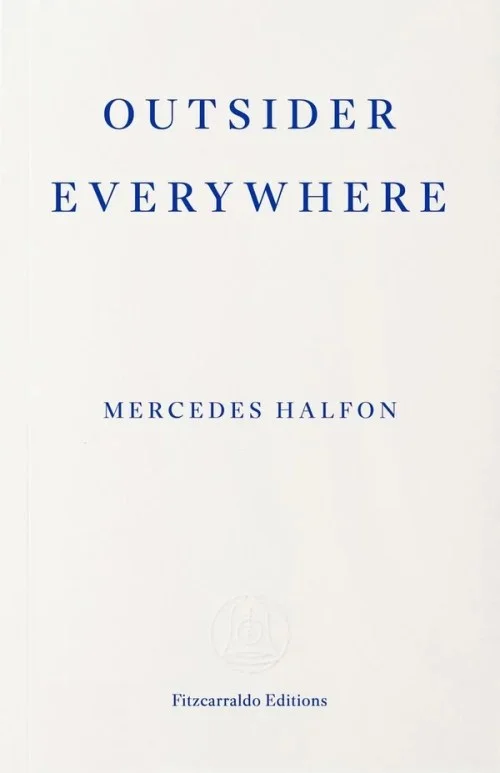
Who decides when a writer is allowed to write? Gombrowicz answered in his own Diary: art means writing not what you meant to say, but something unexpected. Mercedes Halfon's biography Outsider Everywhere takes that idea as a working principle. It's a fitting lens for a book about a man who kept producing strange, lasting work while living far from nearly everyone who might have understood it.
A ship home, and a man who stayed
In late August 1939, Gombrowicz reached Buenos Aires as part of a group of Polish representatives that included journalists and businessmen. Within weeks, German forces attacked Poland and the Second World War began. The ship turned around for home. Gombrowicz didn't get back on it.
That decision shapes everything that follows. He spent the next twenty-four years in exile, frequently broke, in a city whose language he barely spoke. Much of his most important writing came out of those years, including The Marriage, Trans-Atlantyk, and much of Cosmos. Halfon's book is at its strongest when it keeps returning to that gap between a man's circumstances and the work he managed to make inside them.
A biography that moves like a river
Most biographies arrange their material into tidy chapters with clear thematic signposts. Outsider Everywhere doesn't. It runs chronologically through a series of vignettes, each short but together building a fairly complete narrative. Halfon draws on people who knew Gombrowicz directly, and their memories range from warm to withering. Academics who have spent careers on his work add a second layer of commentary.
The looseness can feel unusual at first. My read is that it suits the subject. Gombrowicz resisted tidy categories in his life and his prose, so a biography that lets its voices contradict one another comes closer to the man than a polished, authoritative portrait would. You finish the book without a neat verdict on him, but with a clear sense of who he was.
Not an easy man to like
Gombrowicz had little patience for Argentina's literary establishment. He kept his distance from figures like Jorge Luis Borges and Carlos Mastronardi, and he didn't hide his contempt. Halfon's portrait of the young writer in the 1940s can be raw. When he finally landed an office job, a coworker's description of him reads like a list of grievances: "He's late again, he's dressed like a beggar, he eats oranges like a hog and spits the seeds in his waste paper bin, there's a button missing from his shirt and, worst of all, he fell asleep again today."
I'll admit that I came to the book half-expecting a cautionary tale, the story of a difficult man whose stubbornness undid him. That's not what the book delivers. The rudeness and the disarray are there, but they sit beside relentless productivity, and that's what keeps them from defining him.
Survival as a working method
It's a pleasant surprise to find that Outsider Everywhere works as an inspirational story. It follows an authentically rough man who survives for decades in a country far from home, still stumbling over the language, and keeps writing the whole time. Gombrowicz absorbs life constantly, and that habit feeds the work.
The plays and autobiographical writing show the results. The Marriage, written in 1947, anticipates the theater of the absurd and comes two years before Beckett's Waiting for Godot. The two plays are very different, and Halfon's account doesn't need to rank them. The Diary, shaped partly for public exhibition, and Kronos, with its unsparing account of pain and depression, read as remarkably stylized self-portraits, especially for their time. Reading them, you get the impression that Gombrowicz couldn't stop writing. He was an artist all the way through. Slowly, from near-poverty, he built a literary circle and a group of younger followers.
Two countries, one contested legacy
Gombrowicz had a modest career in Poland. Most of his best work came after he'd left, and while he lived in South America he was barely known. Europe rediscovered him later. He was nominated for the Nobel Prize in Literature four times between 1966 and 1969, a sign that his reputation had grown well beyond the circles he'd once known.
That raises an interesting question: who gets to claim a writer like this? Halfon's book looks closely at Argentina's stake in him. It describes a former apartment that has taken on a pseudo-shrine quality, a renowned archive known as La Gombroteca, and an international festival held in Buenos Aires. The most striking detail may be the Argentine friend who, decades after Gombrowicz's death, wrote a newsletter of essays applying his philosophy and worldview to different subjects. It ran daily for six years. Whether that counts as devotion or obsession depends on the reader, and the book leaves room for both readings.
Who should pick it up
I'd recommend Outsider Everywhere to most readers, especially those interested in literary history and anyone willing to spend time with a difficult, funny, and often contrary man. Writers will likely get the most from it. Watching someone keep working through poverty, isolation, and years without recognition is a useful kind of companionship.
The book is nonfiction, translated from the Spanish by Rahul Bery and published by Fitzcarraldo Editions on November 3, 2026. Its English-language release may matter beyond the biography itself. Readers who come to Gombrowicz through Halfon's pages will have a clear route back to the Diary, Kronos, and The Marriage, and that's where the real test of his survival as a writer lies.
NONFICTION
Outsider Everywhere: Witold Gombrowicz in Argentina
By Mercedes Halfon
Translated from the Spanish by Rahul Bery
Fitzcarraldo Editions
Published November 3, 2026