Simon Garfield’s The Pen Traces the Social History of Writing
| Shelf | Publishing Industry |
|---|---|
| Date in | |
| Readers | 918 |
Simon Garfield follows the pen from quills and fountain pens to ballpoints and digital styluses, exploring how writing changed as pens became cheaper.
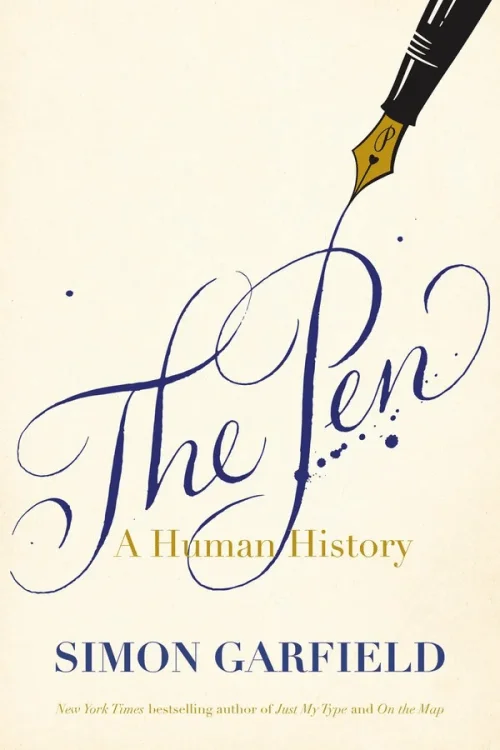
The pen’s story is a history of access: a tool once costly and troublesome became an everyday possession, even as handwriting itself began to recede. In The Pen: A Human History, Simon Garfield follows that shift through the objects people used to write, the habits they formed around them and the changing place of pen and paper in daily life.
Garfield’s account reaches back hundreds of years, though its main focus is the 19th and early 20th centuries. He arranges the history around three broad eras: dipped instruments such as quills, the rise of the fountain pen, and the arrival of the ballpoint. Each marks a different effort to make writing more practical. Quills and their successors had familiar drawbacks; the fountain pen offered a cleaner, easier way to write, while the ballpoint eventually made pens cheap enough for widespread use.
From fountain pens to everyday ballpoints
The book is chiefly a social history, rather than a guide to how pens work. Garfield is interested in how the objects shaped customs and widened access to writing, not in explaining every detail of their mechanisms. The fountain pen takes up much of the narrative, including the many inventors across different parts of the world who tried to improve on the quill during the 19th century. Garfield also notes earlier, isolated examples, including a pen from Egypt dated to AD 970.
That broad focus gives the book room for entertaining episodes, though the mechanical side can sometimes feel underexplained. Several stories follow a recurring pattern: a new design appears, then proves unreliable. The pattern is especially visible in the push to develop a workable ballpoint. Those early models could be messy and prone to failure; once the design improved, the ballpoint changed what people expected from a pen. Writing no longer required the expense or fuss associated with earlier instruments—or ink-stained hands as an everyday hazard.
The shift in price is central to Garfield’s account. A fountain pen can still cost thousands of dollars, and the book’s attention to individual models and makers will appeal to collectors. Parker and Montblanc are among the recognizable names, while other manufacturers will be more familiar to dedicated enthusiasts. Garfield’s affection for the objects comes through, and readers may find themselves drawn to pens they’d previously treated as ordinary stationery.
Pens as objects in culture
For readers less interested in model numbers, Garfield finds a lively route into the subject through film and television. His discussion of Kingsman and Indiana Jones connects pens to familiar screen images. He also examines the pens used in the film and television adaptations of The Talented Mr. Ripley, where forged signatures matter to the story. Choosing a model that fits the period and setting becomes part of the production’s work: even a prop pen can help establish when and where a scene takes place.
Other vignettes range beyond the book’s central account of changing writing technology. One explores the tradition of signing legislation with multiple pens, then giving them to supporters. A pen used for even a small part of a signature can acquire meaning from the event it helped mark, and some have gained considerable value. Garfield offers no settled origin for the custom, but suggests that John F. Kennedy’s celebrity may have helped popularize it. An anecdote about Lyndon Johnson signing the Civil Rights Act, and handing out an unknown number of pens, gives the practice a particularly vivid example.
Writing in a digital age
The ballpoint’s triumph carries an irony: making writing easy and widely available didn’t guarantee that people would keep writing by hand. Garfield considers a present in which digital styluses and screens compete with ink and paper. One scene brings the tension into focus. While he discusses buying a costly, customizable fountain pen with a salesperson, the available choices are recorded on a tablet using a stylus. The traditional instrument and its digital counterpart meet across the same transaction.
Garfield describes the ballpoint as “an unloved item, and an impersonal one, its smudgy paste incapable of individual expression.” That judgment belongs to his account, but it captures a tension at the heart of the book: the pen became more accessible as it became less distinctive. Handwriting is now a fading practice, and touch screens have displaced keyboards in many settings. In the closing pages, Garfield estimates that he wrote less than a third of his manuscript by hand.
The Pen: A Human History is an engaging tribute to an object that tends to disappear from notice until someone needs one. Its anecdotes keep the history approachable, while its attention to models and makers rewards readers with a collector’s interest. Garfield’s pleasure in pens is evident, but so is his curiosity about the habits they enable and the ways those habits change. For casual users, the book offers a fresh look at something easily taken for granted; for collectors, it gives their enthusiasm a broad cultural frame.
NONFICTION
The Pen: A Human History
By Simon Garfield
Crown
Published November 3, 2026