Sarah and Katie: Friendship, Appearances and a Thanksgiving Play
| Shelf | Publishing Industry |
|---|---|
| Date in | |
| Readers | 407 |
Dori White’s 1972 story follows two friends as a school play tests their judgment, loyalty and growing understanding of others.

Sarah and Katie, written by Dori White and illustrated by Trina Schart Hyman, turns a school play into a test of friendship and judgment. Set during the Great Depression, the 1972 children’s novel follows sixth-graders Sarah and Katie as they prepare a Thanksgiving performance—and discover how easily charm, appearance and first impressions can cloud what they see in other people.

A play, and a disagreement about who to trust
Sarah and Katie are writing a play for a contest organized by their drama teacher, Miss Lane. The winning script will be performed for the class’s Thanksgiving celebration, and Sarah, who loves writing, cares deeply about seeing their work on stage. She and Katie have already agreed that Sarah will direct while Katie plays Collette, the play’s wealthy, generous, frail leading character.
Their different readings of the adults around them hint at the conflict to come. Sarah admires Miss Lane, who is young, beautiful and newly engaged. Katie pays closer attention to what the teacher does: she arrives late and, when a pupil falls and hurts her knee, walks past without stopping to help. To Katie, Miss Lane’s good looks don’t make her a good teacher. She prefers their homeroom teacher, Miss Mulkey, whose strictness comes with fairness and care for her pupils. Sarah sees Miss Mulkey as grumpy and severe by comparison.
Their views diverge again when Melanie joins the class. She has red curls, delicate features and far finer clothes than most of the girls, who may have only a few good school dresses. Melanie says she used to live in Hollywood. Her classmates eagerly ask about movie stars, and she tells them she has seen Greta Garbo in a limousine and petted Rin Tin Tin, the famous movie dog. The glamour catches Sarah’s imagination. Katie, meanwhile, thinks Melanie dresses too grandly for school and is showing off.
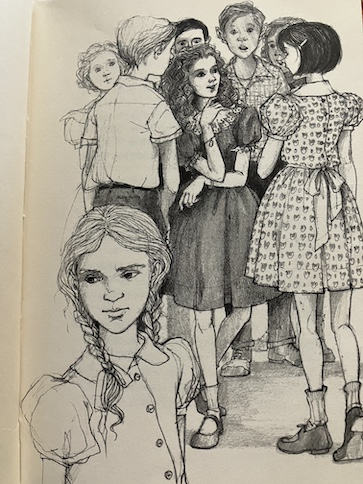
Sarah believes Katie is being unkind, and Katie points out that Sarah may be defending Melanie because she’s pretty. Sarah denies it, but Melanie does look to her like the wealthy girl she imagined while writing Collette. When Melanie hears about the play, she says she has taken acting classes and will happily join the winning production—as long as she can choose her part.
When Sarah and Katie’s play wins, Melanie makes her preference plain: she wants Collette. Sarah starts picturing how well Melanie’s looks and acting experience might suit the role. Katie understands what her friend is considering. She also knows the performance matters to Sarah, so she tells her she can accept Melanie taking the lead if Sarah thinks Melanie is better suited to it.
Sarah’s father reminds her that directing means making difficult choices. Directors may receive less praise than actors when a show succeeds and more blame when it fails, but Sarah has chosen the job because she wants the play to work. She agrees to give Melanie the leading role. The choice hurts Katie, even though Katie said she would understand, and it strains the friendship the two girls had taken for granted.
Rehearsals expose Melanie’s troubles
Melanie invites the cast to rehearse at her apartment. The gathering goes nowhere: she spends the time fooling around and drawing attention to herself, until the children have to leave for dinner. Sarah and Katie are among the last to go. When Melanie notices the time, she quickly puts on a bathrobe. Katie guesses that Melanie’s mother, who has been away, may not know the other children came over or that Melanie has been wearing her best clothes to school. The robe, Katie suspects, is a quick attempt to avoid being caught in her dress.
Sarah is bothered by Melanie’s wasted rehearsal, but she is also tired of Katie pointing out the new girl’s faults. She accuses Katie of jealousy. Katie storms off, then carries on with the play while refusing to speak directly to Sarah. Their communication dwindles to messages passed through other classmates.
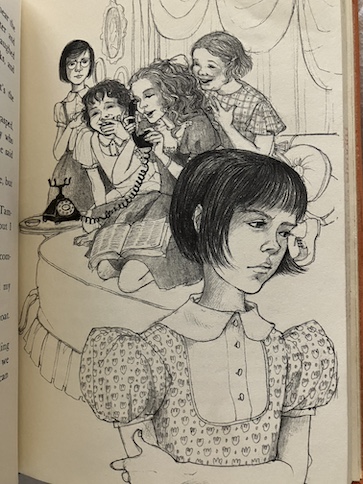
Sarah soon regrets the accusation. Melanie takes over another informal rehearsal at her home, this time turning the gathering toward prank phone calls and showing off. Other cast members begin to stay away. Sarah doesn’t like what Melanie is doing, or the influence she has on the other girls, and she feels guilty that she hasn’t been able to manage the rehearsals. Katie’s early doubts now seem well founded: Sarah had mistaken charisma and fine clothes for good character.
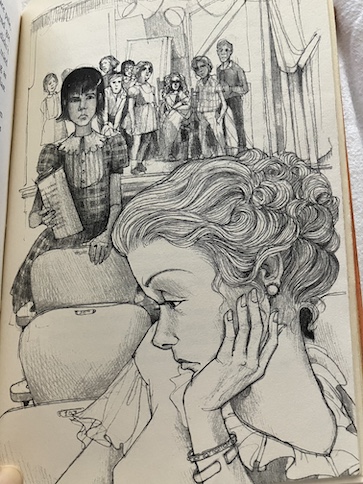
She moves rehearsals to school, hoping to keep the cast focused. There, she sees more clearly that Miss Lane isn’t providing the help she promised. When Sarah asks about scenery and costumes, Miss Lane snaps that the work is Sarah’s responsibility and that she can’t do everything for her. Sarah has no experience with scenery and doesn’t know where to begin. Help comes from classmates and Mr. Scott, the school janitor, who knows what scenery is stored at the school.
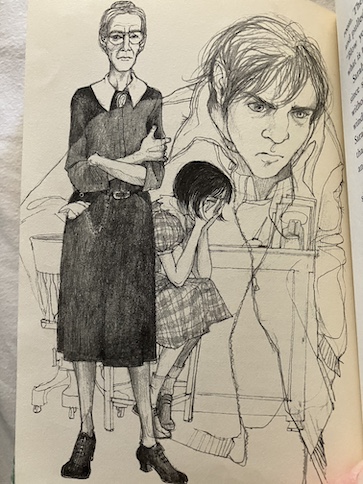
The contrast sharpens Sarah’s changing view of her teachers. Miss Lane, whom she once thought sweet, treats the children’s work as an inconvenience. Miss Mulkey, whom Sarah had dismissed as merely strict, listens when Sarah is upset and gives her advice. Though she isn’t the drama teacher, Miss Mulkey cares about the performance and the students preparing it.
A missing ring raises the stakes
Just as the play is struggling, Miss Lane loses her diamond engagement ring. An anonymous caller accuses Danny Wade, a school bully known for rough behavior, of taking it. The other pupils can imagine him stealing something valuable, and Sarah is initially ready to believe the accusation. But she has begun to question her snap judgments. As she considers what she knows, she identifies who made the call and realizes that the charge is false. When she confronts Melanie with her suspicion, Melanie lashes out.
Melanie’s place in the play is now uncertain. The cast may have to continue without its lead, while the accusation puts Danny at risk of being blamed for something he didn’t do. Sarah also has to face the damage to her friendship with Katie. The central question is no longer simply who should play Collette: Sarah must decide which people have earned her trust, and what it will take to put things right.
The book’s resolution gives the characters reasons for their behavior without excusing every choice. Sarah’s mother talks with Melanie’s mother and learns that Melanie’s family is under strain: her parents’ marriage is troubled, they are close to separating, and Melanie has been uprooted from her home and friends. Her mother is working to support them, leaving Melanie alone much of the time. Sarah has a stable, attentive family life; Melanie’s isolation helps explain why she acts out, even if it doesn’t make her behavior harmless.
Danny, too, has more to him than the intimidating reputation Sarah first accepts. He and his mother are poor, but his mother loves and believes in him. He wants to join the other children’s projects and doesn’t know how to make friends or show that he cares about being included. Sarah can acknowledge the harm he causes while noticing the loneliness behind it.
What Sarah learns about character
Katie’s clearest criticism is that Sarah judges people by their appearance. Sarah tends to assume good-looking people are kind, even when their actions suggest otherwise, and to expect the worst of people she finds unattractive. She’s offended when Katie says this, then recognizes some truth in it. Sarah admired Miss Lane because she was pretty and dismissed Miss Mulkey as old and grumpy. Her impressions had kept her from noticing which teacher was actually fair and engaged with the children.
Sarah’s experience doesn’t lead her to dismiss appearance altogether or to stop caring about other people’s difficulties. She still finds Melanie compelling. As a writer, she sees an interesting person in the girl’s restlessness and unhappiness, even after the glamour has worn off. Katie is right that hardship doesn’t give someone permission to mistreat others. Sarah, though, also sees that understanding why a person acts badly can soften anger without making the action acceptable. Her parents offer that perspective about Melanie, Danny and even Miss Lane.
Miss Lane, Sarah realizes, is preoccupied with her engagement and eager to leave teaching. When Sarah asks whether she’ll help with the play, Miss Lane replies that it is, unfortunately, part of her job. Sarah is stunned by the phrasing. The teacher treats pupils and work she is responsible for as burdens, while Miss Mulkey gives support when it’s needed. Even the school janitor proves more useful to the production than the drama teacher.
The contrast also gives the story’s Thanksgiving setting a quiet edge. The book takes place during the Great Depression, when work was hard to find, yet Miss Lane is impatient with a job she plans to leave. The story doesn’t dwell on that tension, but it makes her indifference stand out. Her departure to marry her fiancé brings the matter to a head: after the ring is found, she faces trouble with the principal for blaming the pupils too quickly, then leaves without showing much concern for the disruption she caused.
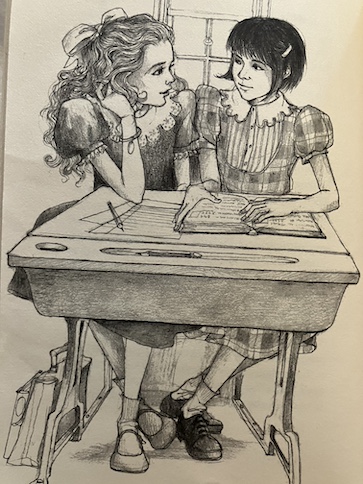
Sarah and Katie’s play reflects the friendship at the heart of the novel. Sarah had started to think Melanie would make a better Collette because she looked the part. Yet Katie was the character’s real model: Collette’s defining quality is generosity, and Katie has shown that quality by offering to give up a role she was supposed to play. By the end, Sarah understands that she had been looking at the wrong evidence.
The adults in Sarah’s life add depth to the story’s treatment of children’s problems. They don’t always know exactly what to say, and they allow Sarah to make her own decisions, but they pay attention. Her father explains what directing will ask of her and leaves her to choose, knowing that the decision may turn out right or wrong. Her mother listens patiently as Sarah tries to sort out what she thinks about Melanie and Katie. The adults provide guidance without taking the play, or the friendship, out of the girls’ hands.
A period setting and a satisfying finish
The Depression-era setting mostly sits behind the plot, but it shapes how the children see Melanie. Her clothes and Hollywood stories seem like signs of a life beyond their own. The movie references add a distinct period texture, from Garbo’s limousine to Rin Tin Tin. Readers who first encounter the book as a story about school may catch more of those historical details on a later read.
The ending resolves the ring mystery and the children’s immediate fears. The ring was misplaced, not stolen, and Miss Lane had been too quick to blame the pupils. Danny’s name is cleared. Melanie’s parents reconcile, offering her a more secure home life. Sarah and Katie also find a way back to each other, with Sarah acknowledging that her friend had seen the situation more clearly from the start.
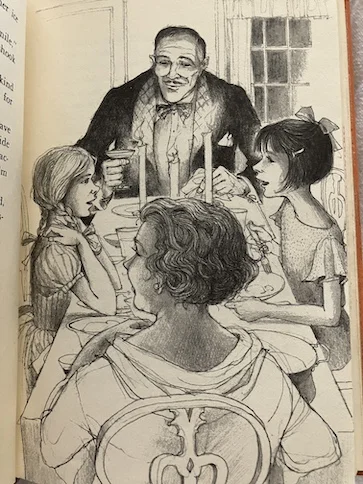
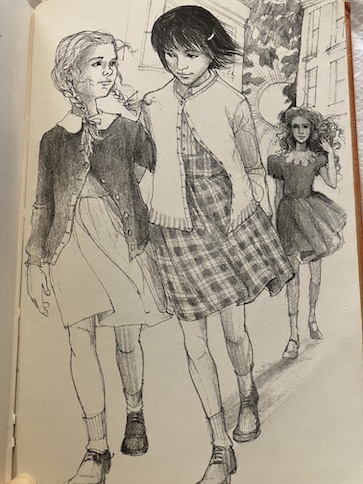
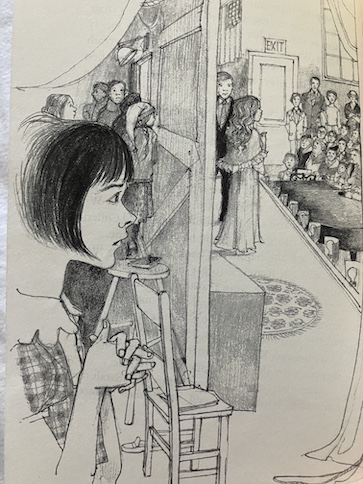
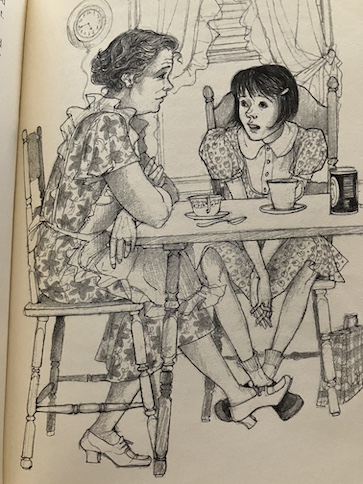
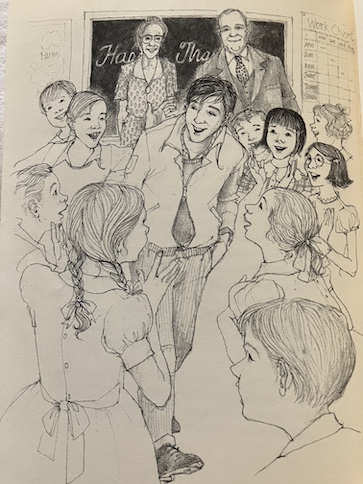
Schart Hyman’s realistic pencil illustrations suit the story’s close attention to the children. The detailed drawings give the characters distinct expressions and help bring their personalities into view. They’re a welcome part of a book that asks readers to look past a person’s surface and pay attention to what that person does.
Sarah and Katie is available to borrow and read online for free through the Internet Archive’s catalog of copies. Its story of a troubled production and a fraying friendship remains appealing for readers drawn to school stories, thoughtful young characters and a period setting. Sarah’s hardest work turns out to be learning how to direct a play while revising her own first impressions.
One of the book’s best ideas is that seeing someone clearly takes more than deciding whether that person is good or bad. Sarah learns to hold people accountable while remaining curious about what they may be carrying. Katie’s honesty helps her recognize the difference between kindness and charm; her parents help her make room for empathy. The friendship survives because Sarah is willing to hear the truth, and because Katie’s generosity was there all along.