Ruth Chew’s What the Witch Left Turns Ordinary Objects into a Gentle Magical Adventure
| Shelf | Authors & Interviews |
|---|---|
| Date in | |
| Readers | 661 |
Two girls discover the magic in a family friend’s belongings, with comic mishaps and the gentle, low stakes that define Ruth Chew’s stories.

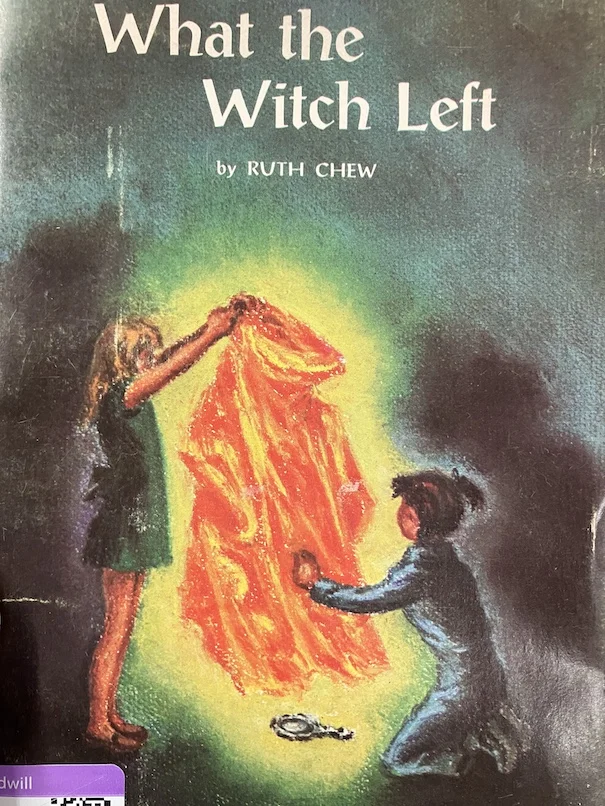
Ruth Chew’s What the Witch Left makes magic feel like an invitation to play—and a reminder that shortcuts can lead to awkward surprises. First published in 1973, the book follows Katy and her friend Louise as they uncover the powers hidden in a drawer of belongings left at Katy’s house by Aunt Martha. Their discoveries take them from schoolwork and sewing to a Thanksgiving play, a mistaken journey across borders, and questions about who Aunt Martha really is.
A pair of gloves that makes everything easier
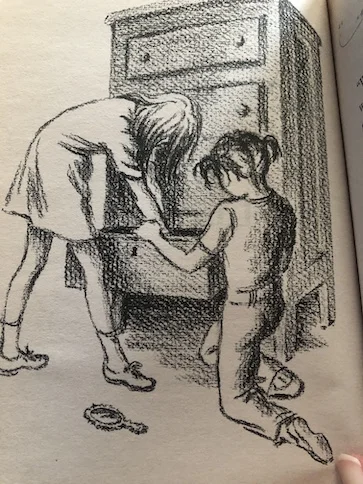
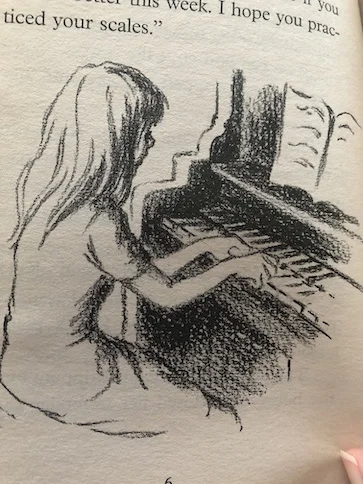
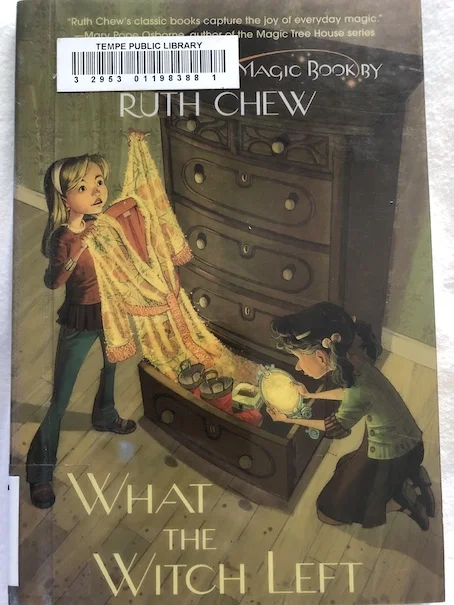
The girls find a pair of boots, a patterned bathrobe, a mirror and a pair of flesh-colored gloves among Aunt Martha’s things. Katy tries on the gloves, which fit so closely that they seem to vanish. When her piano teacher arrives, Katy plays better than usual while wearing them. Her family assumes she has been practicing; Katy suspects the gloves deserve some credit.
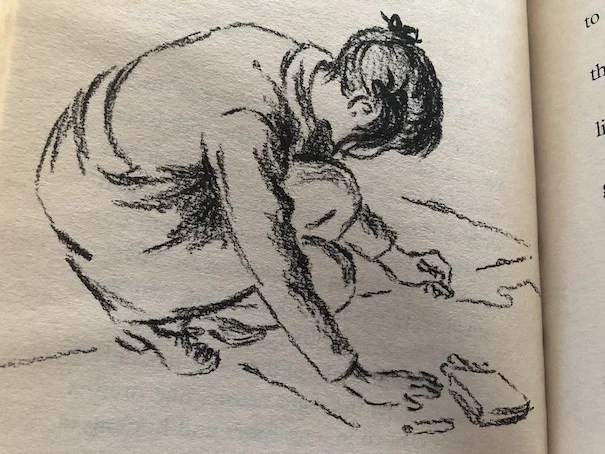
More evidence follows. Katy, who has struggled with sewing, uses the gloves to mend a tear so neatly that it’s hard to spot. Louise tests one too. Since she’s left-handed and Katy’s right-handed, each girl can wear a glove on her dominant hand. Louise’s chalk drawings become strikingly lifelike, and the girls find schoolwork suddenly easy: they earn perfect scores on a spell test and write an essay without much effort.
That ease comes with a catch. Sharing the gloves has led Katy and Louise to write identical essays. Their teacher suspects one copied from the other, moves Katy to another seat and gives her extra punishment after she struggles to pronounce words in the essay. Katy isn’t simply angry at the accusation. She recognizes that getting the gloves to do her work for her was its own kind of cheating. The girls decide to keep them out of the classroom, though they still use the gloves to help sew costumes for the school play.
The bathrobe takes the stage
Costume preparations bring another of Aunt Martha’s objects into play. Louise’s mother thinks she has brought the wrong blanket for Louise’s costume and offers a less appealing replacement. Katy lends her the colorful bathrobe instead. Neither girl knows it has a power of its own until Louise steps onto the stage and appears invisible beneath it, with only her head showing. Some audience members panic; others take the strange sight for a magic trick. Katy and Louise let that explanation stand, but the episode makes them wonder whether everything in the drawer is enchanted.
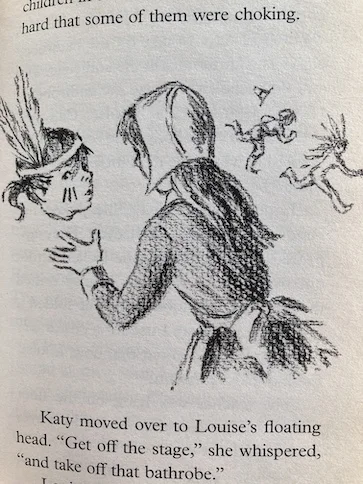
There’s more to learn about the owner, too. Louise asks Katy about her aunt, and Katy explains that Aunt Martha isn’t a relative: she was a friend of Katy’s grandmother, and the family calls her “Aunt” out of habit. The girls begin investigating the other objects, conscious that magical experiments could attract attention or create a mess.
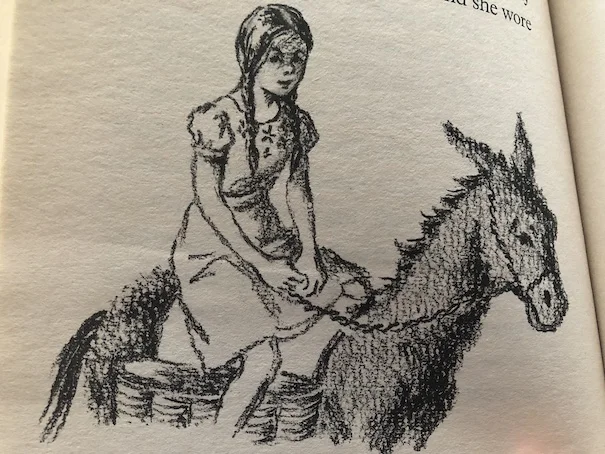
The boots prove to be seven-league boots. Hoping to swim in Florida in November, Katy and Louise set off on foot, but their test sends them the wrong way—to Mexico. There they meet Pilar, help her weave straw place mats with the gloves, and get to ride on her donkey, Pepe. Their adventures are lively and playful, built around the girls’ curiosity and the surprises that come with using unfamiliar magic.
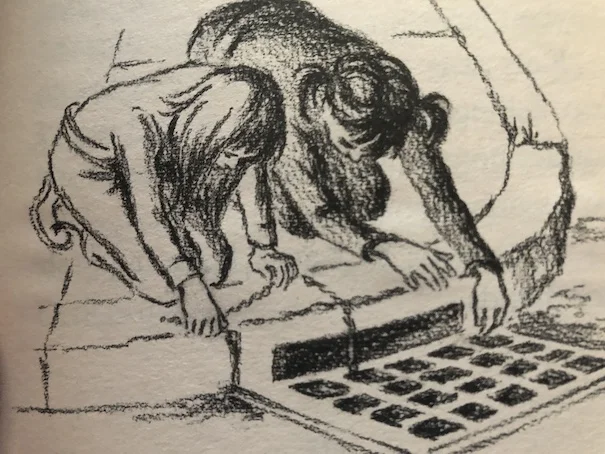
By now, the girls suspect Aunt Martha is a witch, a possibility that fits both the enchanted belongings and Katy’s mother’s description of her. Then they lose the key to the drawer down a drain—and hear that Aunt Martha is coming to visit. The prospect of explaining their experiments, along with the missing key, gives the story its central question: what will happen when the owner of the magic returns?
What the Witch Left is available to borrow and read for free online through Internet Archive, which lists multiple copies.
A comforting kind of magic
Chew is known for children’s stories about witches and magic, and the quality that stands out here is gentleness. The girls get into minor trouble, but their adventures stay low stakes; nothing turns frightening or dangerous. That makes the book an inviting choice for readers looking for a calm magical story, including families in search of a bedtime read. There’s a reassuring rhythm to the mishaps, and the girls’ curiosity keeps the story moving.
Aunt Martha turns out to be a kind witch who knows what the girls have been doing and doesn’t object. The book suggests she may have left the objects for Katy to discover, though it doesn’t spell out why or how much she knows about the girls’ adventures. That openness suits Chew’s approach to magic: its origins often remain unexplained, and the characters can be content with the fun they’ve had rather than insist on answers to every question.
The school’s Thanksgiving play also reflects the conventions of many American schools in the mid-to-late 20th century, with a costume that evokes the period’s portrayals of Pilgrims and Native Americans. The reviewer recalls similar school plays from the 1980s and early 1990s, when “Native Americans” was encouraged even as “Indians” remained common in everyday speech and in the books and television children encountered. As an adult, the reviewer prefers “Native Americans” when a specific tribal name isn’t being used, both to distinguish people from India and to use the term many Native Americans prefer. The play serves a practical role in the story, bringing the bathrobe’s magic to light; the characters don’t pause to discuss its portrayal.
Readers will find a cozy adventure about friendship, experimentation and objects that make ordinary life unexpectedly strange. The gloves offer a quick lesson in the risks of letting magic do the work, while the boots and bathrobe open up new possibilities. And with Aunt Martha on her way, the girls still have to face the consequences of what they’ve borrowed—and what they’ve lost.