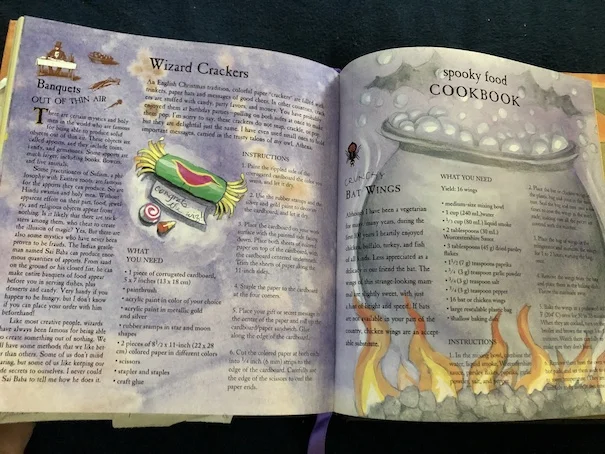
The Book of Wizard Craft: Halloween Ideas, Folklore and Hands-On Projects
| Shelf | Publishing Industry |
|---|---|
| Date in | |
| Readers | 564 |
Janice Eaton Kilby, Deborah Morgenthal and Terry Taylor’s 2001 book mixes wizard-themed crafts, party recipes and folklore for curious Harry Potter fans.

For readers who grew up with Harry Potter, The Book of Wizard Craft offers a glimpse of how the series’ popularity shaped hands-on books at the turn of the century. Published in 2001, it gathers costume projects, decorations, recipes and folklore into a guide with plenty of ideas for a Halloween party. Its title’s “craft” means arts and crafts, though the book enjoys a playful connection to magic.
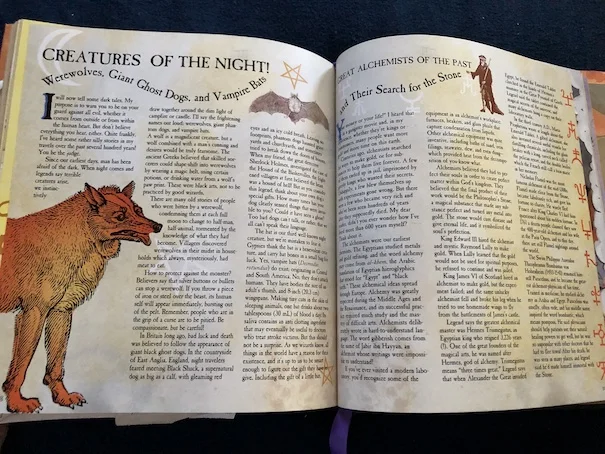
Janice Eaton Kilby, Deborah Morgenthal and Terry Taylor organize the book by creative activity, from making robes and journals to preparing themed food. Folklore and superstition appear throughout, adding stories about magic, mythical creatures and unusual beliefs. Those passages don’t always connect directly to the projects beside them, so the book works as both an activity collection and a sampler of supernatural lore.
Costumes, rooms and plants
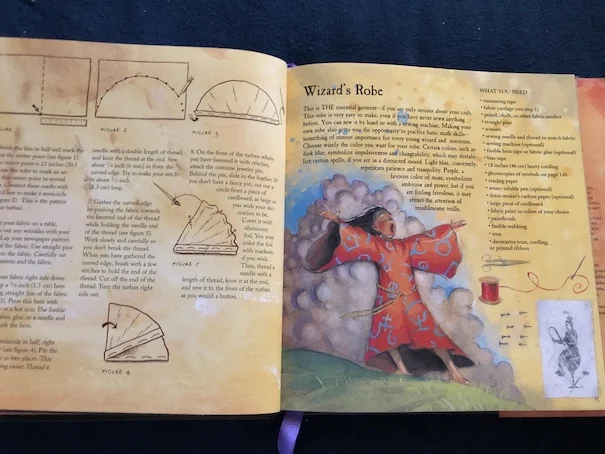
“Wizard Regalia” starts with wearable projects: hats, robes, wands and cloaks. A turban stands out among the more familiar wizard costume pieces, perhaps because Professor Quirrell wears one in Harry Potter. There’s also an hourglass pendant modeled on Hermione’s time-turner. The chapter’s folklore touches on famous wizards, their animal companions and poltergeists, giving costume makers extra material for a party theme.
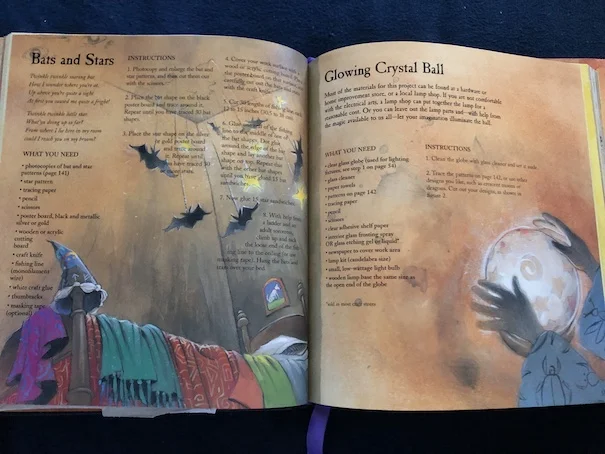
The next chapter moves from dress-up to room decoration. “The Decorative Arts” includes instructions for a magic carpet, a magic mirror, a crystal ball, and bats and stars. Its accompanying lore ranges from the hand of glory to screaming skulls and headless ghosts. The mix gives readers several ways to build a spooky setting, even if some topics feel more loosely connected to the projects than others.
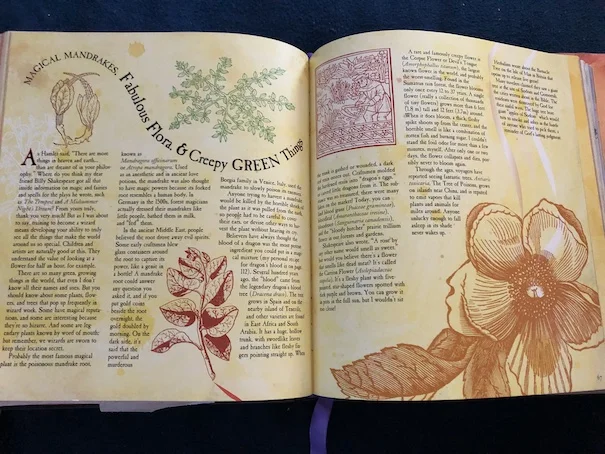
For a greener kind of magic, “The Art of Horticulture” covers container gardens and terrariums, including one featuring carnivorous plants. Readers can also plant a fairy circle with flowers; the book’s folklore connection is distinct from the naturally occurring fairy rings formed by fungi. Another project carves “Shrunken Mandrake Heads” from apples, a familiar Halloween craft under a different name. Stories about plants, fairies, giant spiders and snails broaden the chapter beyond its gardening activities.
Creatures, books and the night sky
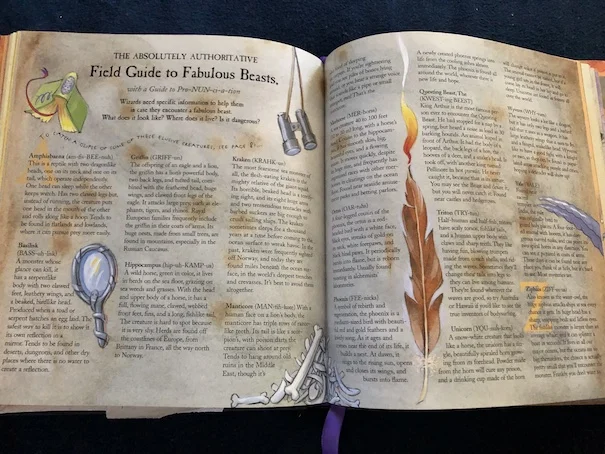
“The Art of Animal Husbandry” pairs a field guide to mythological creatures with make-believe apothecary materials. The projects include narwhal bubbles, unicorn horns and dragon scales, ingredients meant for use in other creations. Later recipes don’t call for them, though, so these are best understood as playful props rather than components in a connected sequence. Animal superstitions supply the chapter’s folklore.
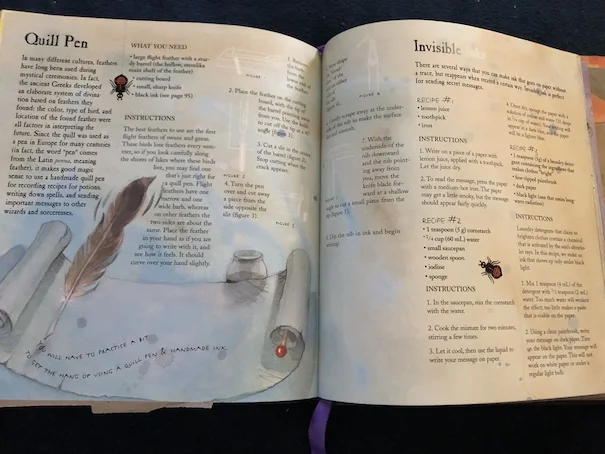
“The Book Arts” turns to writing and record-keeping, with directions for making a journal, a scroll, a quill pen, black ink and invisible ink. The folklore sections bring in Druids, King Arthur and pharaoh’s curses. For young readers who like making things they can keep using after a party, this is one of the book’s more practical collections of projects.
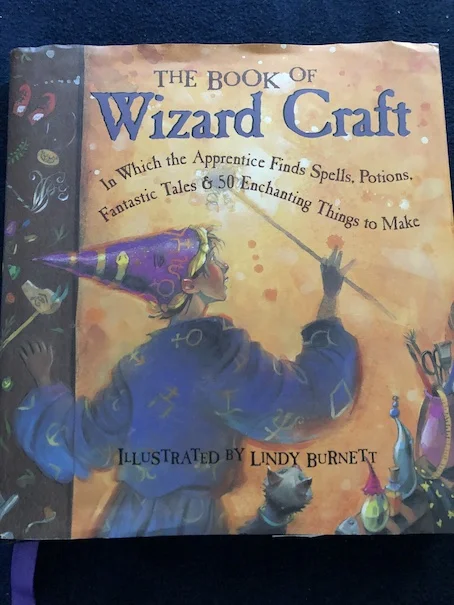
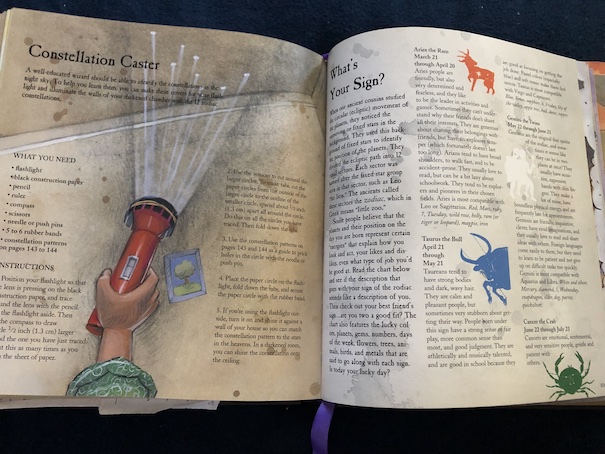
“The Art of Astronomy” connects constellations and astrological signs with a simple display idea: flashlight covers that project constellations onto a ceiling. The chapter’s stories range from werewolves and vampires to ghost dogs. That combination makes the night sky another route into the book’s broader interest in creatures and supernatural traditions.
Potions and party plans
Alchemy gets a hands-on treatment through non-edible recipes for fake blood, slime, quicksand and color-changing water. The projects appear in a “magic potion cook book,” while the folklore section explains who alchemists were and describes their search for the philosopher’s stone—the object at the center of the first Harry Potter book. The link gives fans a recognizable point of reference without making the activities depend on knowing the series.
At the party-planning end, “The Art of Amusement” adds decorations, party crackers with small favors, and edible recipes. The food includes bat wings made from chicken wings, petrified tree cookies and crystal candy. Fortune-telling activities, including palm and tea-leaf reading, bring the chapter back to folklore. Its projects could have been grouped differently, and more party games might have suited the section, but it offers a useful set of themed food and decoration ideas.

The book’s appeal rests in its variety: readers can choose a single craft, build a full Halloween setting or browse the folklore between activities. Some projects are more connected than others, but the range gives families and party planners room to adapt the ideas to their own celebrations. The Book of Wizard Craft is available to borrow and read for free online through Internet Archive, which lists multiple copies.