Witches & Magic-Makers: A Picture-Rich History of Magic and Folklore
| Shelf | Publishing Industry |
|---|---|
| Date in | |
| Readers | 732 |
Douglas Hill’s Eyewitness Books title pairs vivid images with a broad history of witches, folk magic and beliefs across cultures.

Eyewitness Books
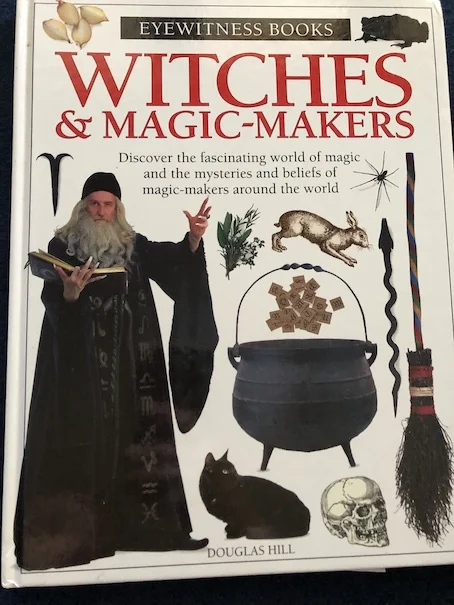
Witches & Magic-Makers by Douglas Hill, 1997.
For readers curious about the history and folklore of magic, Douglas Hill’s Witches & Magic-Makers offers a useful combination: a broad subject overview and plentiful pictures. Published in 1997 as part of the children’s nonfiction Eyewitness Books series, it looks at witches, wizards and folk magic across different times and places. Its visual approach is a particular strength. Images can make unfamiliar objects and practices easier to understand than a long verbal description, and the book gives them room to do that work.
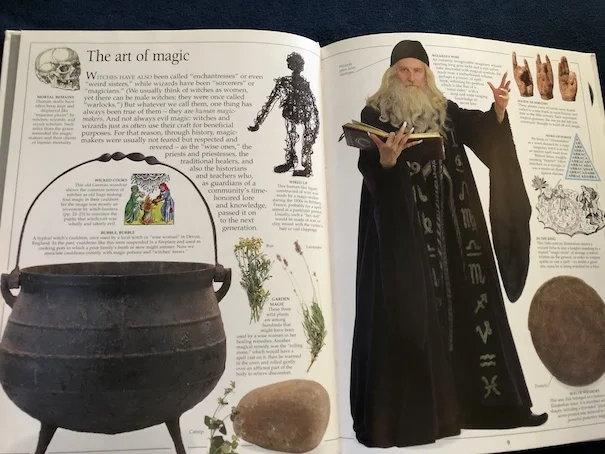
The book brings together legends and historical beliefs about people thought to possess magical powers. Those ideas appear in many cultures, though the meaning and uses of magic vary. Folklore and popular stories have shaped familiar images of magic-makers, but the lives of real people who claimed such abilities—or were suspected of having them—could be far less fanciful.
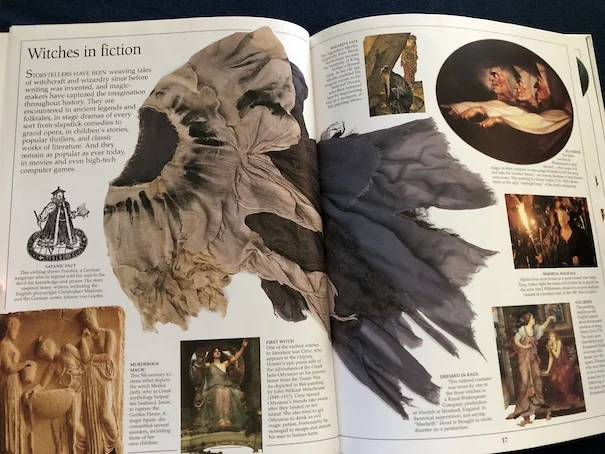
Belief could bring a person respect as well as fear. People might seek magical help for protection, healing or insight into the future, while worrying that the same supposed powers could be used to cause harm. Hill’s account includes the consequences of that suspicion: people accused of witchcraft could face imprisonment, torture and execution. A section on the Salem witchcraft trial gives readers one well-known example of the historical persecution surrounding these beliefs.
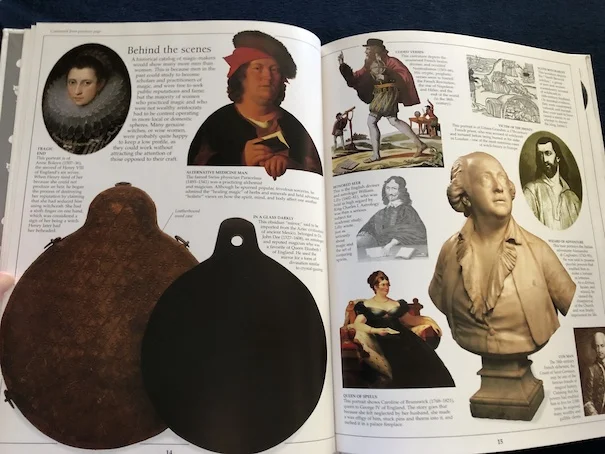
The book’s close-up treatment of objects and practices is especially engaging. Its pages show items and ingredients associated with spells, along with amulets believed to bring luck or protection. Some amulets are religious objects, which raises an interesting question about where people draw the line between magic and divine power. My own distinction has tended to rest on the idea that an object is believed to give its owner a power they would not otherwise possess. The book’s illustrations make that question tangible without requiring readers to accept the beliefs themselves.
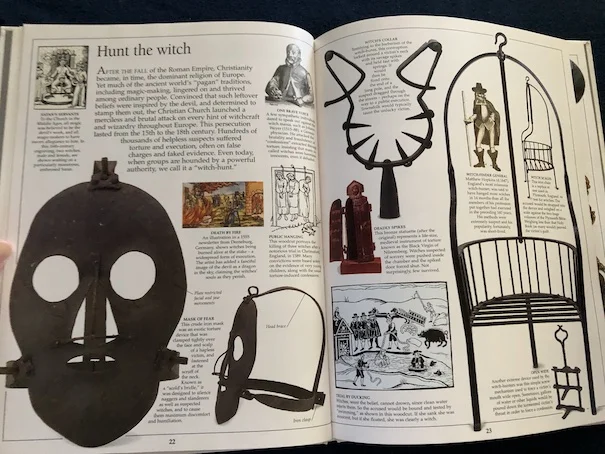
Other spreads cover attempts to tell the future and the ingredients used in magic potions. These details suit a book built around looking closely: the images help readers picture the materials and practices that descriptions alone might leave abstract. Their presence doesn’t turn the book into an instruction manual. It presents beliefs and customs as subjects for historical and cultural curiosity. I’m skeptical about claims of magical results, but I still find the traditions themselves interesting.
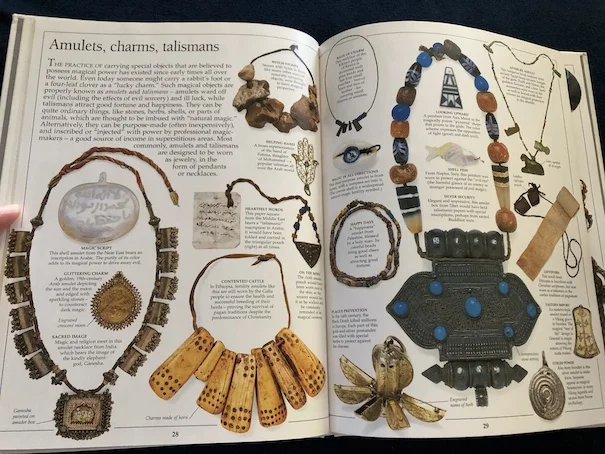
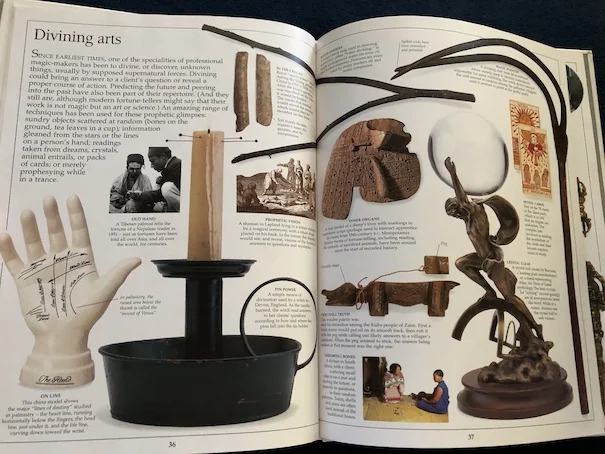
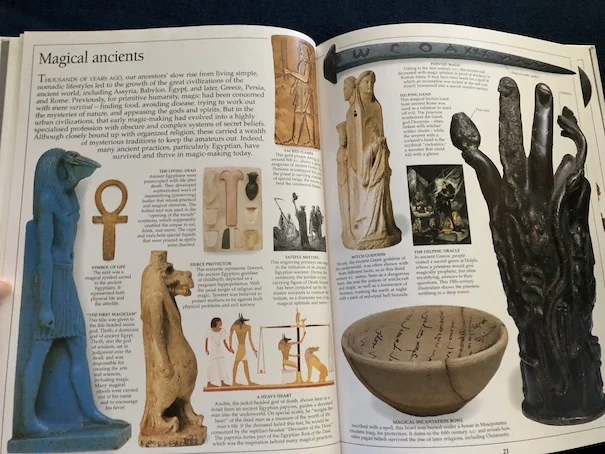
That cultural range matters. Ideas about healing, prophecy and magical ability aren’t identical around the world, even when different societies share some broad themes. Hill gives separate sections to magic in Africa, India, Southeast Asia and Latin America, then turns to modern beliefs about New Age magic and Wicca. For readers, the variety helps keep the subject from collapsing into one familiar picture of what a witch or magic-maker is supposed to be.

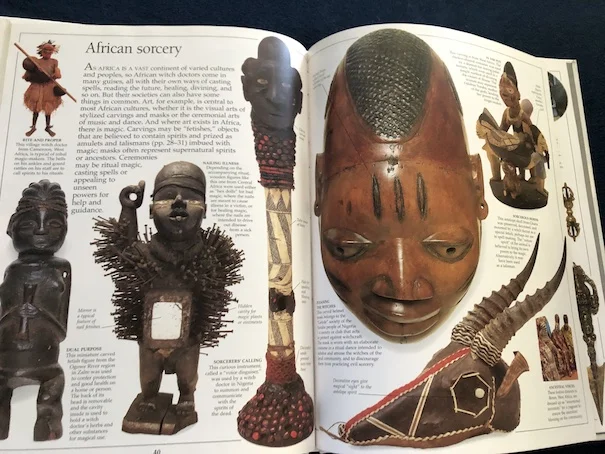
I once used this book as a starting point for a college essay about witchcraft trials. That experience speaks to its usefulness beyond its intended young audience: it provides an accessible entry into a subject that can feel harder to approach in books with fewer illustrations. The overview won’t replace specialist research, but it can help readers orient themselves and identify topics they want to pursue further. I’ve long found the Eyewitness Books series fascinating and informative for adults as well as children.
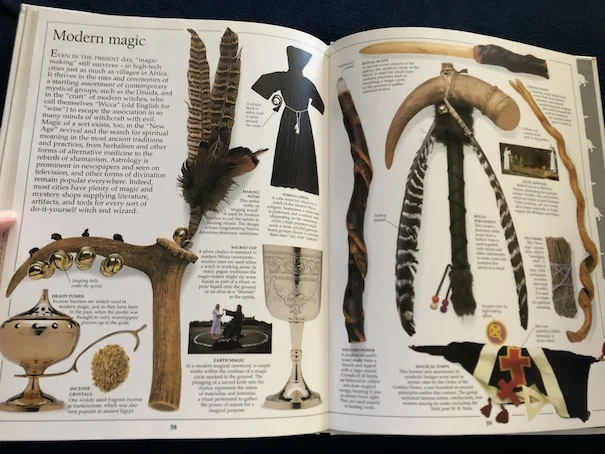
My interest in witchcraft is in its history and folklore, rather than its practice. I had a short-lived childhood curiosity about magic, which I described in my coverage of The Witches of Hopper Street. Whatever book sparked that experiment, its requirements quickly made clear that I wasn’t suited to the traditional version of witchcraft. Since then, I’ve approached the subject as a skeptic interested in what people have believed and why.
Hill’s treatment of Wicca also prompted me to look for more information about its history. For readers who share that curiosity, I recommend this documentary on YouTube about founder Gerald Gardner; it isn’t child-appropriate. I also grew up watching Disney’s Bedknobs and Broomsticks, which may explain my fondness for eccentric magical stories. For younger readers and adults alike, Witches & Magic-Makers offers a picture-led path into the subject, with enough range to invite further reading.
The book is available to borrow and read for free online through Internet Archive (multiple copies, including one in Chinese).