Esther Yi’s To God Makes Love Its Strange, Exacting Subject
| Shelf | Book Reviews |
|---|---|
| Date in | |
| Readers | 379 |
Esther Yi’s To God pursues love with dreamlike intensity; its reviewer admires the ambition but finds the stories less satisfying than Y/N.
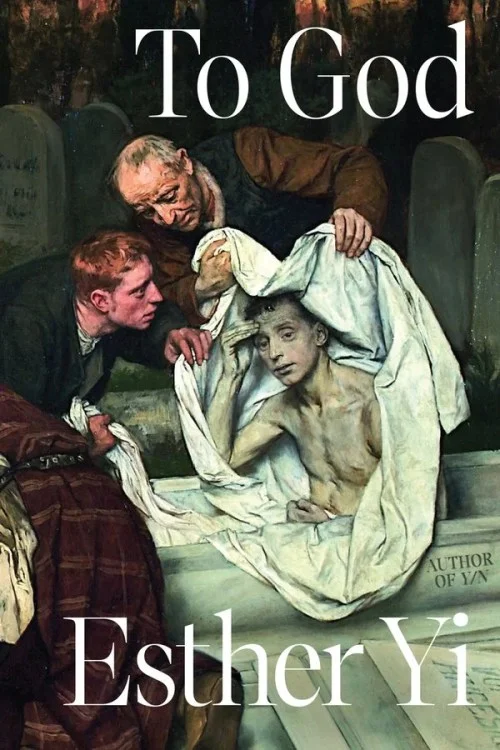
Esther Yi’s To God treats love as a demanding way to understand the world. Across the collection, characters ask what it would mean to give themselves wholly to another person, and whether any ordinary measure of human feeling could meet that standard. The reviewer finds that sustained attention compelling, even when the stories’ language and dreamlike turns make the collection harder to follow.
One narrator in “Centripetal” wants to love a single person “unconditionally and indefatigably, like a machine.” If that love fades, she reasons, the failure would show not that she was only human, but that she was not “nonhuman enough.” It’s a striking measure of devotion: love becomes a test of what kind of being she can become. The men at the center of these attachments are not idealized figures. The narrator’s awaited beloved looks worse than she imagined, and that very specificity moves her. When he calls her love scary, she answers, “What else would it be?”
Love beyond ordinary measure
Yi’s characters seek both a lover and a form of love they can regard as complete. Their standards are extreme by design. The reviewer sees the collection’s unusual settings as an extension of that intensity: in “Ultramontane,” for instance, the narrator’s pores open visibly to drink rain. Such departures from realism make room for feelings that might seem out of proportion in a familiar setting.
That freedom comes with a cost for this reviewer. The stories can move according to the logic of dreams: people find or lose someone they need, or encounter a changed place, without a clear chain of events to explain the shift. The reviewer recalls H.G. Wells’s line, “Nothing remains interesting, where anything may happen,” and says the collection sometimes produces that kind of fatigue. When the world’s rules keep changing, each strange event can lose some of its force. For this reader, the effect grows more tiresome when the prose itself feels awkward.
“White Anton” offers one example. At a boxing gym, a woman’s sparring partner tells her he has dreamed about her. She replies, “The dream’s content must’ve been of an intimacy we lacked in reality.” The reviewer objects to the phrasing, and describes similar sentences as clumsy and insufficiently polished. That criticism matters because the characters’ ideas about love are so exacting: the prose, in the reviewer’s view, does not always meet the standard the stories set for themselves.
A return to Yi’s central subject
The collection follows Yi’s debut novel, Y/N, which also centers on an all-consuming attachment. Its protagonist is an obsessive fan who searches for a K-Pop idol after he disappears from public life. The reviewer remembers that novel as exhilarating: Yi established an improbable premise and sustained it across a full-length story. The short fiction in To God offers less room for that kind of sustained immersion, and the reviewer finds that the individual stories don’t provide the same satisfaction.
Still, the collection makes Yi’s recurring interest unmistakable. The reviewer reads love as her enduring subject, explored here not only between romantic partners but also among parents, children, and friends. In “No Right Hand,” one line captures a friendship as a shared effort to think more clearly: “Aren’t we trying to think better together?” It’s a brief statement of affection that widens the book’s inquiry beyond romantic obsession.
The reviewer compares the stories’ fantastical elements to Jorge Luis Borges, while noting that Yi directs that seriousness toward relationships. Where Borges is associated here with libraries, encyclopedias, and memory, Yi asks what it means to love well. The reviewer admires the ambition behind that question and believes the collection gives love a moral and intellectual weight rarely granted to it. The reading experience remains uneven: the ideas can outpace the language, and the shifting realities may wear on readers who prefer firmer narrative ground. But for readers drawn to fiction that takes attachment as a matter of principle, Yi’s stories offer a distinctive, searching approach.
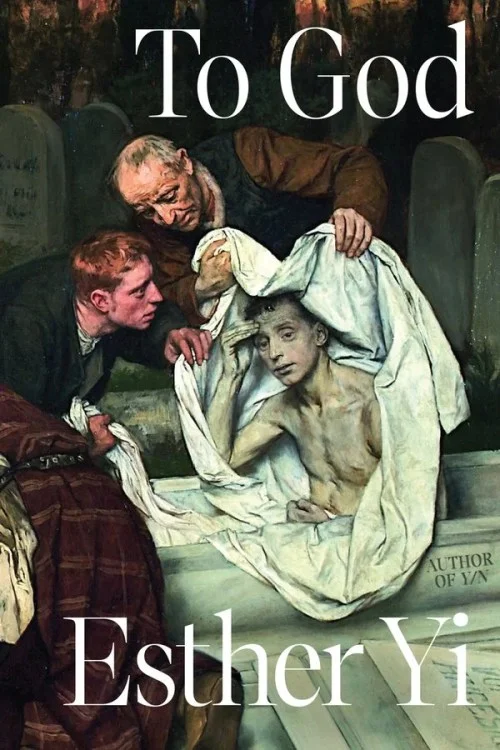
FICTION
By Esther Yi
Astra House
Published October 13, 2026