Eleanor Estes’s The Witch Family Turns Childhood Imagination Into a Spellbinding Story
| Shelf | Publishing Industry |
|---|---|
| Date in | |
| Readers | 853 |
Eleanor Estes’s 1960 novel follows two girls whose make-believe witch story grows into a tale of mischief, friendship and change.

The Witch Family, Eleanor Estes’s 1960 novel, makes the act of storytelling part of the story itself. Amy and Clarissa, two seven-year-old best friends in Washington, DC, invent a witch and a glass-hill home, then watch their imaginative game gather characters, rules and consequences. The result is a playful tale about how children shape the worlds they create—and how those worlds can change when their creators reconsider what seems fair.
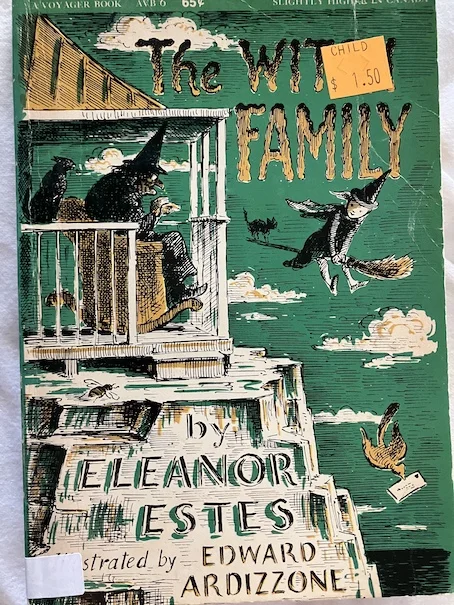
A witch on the glass hill
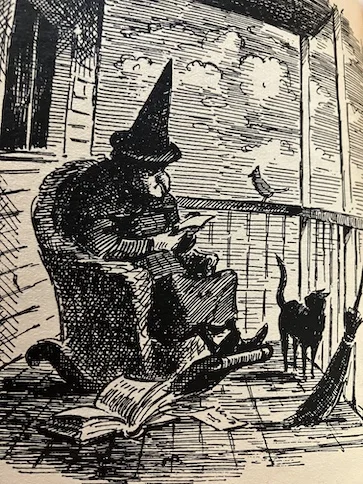
Amy and Clarissa begin by drawing Old Witch, leader of all the witches, into a house atop a glass hill. They send her there because she is mean and eats rabbits, her favorite food. But the girls soon realize that Halloween would lose some of its appeal without a frightening witch. Amy writes to say Old Witch may leave the hill on Halloween if she learns to behave. A bird carries the letter away, and Amy takes that as a sign it will reach its recipient.
Old Witch finds the glass hill bare and lonely. She has only her cat, Tom, for company, and no wish to become good. Another letter from Amy suggests she cast a spell to bring someone to live with her. The spell brings Hannah, a young witch, and her cat, Little Tom.
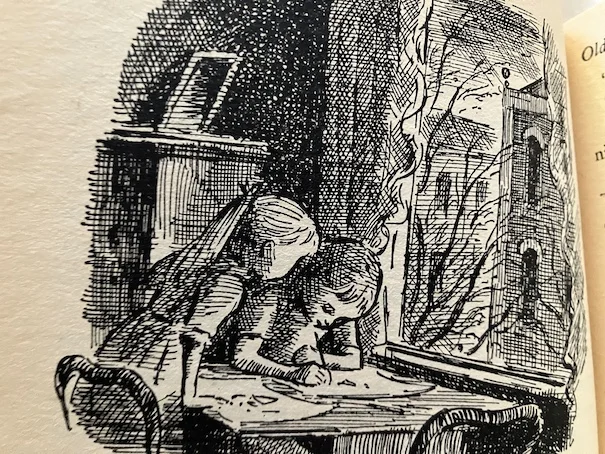
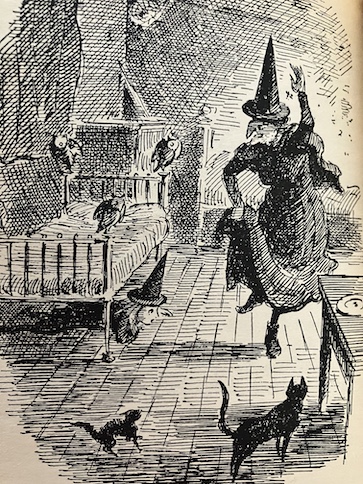
Hannah likes the hill’s view and the Witch House’s appearance. Old Witch uses her match to conjure a bed, a rocking chair, and hairbrushes for her guest. That last gift breaks witch custom: witches keep their hats on and don’t brush their hair. Old Witch is captivated by Hannah’s hair, though Hannah dislikes being combed. Malachi, a bumble bee who has secretly joined them, stings Old Witch to make her stop. He is Amy’s representative, and he spells out messages when he needs to communicate—fittingly, he’s a spelling bee.
Learning to share the story
Hannah shows Old Witch the spells she has learned at Witch School, and the pair race around the hill on broomsticks. Old Witch’s cackles and wild dances frighten Hannah, who tells her plainly that she doesn’t want to be scared. Old Witch must start managing her behavior if she wants Hannah to feel at home. The story’s comedy comes with a gentle lesson: even a powerful witch has to pay attention to the feelings of someone smaller.
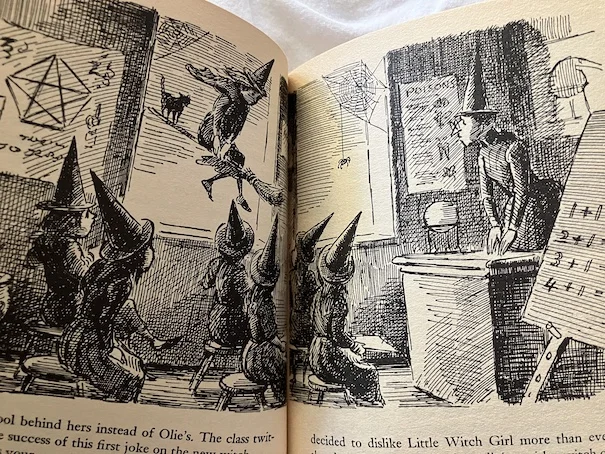
At school, Hannah’s success and unusual home life make the other young witches jealous. They tease and bully her, but Malachi stings them whenever they try to be unkind. In time, they stop their tricks and come to admire Hannah’s witchcraft. That change echoes the wider story: the young witches can learn to treat one another differently, while Old Witch is also being nudged toward better behavior.
Amy decides Hannah has birthdays without growing older than six, much like a doll, and draws a birthday party attended by the other young witches. Old Witch refuses Amy and Clarissa’s wish to join because she still resents being sent away. But Hannah’s birthday gives her special power over her spells, and she summons the girls herself.
Amy and Clarissa keep their attention on their drawings. Amy tells Clarissa not to speak because they’re in a haunted witch house, then declares that Old Witch can’t see them. Everyone else can. The girls get to ride Hannah’s mechanical toy broomsticks and play with the guests until Old Witch casts a spell that makes them visible. She has to let them stay. When the young witches ask for a wicked spell, Old Witch tries to oblige, but Malachi stings the group before she can carry it out.
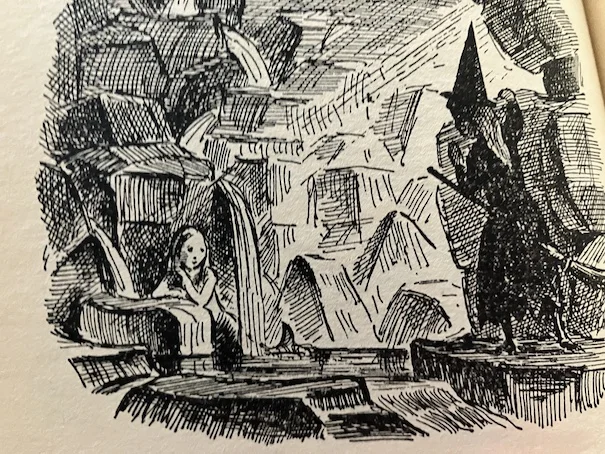
To give Hannah a playmate, the girls create a lagoon and waterfall inside the glass hill. Hannah finds a mermaid and her baby sister there, then wishes for a baby sister of her own. Old Witch hesitates, but eventually summons a baby witch on a tiny broomstick, accompanied by a black kitten. Old Witch is charmed by the baby, whose care soon takes up much of her time.
Her old appetite for mischief hasn’t disappeared. When she sees rabbits painting Easter eggs, she plots to eat the rabbits and their eggs. The rabbits outwit her with painted rocks and toy rabbits. Old Witch blames Malachi for interfering and challenges him to a spelling bee; the bee wins, as one might expect of a literal spelling bee.
Halloween and a change of heart
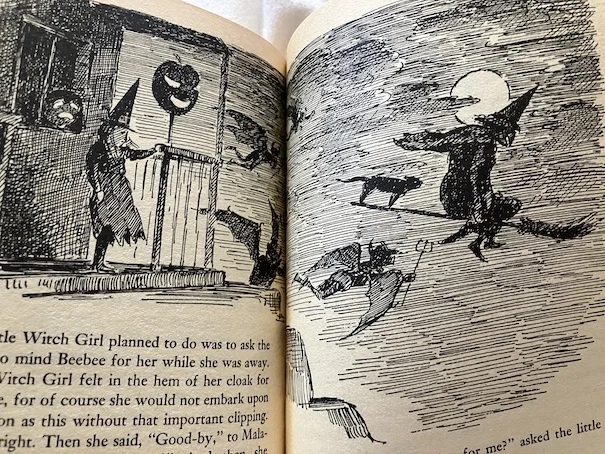
When Halloween comes, Old Witch is allowed to fly with the other witches and make scary mischief. She leaves Hannah to look after the baby, but Hannah doesn’t want to miss the festivities. She arranges for her mermaid friend to babysit and slips out. There she meets Amy, dressed as a witch for trick-or-treating. The girls trade places so Amy can ride Hannah’s broom, which carries her to the glass-hill house. Amy can’t get back by herself and needs Malachi’s help.
Being alone in the house gives Amy a fresh view of it. The glass hill seems too bleak for Hannah, and even too harsh for Old Witch, whose conduct has improved. Amy asks Clarissa to help make the hill and house more welcoming through their drawings and stories. The shift matters: Amy’s imagination first creates Old Witch’s punishment, then gives her a chance to soften it. Old Witch still has plenty of mischief in her, but she is no longer defined only by the girls’ first judgment of her.
A story that knows it is being made
The novel’s most distinctive pleasure is its uncertain boundary between play and apparent reality. Amy and Clarissa send messages into their story and interact with its characters, while readers may wonder whether their drawings have brought the witch family to life. The book ultimately presents these events as part of the girls’ imaginative game. Amy, especially, can steer what happens: when Old Witch plots to be wicked, the girls’ storytelling keeps her schemes from succeeding.
That connection also shapes the witches’ speech. They mispronounce difficult words in the same way the girls do, calling Amy and Clarissa Old Witch’s “banquishers” after Amy says “banishment” incorrectly. They borrow the girls’ made-up terms too, including “grantify” for granting a wish and “haunched” for haunted. These jokes make the invented world feel like an extension of its young authors, right down to their mistakes.
Estes’s story will suit readers who enjoy imaginative play, gentle witchy comedy and characters who learn to live together. Its closing movement offers a satisfying thought for book-club discussion: the people who make up a story can change their minds about the world they have made, and even a once-frightening witch may deserve a kinder home.