Little Witch by Anna Elizabeth Bennett: A Lonely Young Witch Finds Her Own Way
| Shelf | Genre Fiction |
|---|---|
| Date in | |
| Readers | 553 |
Anna Elizabeth Bennett’s 1953 fantasy follows Minx from lonely experiments to school, friendship and a mystery that reaches beyond her mother’s spells.

A witch who wants a different life
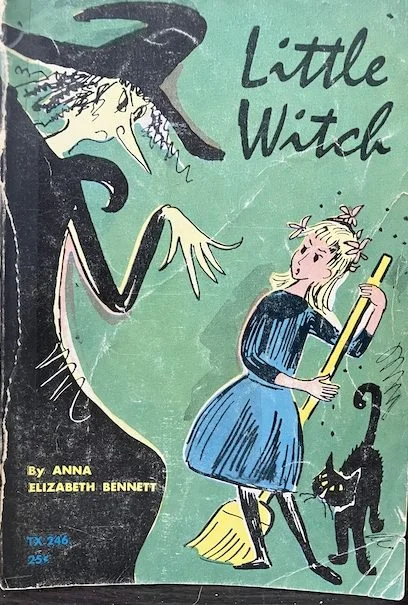
Anna Elizabeth Bennett’s Little Witch (1953) gives its young heroine a problem more complicated than learning spells: Minx doesn’t want to become the kind of witch her mother expects. Madam Snickasnee turns the town’s children into flowers, and she scolds Minx for preferring sleep to broom rides and wicked potions. Minx, meanwhile, is lonely. The townspeople fear her because of her mother, leaving her with little chance to make friends.
Minx’s private ambition is to see a fairy. When Madam Snickasnee is away, she tests potions meant to summon one. The results are unpredictable: balloons, toads and an assortment of magical creatures appear instead. There’s another mystery in Minx’s life, too. Whenever she looks in a mirror, she sees a beautiful woman who isn’t there when she turns around. Minx doesn’t know who the stranger is or why she appears.
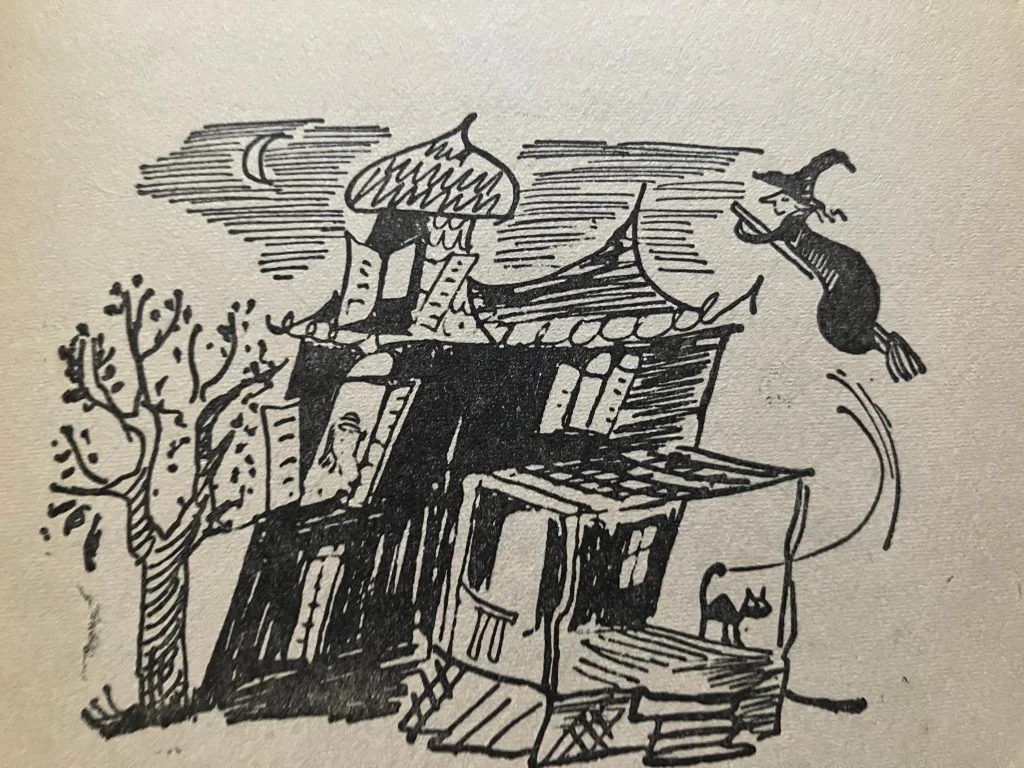
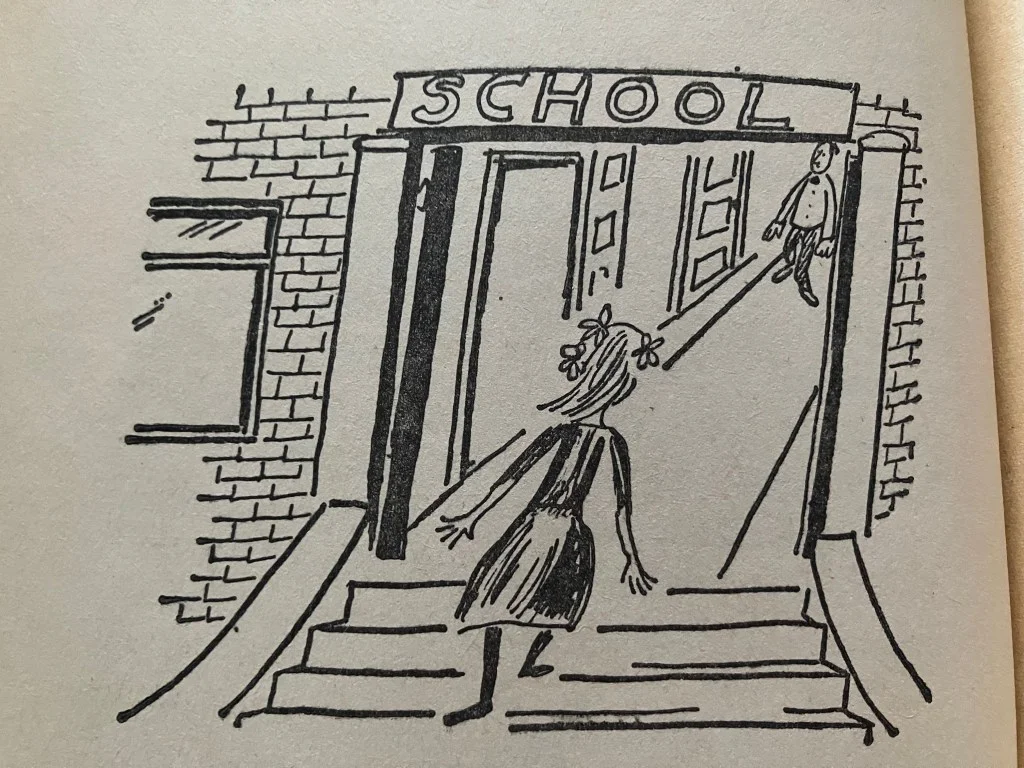
The story’s turning point comes after Madam Snickasnee refuses to feed Minx as punishment for failing to make the black brew that turns children into flowers. Minx decides to do something her mother has forbidden: go to school. She’s nine, can’t read, and has never been allowed to attend. At the school, a kind janitor helps her reach the principal. He’s frightened when he learns whose daughter she is, and indignant that she has missed so much schooling. But Minx insists she has a right to attend. The principal places her in first grade.
School doesn’t instantly make Minx feel at home. The other children are wary, and she’s hurt by their reaction. Then Frances shares cookies with her. That small kindness opens a door: Frances invites Minx to meet her siblings and their great-grandmother, who cares for the children after they’re orphaned. Minx is welcomed, fed and treated with curiosity rather than fear. Her experiments, once a secret she pursued alone, become a shared source of excitement.
Friendship, spells and a growing mystery
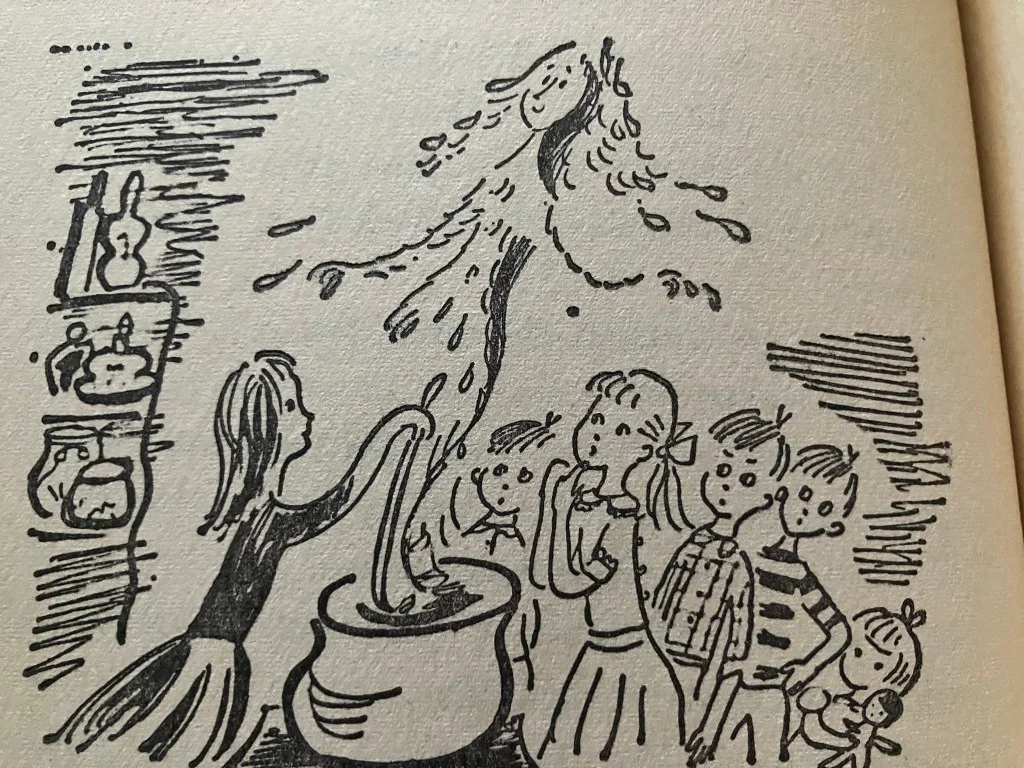
Minx sneaks Frances and the other children into her home to watch her next attempt at summoning a fairy. They get a nixie instead. The children are delighted, and the nixie is about to explain how Minx might find a fairy when the spell ends and the visitor fades. The scene gives the book room to play with folklore beyond its central witch-and-fairy premise. Minx’s goal remains out of reach, but her experiments now connect her to the friends she has been missing.
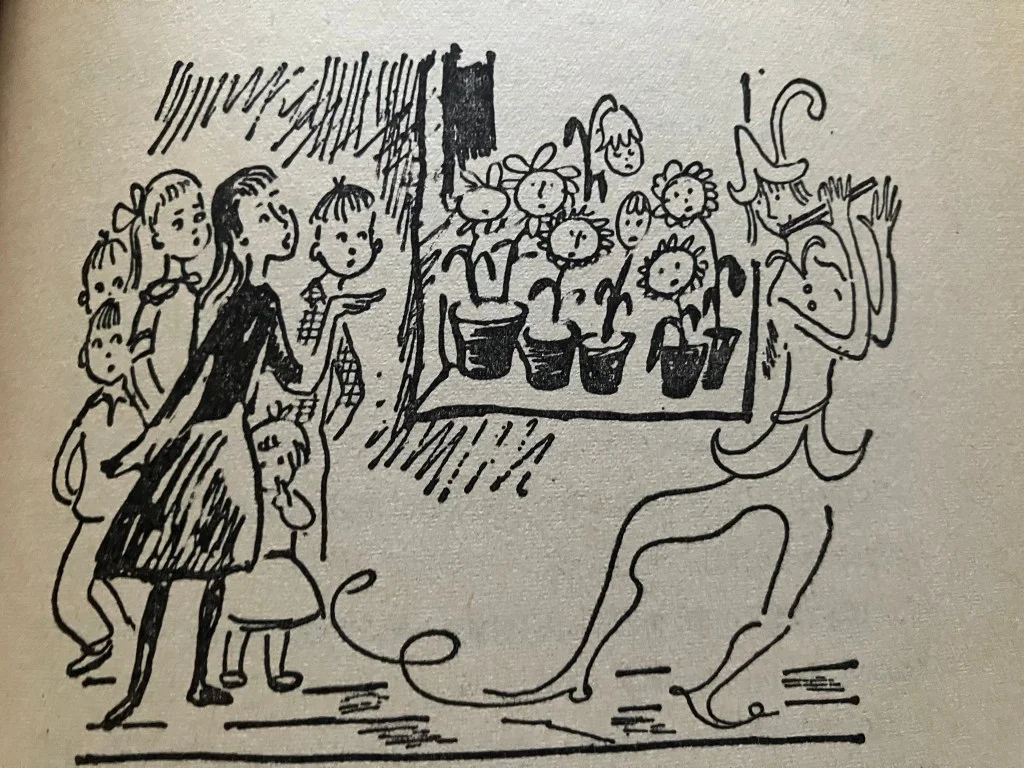
That new friendship comes with a serious complication. Mr. Beanpot, a detective investigating the town’s missing children, suspects Madam Snickasnee. Minx knows her mother is responsible and fears what will happen if the truth comes out. A later summoning brings the Pied Piper, whose magic can undo the witch’s spell. Minx asks him to restore the children, and they return to their families without remembering their time as flowers.
Minx hopes their return will end Mr. Beanpot’s inquiries, but the children remember that they came from the witch’s house. The mystery hasn’t disappeared with the spell. And when Mrs. Sputter, the head of the PTA, visits to urge Madam Snickasnee to join, Minx’s school attendance is revealed. The witch turns Mrs. Sputter into a plant, creating another disappearance to investigate. With the flowers gone, the detective asking questions and her mother suspicious, Minx is caught between problems she can’t solve by herself.
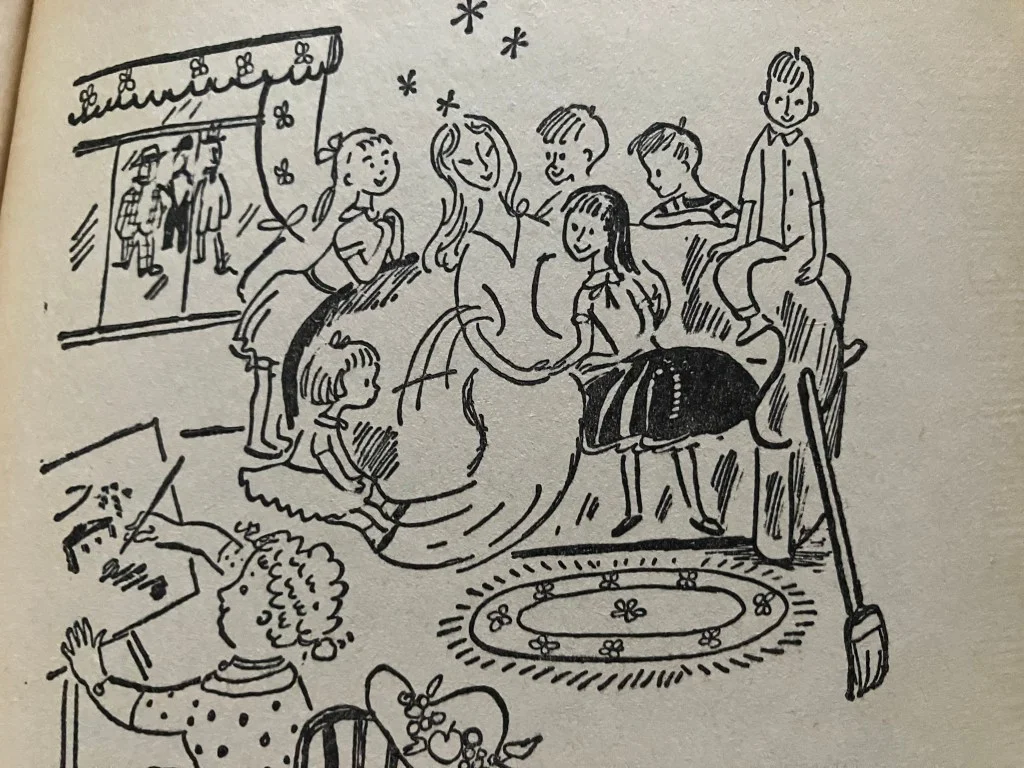
At that point, the strange woman in the mirror is Minx’s only confidante. The story’s eventual explanation is a major reveal: Minx is the child of a fairy, kidnapped as a baby by Madam Snickasnee. That connection makes her failed attempts to summon a fairy more than a running joke. The answer to her yearning has been present all along, though Minx doesn’t understand what she’s seeing.
A warm fantasy with a dated convention
The reviewer’s fondness for Little Witch comes partly from its fuller plot. They remember another story about a young witch who turns out to be a fairy, Weeny Witch, which is now difficult to find, but find Bennett’s book more developed. The school story, Minx’s friendships and the investigator’s questions give the fantasy several threads to follow. Even when the children are restored, the adults still want to know where they went and why they can’t recall what happened. The reviewer finds that persistence surprisingly grounded within a story where magic is part of everyday life.
Minx’s summoning attempts also offer a welcome variety of mythical visitors. The reviewer especially appreciates the nixie, a less familiar figure in children’s fantasy, alongside the more recognizable Pied Piper. These appearances keep the magical episodes lively while giving Minx’s wish to meet a fairy a clear thread through the book.
The reviewer has a sharper reservation about the book’s appearance-based shorthand. Its good characters are described as fair-haired and blue-eyed, while Madam Snickasnee is dark. The reviewer recalls disliking this convention as a child, having dark hair and eyes themselves, and sees it as a familiar pattern in children’s books of the 1950s: light colouring signals goodness while a darker look marks a villain. They connect it to the idealization of blond heroines in traditional fairy tales, including the history of idealized blondes, “golden-haired” characters, Alice’s Adventures in Wonderland and The Princess and the Goblin. They find the device stereotypical and irritating, and would have preferred the fairy to have fantastical pink, blue or lavender hair.
For readers drawn to classic children’s fantasy, Minx’s path from isolation to friendship gives the book its emotional centre, while its magical visitors and unresolved questions keep the plot moving. The dated beauty convention may frustrate some readers, but the reviewer’s account suggests a story with more going on than its familiar little-witch premise promises.