Call a Hearse by Jonathan Stagge: A Christmas Mystery with a Menacing Taxi
| Shelf | Book Reviews |
|---|---|
| Date in | |
| Readers | 892 |
A taxi stalks a woman in Jonathan Stagge’s Dr Westlake mystery, a brisk Christmas read with lively misdirection and an uneven final reveal.
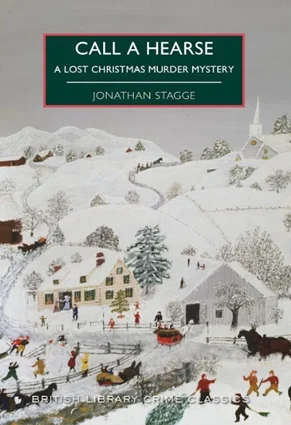
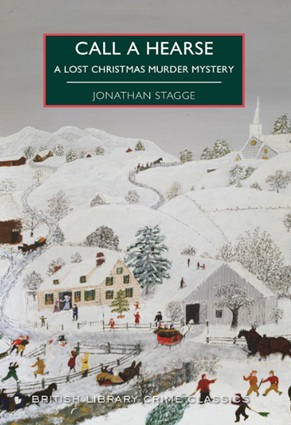
A yellow taxi that seems to pursue its passengers gives Jonathan Stagge’s Call A Hearse a striking premise, and the novel makes good use of that unsettling image. The cab has already been linked to a death; now Norma Hale fears it has marked her as its next target. Dr Hugh Westlake must work out what happened before the danger catches up with her. The mystery moves briskly, offers more than one persuasive false lead, and keeps its secrets in motion rather than saving every answer for the final pages.
The story begins at Christmas, with Westlake preparing for the holiday alongside his daughter Dawn. Her wish list includes a goldfish, skis and a ship in a bottle. Then Norma arrives seeking medicine to calm her nerves and explains that a taxi has been stalking her. She believes it is connected to Libby, a friend who was pursued by the same cab before her death. Westlake has a personal reason to take her fear seriously, but the case calls for more than reassurance: he needs to discover who is behind the apparent threat and why.
The taxi’s place in the mystery becomes clear as the story proceeds, and another person’s involvement gradually comes into view. Stagge doesn’t make the reader wait until the closing scene for every significant piece of information. That choice helps the plot keep gathering speed. Conversations and clues lead to new questions, and the discoveries change how earlier events look. For a reader who enjoys watching a mystery rearrange its possibilities along the way, that steady flow is one of the book’s strongest pleasures.
A mystery that keeps the reader guessing
Several turns caught me off guard. The book briefly points toward two developments that seem likely, only to use those expectations as distractions. The misdirection feels playful without making the clues meaningless, and I found myself reconsidering the evidence more than once. That’s a particularly satisfying quality in a classic mystery: surprise works best when the story has given you enough to form a theory, then nudges you toward a different one.
The solution to the central crime is less impressive than the journey there. Working out who could have been in the right place at the right time feels more like a practical elimination than a final flash of insight, and the murderer’s reveal lands rather quietly. Still, the explanation makes sense, and the earlier stretch gives the book enough momentum to carry it through. My read is that the ending is a modest weakness in an otherwise enjoyable puzzle, rather than a reason to dismiss the novel.
Dawn is the more divisive part of the experience. She can be quick-witted, but she also lets information slip around people who may have reason to use it. Her Christmas requests add an offbeat note to the opening, though they can make her seem younger than the story suggests. One description of her saying goodnight to her father also struck me as an odd choice of wording. These moments may distract some readers, but they give the Westlake household a distinctly eccentric feel.
Where it sits in the Dr Westlake series
Call A Hearse is the fifth of nine Dr Westlake mysteries written under the name Jonathan Stagge. The writing team also used the pseudonyms Patrick Quentin and Q Patrick. My experience of the series has been uneven: two of the earlier books I’ve read worked especially well for me, while two disappointed. This one falls on the enjoyable side, thanks chiefly to its pace, its inventive central image and its skill at planting plausible wrong turns.
Westlake’s small-town doctor setting gives the book a familiar, appealing centre. Readers who like a sleuth embedded in a community may find that domestic scale a welcome counterweight to the strange threat surrounding Norma. The mix also brought to mind the Dr Sam Hawthorne stories by Edward D Hoch, though Stagge adds a more peculiar family dynamic through Dawn. That resemblance is a matter of reading taste rather than a promise that the books share the same approach.
The British Library selected the novel as its Christmas title for 2026, and it has also appeared as The Yellow Taxi. The two titles point to different parts of its appeal: one has the atmosphere of a seasonal mystery, while the other foregrounds the cab that haunts Norma. Readers who want a tightly paced puzzle with an eerie hook and a few well-placed feints should find plenty to enjoy, even if the final reveal doesn’t quite match the pleasure of getting there.
For those following Westlake’s cases in order, the series runs from The Dogs Do Bark (1936), also known as Murder Gone To Earth, through The Three Fears (1949). Call A Hearse sits midway through that sequence, with The Scarlet Circle next. I have two more Stagge novels waiting on my shelf; after this one, I’m still keen to see how the series develops.
The Dr Westlake Series
- The Dogs Do Bark (1936) aka Murder Gone To Earth
- Murder by Prescription (1938) aka Murder or Mercy?
- The Stars Spell Death (1939) aka Murder in the Stars
- Turn of the Table (1940) aka Funeral For Five
- The Yellow Taxi (1942) aka Call a Hearse
- The Scarlet Circle (1943) aka Light From a Lantern
- Death, My Darling Daughters (1945) aka Death and the Dear Girls
- Death’s Old Sweet Song (1946)
- The Three Fears (1949)