Sam Riviere’s Doppelgänger Examines Shared Identity and Creative Ambition
| Shelf | Book Reviews |
|---|---|
| Date in | |
| Readers | 498 |
At an elite English writing academy, Sam Riviere’s Doppelgänger traces the appeal and loneliness of shared identity, with a mystery at its center.
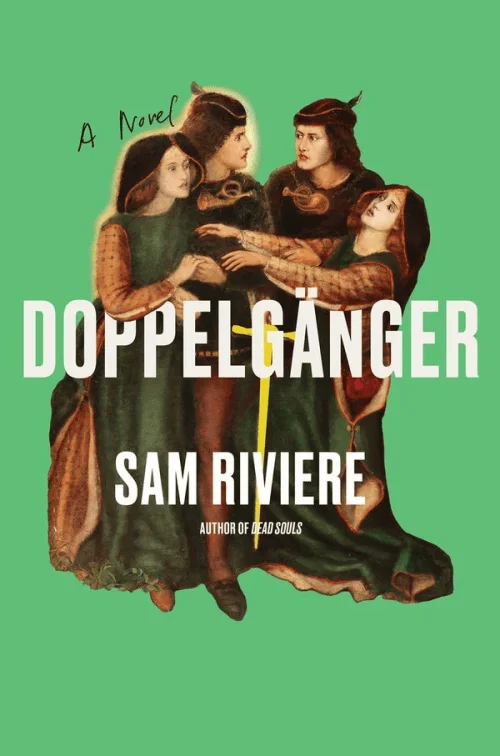
Sam Riviere’s Doppelgänger starts from a familiar pleasure: discovering that someone else has arrived at the same thought as you. Then it asks what happens when that flash of recognition becomes a way of life. Set at a fictional English academy for aspiring writers and artists, the novel follows a brief cultural trend in which people begin to pair up, imitate one another and share parts of themselves. The result, as the reviewer reads it, is an intriguing study of connection that keeps loneliness and unequal influence in view.
The academy’s students are already thinking about how experience might become material. Early on, sophomore Carl Sample tells his peers about his fixation on being beaten up. After a nonviolent encounter with people from the nearby town, whom he sees as hostile to the students’ perceived pretensions, Carl becomes consumed by the prospect that one of them might punch him. He proposes deliberately provoking someone so the feared event will happen on his terms. His friends understand, without saying so, that he also hopes to turn the experience into creative inspiration.
That plan is interrupted when another student arrives bloody and disheveled after an attack by someone from town. The timing gives Carl’s discussion an unsettling echo, and the incident appears to set the novel’s twinning phenomenon in motion. From there, what might have stayed a private fascination spreads through the academy and, for a short but consequential period, becomes a wider cultural trend.
A story that keeps changing its center
Riviere’s structure makes the novel’s interest in doubles felt at the level of its storytelling. The narrative settles with one character long enough to build investment, then shifts to another person’s thoughts or recollections. Sometimes a character’s memory contains the story of someone else’s memory, nesting one account inside another. These embedded tales retain their emotional weight rather than fading into background detail.
The academy’s twinning takes many forms. Students dress alike, combine names, share thoughts and gradually adopt one another’s mannerisms. Even the prose plays with repetition. A line such as “Part of the problem is the American stream system, as I’m sure you’re aware, Philip, Philip read” makes a doubled name part of the reading experience. These small disruptions ask the reader to consider where one person’s identity ends and another’s begins.
That question extends beyond resemblance. Can another person enter your thoughts as if they were a shared room? How much of the self you recognize is shaped by the version other people carry in their minds? And what does it mean to encounter yourself in someone whose perspective differs from yours? The novel approaches these questions through its changing narrators and its accumulating stories, giving the idea of a double more than one possible shape.
Creative kinship and its costs
The reviewer initially wondered whether Doppelgänger was criticizing MFA programs as institutions that produce writers in a familiar mold. The novel’s account of doubling proves less straightforward. Creating generations of people who think, speak and make work in similar ways may look like an act of greed, but the reviewer sees loneliness beneath that impulse, too. The desire to reproduce a creative self can also be a desire not to be alone.
Pairing people can bring practical and imaginative gains. Opposing personalities may offer each other new perspectives and help them produce more. Yet the connection carries an imbalance: when two individuals join forces, the novel suggests, their influence won’t necessarily be equal. The same closeness that makes shared work possible can leave one person’s identity overshadowed by the other’s.
That tension gives the book a sharper focus than a simple satire of creative education. Its doubles can be companions, mirrors, collaborators or copies, and those roles don’t always sit comfortably together. Riviere’s emphasis on imitation invites readers to ask who benefits when a style or personality is replicated, and whether closeness built on likeness can make room for difference. The story’s interest in the relationship between capitalism and creative work also opens up questions for discussion about what happens when artistic identity becomes something that can be reproduced.
A mystery, and a point of unease
A student’s disappearance supplies a mystery as the twinning trend develops. Its unravelling brings answers to questions that initially seem separate from the central premise, while raising further ones along the way. The reviewer describes the experience as mentally twisting and provocative, a fitting match for a novel that keeps multiplying perspectives.
One aspect of the book left the reviewer less satisfied. The novel refers at least three times within a few pages to American exchange students with “giant” or “enormously fat behinds.” A single instance might read as one character’s comic reaction to cultural difference; the repeated attention feels more pointed. The reviewer questions why the references don’t go further, particularly in a story that examines trends and is set mainly in an academic institution. They also raise the absence of discussion about BBLs and the ways Black bodies can be borrowed from when their features become fashionable. A character’s sustained attempt to understand that fixation, even without a firm answer, might have made these passages feel more fully considered.
That reservation sits alongside the reviewer’s broader appreciation of a novel that examines how people connect with and shape one another, and what individual identity is worth. Doppelgänger offers book clubs plenty to debate: whether creative kinship can avoid turning into imitation, how shared work can tip into unequal influence, and whether a person’s impact on another can outlast resemblance. Riviere’s closing thought, as the reviewer presents it, leaves room for connection without requiring a perfect match: each person can prompt someone else’s evolution simply by living a life of their own.
FICTION
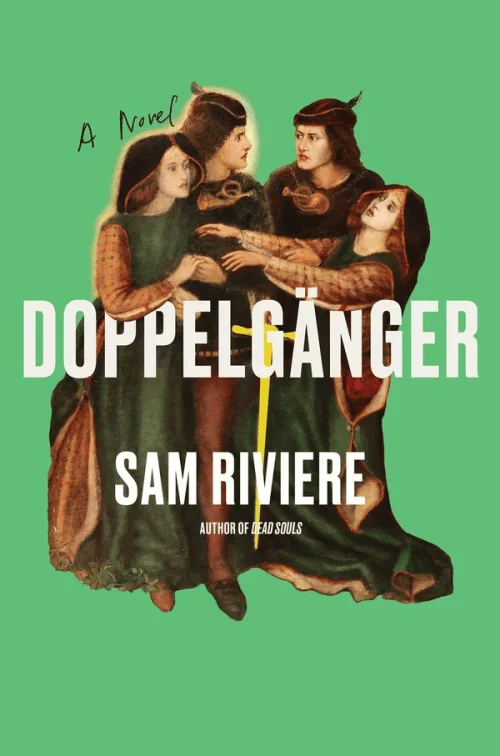
Doppelgänger
By Sam Riviere
Catapult
Published October 20, 2026

The post The You Reflected in Me in “Doppelgänger” appeared first on Chicago Review of Books.