Vanesha Pravin’s Gold Country Gives Working Life a Poetic, Unflinching Presence
| Shelf | Publishing Industry |
|---|---|
| Date in | |
| Readers | 693 |
In Gold Country, Vanesha Pravin traces the physical costs of service work while making room for moments of rest and attention beyond the job.
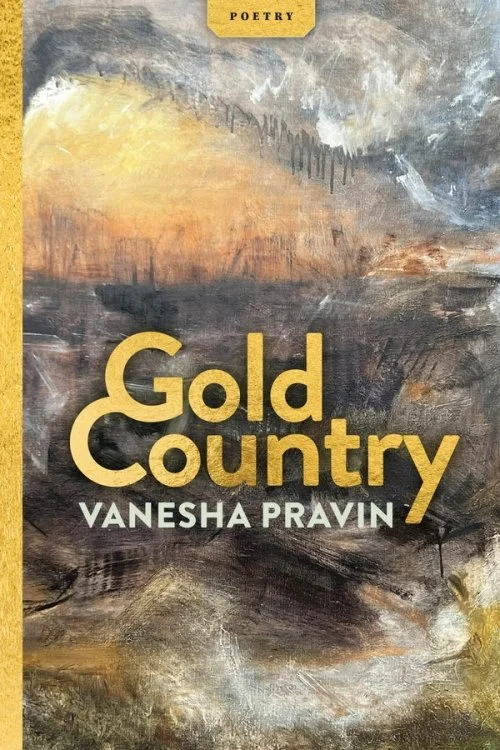
Vanesha Pravin’s Gold Country brings service workers into view, then asks what their work takes from them. The collection’s waiters and cocktail servers carry the strain of long shifts in their bodies, along with bills that keep arriving. Pravin’s poems make that pressure tangible without reducing their speakers to hardship alone: they also find brief openings for companionship, attention and life outside the demands of a job.
That focus gives the collection its particular force. Service work depends on being present for other people, yet the workers themselves can fade into the background. One speaker recalls that diners “saw me without seeing me.” Pravin turns that small, sharp observation into a way of looking at who receives attention and who is expected to provide comfort quietly. Her poems bring workers forward as people with their own fatigue, needs and ambitions.
Service work leaves its mark
In one poem, the speaker moves between waiting tables and searching for another position, “pounding the pavement with an / updated resume like I had many other times.” Unpaid bills gather, with “late fees on top of / interest,” while the speaker sells “a third of my possessions” to help cover “hospital bills.” The details make financial insecurity part of the working day’s aftermath. A job may demand stamina and reliability, yet it offers no guarantee that a worker can manage an illness or an unexpected expense.
The poem’s title refers to a figure for public spending, a choice that sets an individual life against a much larger scale of priorities. Pravin keeps the focus on the speaker’s immediate experience: pain pushed aside during “the dinner rush,” the search for employment, and the cost of medical care. When the speaker asks “Good Samaritans” to “never ever call an / ambulance for me again,” the request lands as a measure of how expensive even urgent help can feel. The work ethic praised as a route to independence has instead left this speaker physically worn down and financially exposed.
Pravin extends that attention to the less visible physical demands of service. In “Vegas: The Cocktail Server,” a woman carries drinks through a “double shift in gold stilettos.” The shoes belong to the glamour of the job, but the body records what that appearance conceals: “a pinched nerve in the / ball of her right foot,” a lost toenail, a heel spur and bunions “thickening / under gold straps.” The sequence is specific and unshowy. It lets each injury accumulate until the performance of glamour looks less like a perk than another part of the labor.
“Soccer” shifts from the workplace to the workers’ living space. Waiters watch the World Cup in a “sixth-floor walk up” furnished with “used mattresses, / lawn chairs, and a television.” For a while, the match offers a shared focus. The spectators can “forget that their minds have been trapped / and that slowly, their bodies will fail them.” That reprieve matters, though the poem keeps the cost in view. Their bodies are still shaped by repetitive work, even in the hours when they are watching someone else play.
In “Career Waiter,” Pravin gives this wear a longer timeline. The central figure is “[g]rowing older in the wrong place at the wrong time,” having spent a life “[d]reaming feverishly at a chance of independence.” Skill and pride can exist in service work; the poems don’t deny either. But a worker’s competence doesn’t by itself produce security or room to build a life. That gap between effort and possibility is one of the book’s clearest concerns.
Attention beyond the job
Gold Country doesn’t suggest that work should occupy every measure of a person’s worth. Its opening poem, “Civilians,” imagines the “ghosts of dead workers” and wonders how many mourned “the committees they did not chair” while alive. The question opens a space beyond the job’s familiar demands. What might a life hold if it were not measured by productivity, status or recognition at work?
“How to Read the News” offers another kind of pause. Its speaker asks readers to let headlines appear distant, with their smartphones left in a trunk, so that “The cormorants can be seen in entirety for once.” One bird is “perched on the rock, spurning // Groupthink.” The poem’s attention to a natural scene doesn’t cancel the collection’s concern with labor. Instead, it points to the value of looking closely at something without needing to turn it into work.
That balance is central to Pravin’s approach. She insists that readers recognize the labor that allows others to dine, travel and relax, and she shows what that labor can cost. At the same time, the collection makes room for observation, shared pleasure and imagined alternatives. The result is a book attentive to the people whom comfortable routines often obscure, and to the possibility that a worker’s life contains more than the shift ahead or the bills left behind.
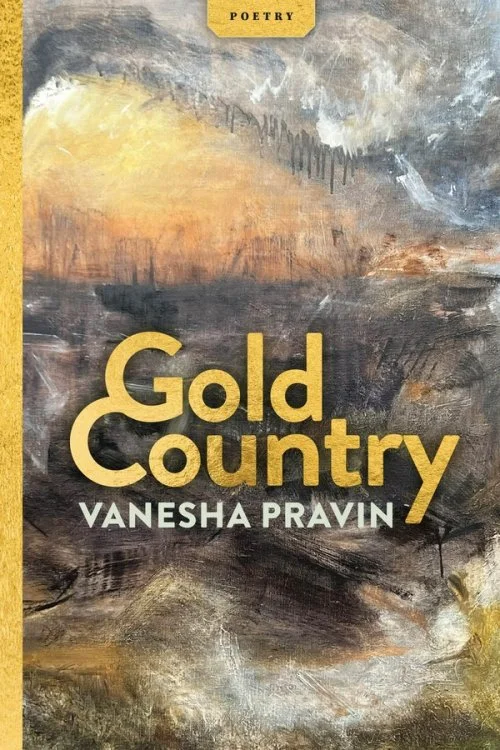
Gold Country is a poetry collection by Vanesha Pravin, published by Ohio State University Press on November 2, 2026.
POETRY
Gold Country
By Vanesha Pravin
Ohio State University Press
Published November 2, 2026