Rebels & Cowards by J. Adler: Grief, Family and a Narrator Worth Following
| Shelf | Book Reviews |
|---|---|
| Date in | |
| Readers | 778 |
J. Adler's coming-of-age novel follows Jackson Avila after his best friend's death: a witty, grief-heavy story with a memoir-like voice.

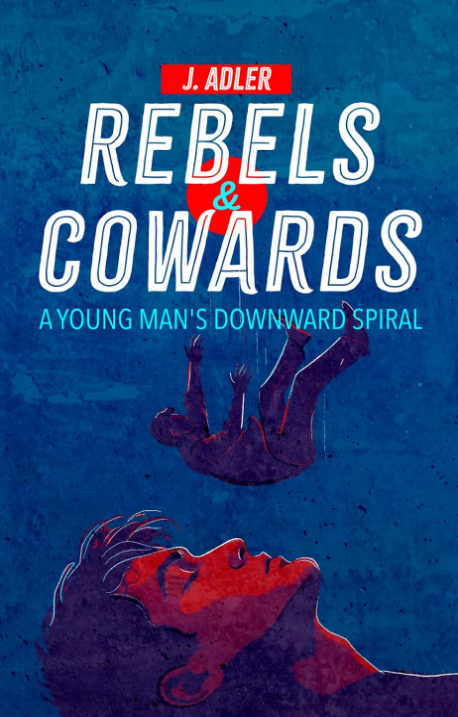
Rebels & Cowards by J. Adler is a contemporary coming-of-age novel set in 2024. Its central question is simple and hard to answer: how do you carry a loss that seems to swallow everything else? The book is set in motion when 23-year-old Jackson Avila loses his best friend and roommate, Jessie Khoury, in a car accident. Grief and guilt arrive together, and Jackson finds himself back under his mother's roof with a strong-willed mother, Dahlia, a disabled older brother, Gonzo, and a feckless stepfather, Al. The reviewer's read is that the novel is less about the accident itself than about what a family does with a loss it never quite agreed to share.
A voice that carries the weight
The book opens in January, straight into Jessie's funeral. That's a bold place to start, and Adler doesn't soften the moment. Jackson narrates it with understated, observational humor and a conversational tone that feels almost like talking to someone across a kitchen table. The reviewer notes that this lightness never hides the grief underneath. Adler lets Jackson's reactions feel believable without shrinking the trauma, and that balance is what keeps the opening from tipping into either sentimentality or flippancy.
Jackson is the engine of the book, and the reviewer describes him as an engaging, believable narrator who drives a character-driven story almost on his own. His voice mixes cynicism, humor, anger and vulnerability. Those ingredients sound like a recipe for an unstable character, but the reviewer finds them authentic, and says the voice is hard to put down. For readers who want a protagonist they can be irritated by, amused by and worried about in the same chapter, that's a useful combination.
Structure that reads like a memoir
Much of the book's intimacy comes from its form. It reads like a memoir in several ways: Jackson's chatty, confiding candor, and a structure in which each chapter centers on a personal experience or an important person in his life, filtered through memory and anecdote. Many chapters are written like private diary entries. That approach pulls the reader closer to Jackson and makes it easier to invest in him, even when he isn't doing much that looks admirable.
The scattered illustrations reinforce that journal-like, handmade feel. The reviewer's view is that they suit the tone but don't do much narrative work. They read as decoration rather than as a second layer of storytelling. Readers who enjoy books where images carry real meaning may find them underused, though they don't get in the way of the text.
Comedy, darkness and the coffee shop
From Chapter 3, Jackson introduces the people around him: his family, his friend Bo, and his co-workers at Mile High Coffee Cup, where he works as Lead Cashier. The reviewer describes these portraits as warm and nostalgic, with individual quirks that make each person feel specific rather than sketched. There's a clear comic energy in how Jackson recalls them, and he moves through these memories at a buoyant pace.
Still, the reviewer points out that Adler keeps the darker themes visible under the jokes. Jessie's absence is never far from the page. Early on, a tension builds between Jackson's playful surface and the psychological struggles he's keeping hidden. The result is a steady sense of foreboding. Nothing is announced, but the reader senses something gathering pressure, and that unease is one of the book's quieter pleasures.
A shift in gear
The novel changes shape around Chapter 12, titled "My Fortune Teller." It becomes more chronological and more plot-driven, a move the reviewer considers well timed to keep the reader engaged as the early charm begins to thin. The following chapter brings a major, unexpected turn, and Jackson's behavior becomes disturbing. The book moves into different territory at that point. Without giving away the turn itself, it's fair to say that readers expecting the gentler comedy of the opening should be ready for the shift.
The reviewer finds this trajectory credible and absorbing. Jackson stays likable and sympathetic even as the novel loses the superficial gloss that made its first half so appealing. What replaces it is an intriguing, unpredictable sequence of events. That's a risky move for a character-driven book, and it's one that tends to divide readers: some will feel the story has finally found its footing, while others will miss the earlier looseness.
The therapist and the uneven supporting cast
Jackson's relationship with his therapist, Jeannie, is among the strongest material in the book. These scenes carry real intimacy and sexual tension, which Adler handles with sensitivity and nuance. The humor drops away in these conversations, and the reviewer sees them as revealing: they show a more reflective, more focused Jackson than the one who narrates the family chaos.
Not everything in this thread lands. Jeannie stays somewhat hazy, which the reviewer finds understandable given the narrator's point of view, but the conclusion involving her feels unsatisfying. The reviewer also flags uneven traits in other characters. Dahlia's protectiveness sits at frustrating odds with her failure to see how badly Jackson is struggling. Al's eccentricity often feels over-engineered and tips into absurdity. Gonzo's charm occasionally wears thin. Even so, the reviewer argues that these figures add to the novel's messy, emotionally rich texture, and that their surreal, sometimes funny conflicts give the family dynamics their energy.
Who this book suits
The reviewer's verdict is that Rebels & Cowards is a highly entertaining novel with a dark, compulsive core and a protagonist with broad appeal and real empathy. The writing is poignant, provocative and fresh, and the structure is more deliberate than it first appears. The novel also hints at a sequel, which the reviewer says the book's ending sets up with promise.
Readers who enjoy first-person narrators with a sharp, self-deprecating edge will probably get the most from it, particularly those who like family stories where affection and frustration share the same room. Readers who need a tidy resolution, or who prefer their grief stories to stay consistently gentle, may find the second half harder going. My read is that the book's willingness to get uncomfortable is the reason it sticks, and that's the thing to watch for in whatever Adler writes next.