The Other Magic by Derrick Smythe: A Sprawling Fantasy Debut With Heart
| Shelf | Book Reviews |
|---|---|
| Date in | |
| Readers | 849 |
Derrick Smythe's YA epic fantasy follows an enslaved youth, a spoiled prince and a disgraced priestess under a fanatical God-king. Uneven but rewarding.

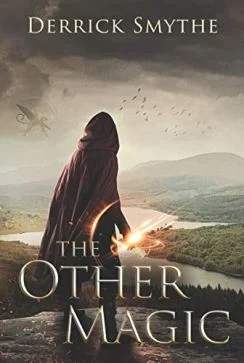
Plenty of series openers spend their first chapters clearing their throats. Derrick Smythe's The Other Magic doesn't bother. It drops three characters from three different races into a tangled situation and trusts readers to keep up. Most of the time, they do, and the rough patches are easy to forgive in a book this ambitious.
Three people, one dangerous bargain
Kibure is enslaved and has access to forbidden magic he can neither understand nor control. Aynward is a spoiled prince sent overseas to a university, partly in the hope that he'll stop embarrassing his royal family at home. Sindri is a disgraced priestess, hired by Kibure's master to bring the young man under control, and she has plans of her own for him. What ties these three together is pressure from the same direction. Both Sindri and Kibure are wanted by a dangerous, fanatical God-king and his priests, and the empire they serve is no place to get caught.
That setup is strong. It gives each thread a clear reason to exist and a clear risk attached, and it lets the novel move between very different kinds of stakes: a slave's fear, a prince's pride and a priestess's calculation. Here's the thing, though. Three viewpoints in one volume only work if each one earns its place, and this book mostly manages it.
Worldbuilding that does the heavy lifting
Smythe's descriptions are the book's strongest asset. Scenes are easy to picture, and the prose makes it clear how each character sees the places they move through, which turns settings into something more than backdrop. The fictional world shows real variety, from the texture of daily life to the sense of different cultures sitting uneasily beside one another.
That kind of detail usually pays off in series fiction. Readers who invest in a setting this carefully built tend to stay for the sequels, because the world already feels lived in. My read is that the worldbuilding is what will keep many readers coming back, even when the plot slows down to make room for it.
Aynward and the university detour
Aynward's sections are often the most fun. He wrestles with entrance exams, hunts for classes he can't find and gets tangled in university politics, and these scenes can feel like detours from the main action. I'd argue they're the emotional core of the book. The humor and the sharp, sometimes insufferable arrogance give the story its lighter register, and they also show the young man Aynward could become if he grows up a little.
That coming-of-age arc is where the novel earns its label as a YA story. It's less about battles and more about a privileged kid discovering that the world doesn't bend to his name. Some readers will find these chapters indulgent. Others will find them the most human part of the book.
Pacing, cutaways and the cost of a long first book
The narration is thorough but can be slow, and the story has a habit of switching from one character to another at what feels like the worst possible moment. Sometimes a few more sentences would resolve the new development and make the cut feel earned instead of frustrating. Editing is another weak point. Some passages are missing words, and a more polished final pass would smooth out a few sentences that stumble.
Even so, the book feels complete as a standalone experience while still clearly opening a larger story. Character growth can occasionally seem too quick to be convincing, but for the most part, the pacing is paced in a way that makes the changes believable and, at times, genuinely moving.
Characters, from God-king's priest to side players
The three leads come across as realistic, though the book leans on telling readers how characters feel more than showing it through action or direct thought. A narrator who helps orient readers geographically and narratively might have served the story better, especially in a book with this many moving parts.
The standout is Grobennar, the God-king's most important priest. Smythe avoids turning him into a caricature. He's troubling and harmful, and yet likable, driven by what seem like pure intentions and a dangerous devotion. That ambiguity is the book's sharpest thematic move: its evil isn't always wicked, and it's more unsettling for that. The supporting cast is less successful. Aynward's aunt and guardian, along with Kibure's fellow slaves and his master, feel underdeveloped, and in a book this long, readers might expect more focus and variety among them.
Who this book suits
If you like long, immersive fantasy that opens a series and takes its time with character, The Other Magic is worth your attention. Readers who enjoy morally complicated villains, coming-of-age arcs and magic systems that still feel mysterious will find plenty here. Readers who want tight plotting and polished prose may find the rough edges distracting. The plot is imaginative and intriguing, and it blends sorrow and humor in a way that keeps the mood from sagging. Expect a book that asks for patience and rewards it with a world worth returning to.