Liam Blackford’s The Stud Turns Dating Fatigue Into a Chilling Dystopia
| Shelf | Book Reviews |
|---|---|
| Date in | |
| Readers | 870 |
In The Stud, Liam Blackford imagines a society that makes reproduction efficient—and asks what people lose when they avoid the risks of wanting one another.
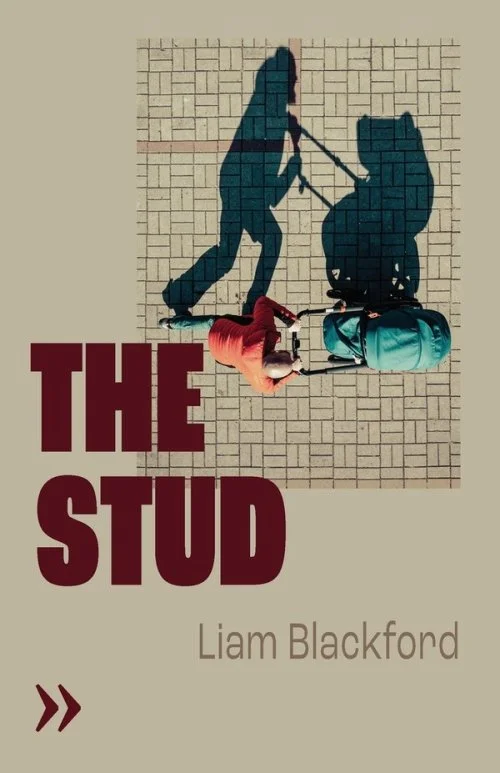
Liam Blackford’s debut novel The Stud takes a familiar frustration—dating feels like too much work—and builds a society around avoiding it. In this near-future Australia, people have turned reproduction into an organized service. The arrangement looks efficient, even appealing, until the people involved start to seem like parts in someone else’s plan.
That premise gives Blackford room to examine desire as a problem shared across genders. The novel’s men often appear unwilling or unable to take the initiative expected of them. The women who respond by assuming power and defining the terms of intimacy may seem more capable. Yet Blackford’s unsettling question is whether control can substitute for wanting something, or for risking an honest connection with another person.
A household built around reproduction
The setting is Westralia, a wealthy Australian state that has separated into its own hyper-liberal republic amid a birthrate crisis. Its leaders support child-rearing through a range of measures, including stipends, medical debt relief, publicly funded in vitro fertilization, training for surrogate mothers and appeals for sperm donors.
The novel’s signature arrangement is the “mother-leader-father-labourer” homestead. Several women employ one man to live with them, father children and help raise them. The arrangement gives the women a way to have children while maintaining their careers, and it treats intimacy as another role with agreed terms. Martina tells her friends she’s moving into one after years of dispiriting dates. Her decision barely raises an eyebrow: in this world, a stud house looks like a practical answer to a persistent difficulty.
The women around Martina work in law, architecture and advertising. They’ve reached the point where men seem, in the reviewer’s telling, more like obstacles than partners: foolish, threatened by women’s success or simply unreliable. The novel’s men are assigned usefulness in place of intimacy. They may be competent caregivers, but they can also be treated as sex workers expected to serve each client’s needs.
That distance extends to Luke, Martina’s live-in stud. When the reader enters his thoughts, he approaches each encounter by considering how to get the best return from it. He’s not presented as a devoted husband whose family life happens to have an unusual structure. He is a worker adapting to a client’s preferences. The arrangement may offer clarity, but it also limits what its participants are permitted to mean to one another.
The seduction of an easy solution
The novel’s sharpest achievement, according to the reviewer, is making this inverted version of The Handmaid’s Tale seem workable. The roles are explicit, the responsibilities negotiated and the path ahead clear. Even when the household feels disturbing, Blackford introduces a softer note: a tender moment between a father and daughter, or the possibility that affection might grow inside a transaction.
Those moments make the unease more persuasive. The system doesn’t survive because everyone involved is cruel; it survives because it can satisfy real needs. Its danger lies in how readily convenience begins to stand in for goodness. Blackford’s plain, propulsive prose helps that substitution feel ordinary. Conversations are matter-of-fact, and the grotesque elements arrive without fanfare. The reviewer describes the effect as both provocative and alarmingly plausible.
The book also widens its focus beyond the household. Its wealthiest man is a transgender OnlyFans model and cage fighter who has given birth to children using public birthing infrastructure built by his megacompany. Meanwhile, people in eastern Australia are treated as objects of charity while being drawn into surrogacy for westerners. The reviewer sees a world where public displays of progressive values coexist with private exploitation, and where reproductive choice is shaped by class as well as personal preference.
Blackford’s imagined society may be extreme, but its fixation on productivity and optimization feels recognizable to the reviewer. That familiarity lends weight to the novel’s ugliest premise: men can be reduced to sexual function and discarded as potential partners. The women who direct that system may sound familiar to women who have experienced male entitlement. Their smug assurance may also ring familiar to men who have seen women’s confidence collapse under pressure into vulnerability and need.
Agency, not a contest between the sexes
There’s an uncomfortable possible reading of The Stud: that women given traditionally masculine power and agency will eventually want to surrender it. The review brings in a scene from Sex and the City, where Charlotte, exhausted by dating, longs for someone to rescue her. Carrie asks whether Charlotte could be her own rescuer; Charlotte finds the idea depressing.
How a reader responds to Blackford’s gender provocations may depend on whether they accept that desire for rescue as something fundamental to women. But the reviewer reads the novel less as an argument about women than as a diagnosis of a broader failure of desire. Its characters don’t seem to act on what they genuinely want. They take the path that asks least of them and mistake ease for fulfillment.
That makes the book’s central tension the burden of agency: choosing while knowing that choices bring consequences, risking rejection, and allowing other people to surprise or disappoint you. Blackford offers no program for how to live differently. Instead, the novel exposes the human need for one another alongside the systems designed to make that need seem optional. People become useful pieces to be recruited into private designs.
The reviewer’s final impression is bleak, but not limited to one gender. Men in The Stud seem close to giving up control, while women discover that taking power doesn’t guarantee satisfaction. The book leaves readers with a pointed question: what does it mean to “have it all” if the life you’ve arranged never held what you truly wanted?
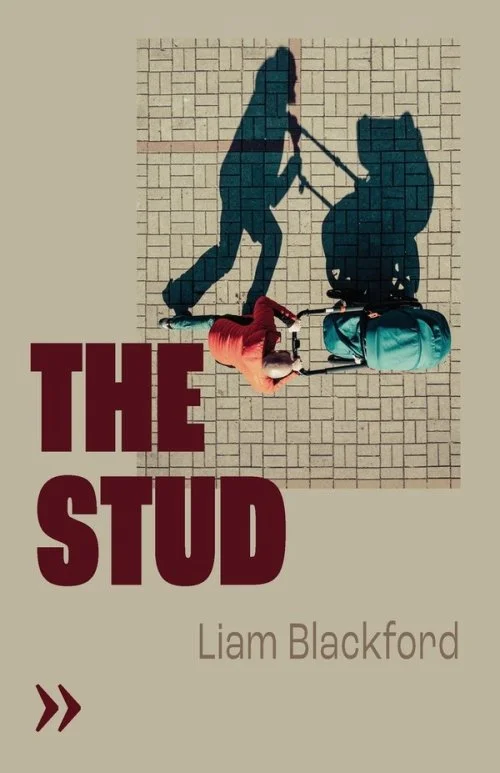
FICTION
The Stud
By Liam Blackford
Verdurin
Published November 18, 2026